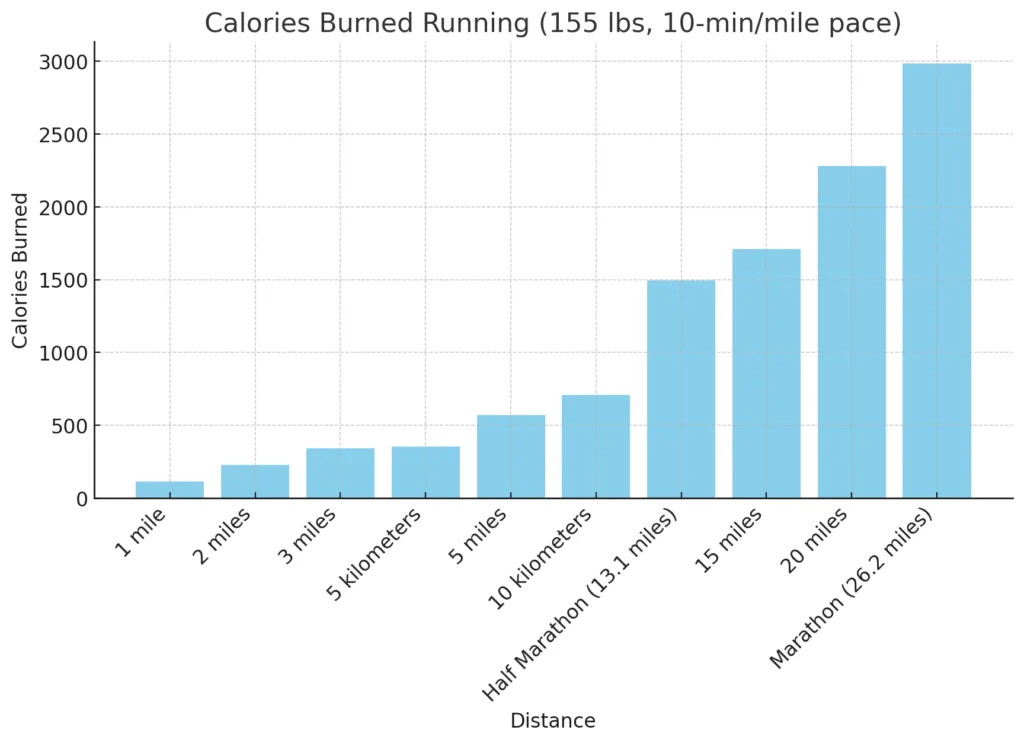
How Many Calories In A 5k Run

Ever laced up your running shoes, felt that delightful burn in your legs, and wondered, "Just how much fuel did I just burn?" If you're a runner, or even just thinking about hitting the pavement for a 5k, you've probably pondered the magical number of calories shed. It’s a question that pops up everywhere, from casual conversations with friends after a race to serious discussions about fitness and weight management. Understanding the calorie burn of a 5k isn't just about satisfying curiosity; it’s a fantastic way to appreciate your body’s incredible engine and make informed decisions about your health and nutrition.
The beauty of the 5k (that's 5 kilometers, or about 3.1 miles for those of us who grew up with a different measuring system) is its accessibility. It's a distance that many people can train for and complete, whether walking, jogging, or sprinting. This makes it a popular goal for fitness enthusiasts, charity events, and weekend warriors alike. And with its popularity comes a natural curiosity about the energy expenditure involved. So, let’s dive into the delicious details of how many calories a 5k run actually torches!
The Calorie Conundrum: What's the Magic Number?
So, how many calories are we talking about when we conquer a 5k? The honest answer is: it varies! It's not a one-size-fits-all number, which can be a bit frustrating but also empowering because it means your effort is unique to you. Several key factors play a starring role in this calorie calculation:
Must Read
- Your Body Weight: This is arguably the biggest player. The heavier you are, the more energy your body needs to move that mass over the same distance. So, a 200-pound runner will burn more calories than a 120-pound runner completing the exact same 5k. Think of it like pushing a heavier cart – it requires more effort!
- Your Pace and Intensity: Are you a leisurely jogger or a speed demon? Running faster or at a higher intensity requires your cardiovascular system and muscles to work harder, leading to a greater calorie burn. A brisk walk will burn fewer calories than a steady jog, which will burn fewer than an all-out sprint.
- Your Metabolism: Everyone’s internal furnace is slightly different. Your basal metabolic rate (BMR) – the calories you burn at rest – influences how efficiently your body uses energy. Factors like age, muscle mass, and genetics all contribute to your unique metabolic rate.
- Running Efficiency: Believe it or not, how efficiently you run can also make a difference. Someone with a more streamlined running form might use slightly less energy than someone whose form is less efficient, though this is a more subtle factor.
- Environmental Conditions: Running in extreme heat or cold, or on challenging terrain (like hills!), can increase your calorie expenditure as your body works harder to regulate temperature or overcome obstacles.
Despite these variables, we can provide some excellent general estimates. For an average-sized adult (let's say around 150-160 pounds), a 5k run typically burns somewhere in the ballpark of 300 to 400 calories. This is a fantastic baseline to keep in mind!
To get a more precise idea, many fitness trackers and online calculators use formulas that take into account your weight, speed, and distance. These tools are incredibly handy for monitoring your progress and understanding your individual calorie expenditure. For instance, if you weigh 180 pounds and complete a 5k at a moderate pace, you might be looking at burning closer to 350-450 calories. Conversely, a lighter individual, say 110 pounds, might burn around 250-350 calories for the same distance.

The Benefits of Knowing Your Burn
Why bother with these numbers? Understanding your 5k calorie burn offers several fantastic benefits:
- Informed Nutrition: Knowing how many calories you’ve expended can help you make smarter food choices. It doesn’t mean you should “reward” yourself with an entire pizza after every run, but it can help you understand your energy needs. If your goal is weight loss, you can use this information to ensure you're in a calorie deficit. If you're training hard and need to refuel, it helps you gauge appropriate post-run nutrition.
- Motivation and Goal Setting: Seeing that number on your fitness tracker can be incredibly motivating! It’s a tangible representation of your effort and a great way to track progress towards fitness goals, whether that's completing a 5k comfortably or improving your race time.
- Appreciating Your Body: Honestly, it’s pretty amazing to think about what your body is capable of! Running a 5k is a significant physical feat, and understanding the energy output helps you appreciate the power and resilience of your body.
- Balancing Exercise and Diet: For those aiming for weight management, knowing your calorie burn is crucial for balancing your energy intake and expenditure. It’s about creating a sustainable and healthy relationship with food and exercise.
So, the next time you cross the finish line of a 5k, take a moment to pat yourself on the back. You’ve not only accomplished a fantastic feat of endurance, but you've also burned a significant number of calories, contributing to your overall health and fitness journey. Remember, the exact number is less important than the consistent effort and the positive impact it has on your well-being. Keep running, keep exploring, and keep enjoying the journey!