
How Long Did The Stone Age Last
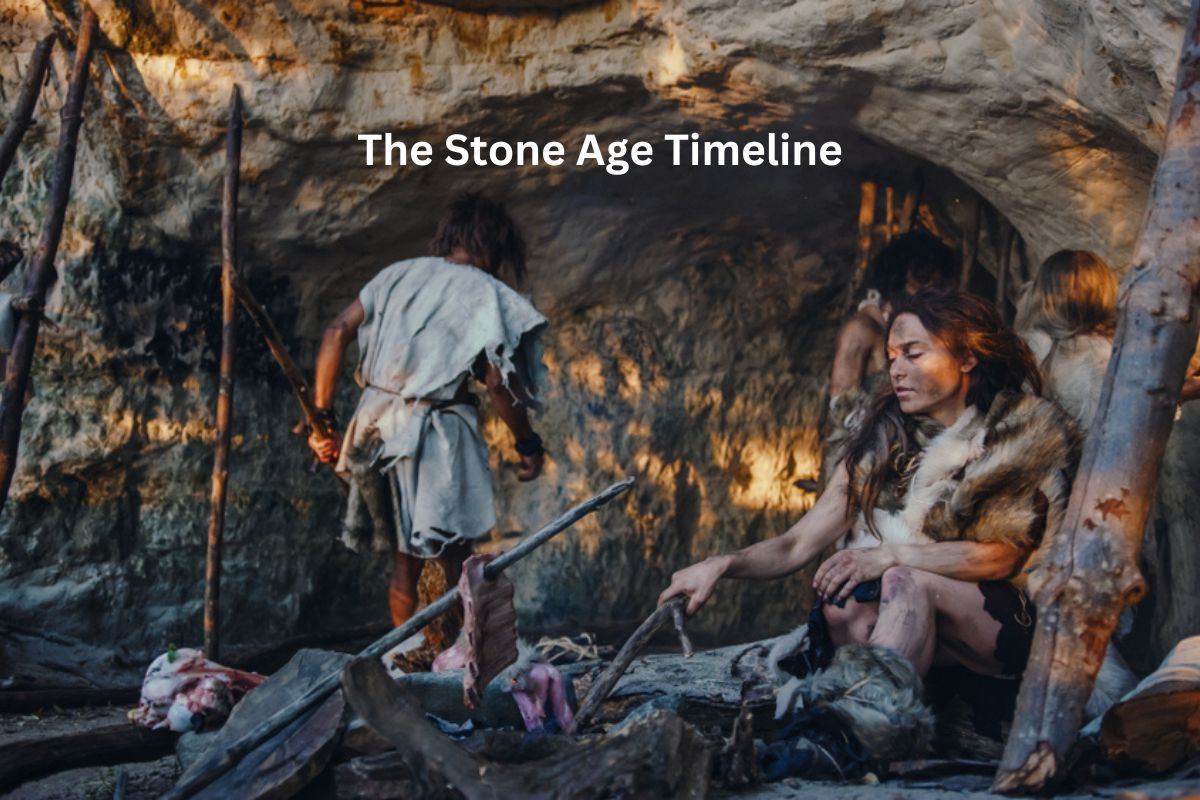
Picture this: a cave, flickering firelight dancing on rough-hewn walls, the scent of roasted mammoth (or maybe just a really grumpy badger) in the air. A group of our ancestors, bundled in furs, are huddled together, sharing stories. One of them, let’s call him Grunk, points a knobbly finger at a shiny rock he’s just chipped. “Look!” he grunts, his voice echoing slightly. “This one… it’s sharp!” Another, perhaps named Flit, nods enthusiastically, holding up a roughly shaped stone axe. “Good for chopping… trees. And… enemies. Mostly trees.”
It’s easy to imagine these scenes, isn’t it? We often have this romanticized, sometimes slightly silly, image of our Stone Age relatives. But the reality is, that “shiny rock” and that “axe for chopping” represent something incredibly profound. They represent a massive chunk of human history, a period so ridiculously long it makes our modern lifetimes feel like a blink of an eye.
So, how long did the Stone Age actually last? Buckle up, because we’re about to embark on a journey that spans millennia. And trust me, it’s a journey that really puts things into perspective.
Must Read
The Granddaddy of All Ages
When we talk about the Stone Age, we’re not talking about a quick weekend camping trip. Oh no. We’re talking about a period that stretches back, way back. We’re talking about the dawn of humanity, the era when our ancestors first started figuring out how to make tools, how to control fire, and probably how to avoid being eaten by saber-toothed cats. (A skill I, for one, would have been very grateful to possess.)
Now, pinpointing the exact start and end dates for something as vast as the Stone Age is, well, a bit like trying to nail jelly to a wall. It’s not a neat, tidy package. Geologists and archaeologists have different ways of measuring time, and different regions of the world experienced these changes at different paces. Think of it like this: if you were to ask different grandmothers when “modern times” started, you’d probably get a few different answers, right? Same principle, just with a lot more rocks involved.
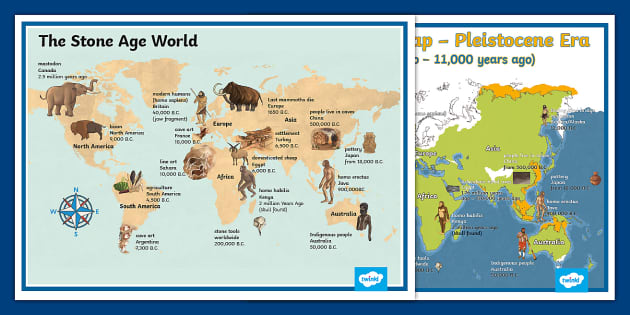
But for the most part, when scientists talk about the Stone Age, they’re referring to the period that begins with the first evidence of stone tool-making by hominins. And that, my friends, is estimated to be around 3.3 million years ago.
Yep. 3.3 million years. Let that sink in for a moment. That’s… a lot of mammoths. A lot of caves. A lot of questionable fashion choices involving animal hides.
The Stone Age: A Triple Threat (of Eras)
To make things a little easier to digest (and because, honestly, “Stone Age” is a bit of a mouthful to repeat that many times), archaeologists have helpfully divided this colossal era into three main phases:
1. The Paleolithic Period: The OG Stone Age
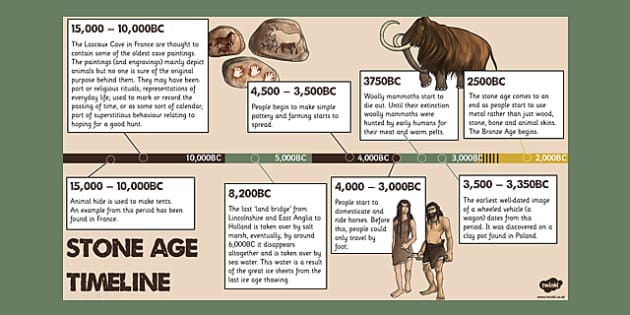
This is where the magic really begins. The Paleolithic, meaning “old stone,” is the longest stretch of our Stone Age journey, running from around 3.3 million years ago all the way up to roughly 10,000 BCE.
What were our peeps up to during this time? Well, they were busy being hunter-gatherers. Imagine constantly moving, following herds of animals, foraging for edible plants. It was a nomadic lifestyle, driven by the need to survive. Think of it as the ultimate road trip, except the car was your own two feet, and the snacks were whatever you could find.
This was also the era of flaked stone tools. These weren’t exactly pretty, but they were incredibly effective. Think sharp edges for cutting, pointed ends for hunting, and rough surfaces for scraping. Our ancestors were becoming increasingly skilled at shaping rocks to meet their needs. It’s the ultimate example of ingenuity, wouldn’t you say? They saw a problem (a juicy animal that’s hard to cut, a tree that’s too big) and they solved it with what they had around them.
And, of course, this is the period when humans started to harness the power of fire. Can you imagine the impact of that? Suddenly, it wasn’t just about survival; it was about comfort, about protection from predators, and importantly, about cooking food. Cooked food is easier to digest, meaning more energy. It’s also less likely to make you sick. So, fire was a game-changer, literally. It’s probably why we have so many more teeth than our primate cousins – we could chew less!
The Paleolithic is further broken down into:
- Lower Paleolithic: This is the earliest and longest phase, where the simplest stone tools, like the Oldowan and Acheulean handaxes, were made.
- Middle Paleolithic: Tool-making became more refined, with the development of the Levallois technique, allowing for more predictable flake production.
- Upper Paleolithic: This period saw a surge in innovation, including the development of composite tools (like spear throwers and bows and arrows), as well as the emergence of art, such as cave paintings and figurines.
Seriously, the art from the Upper Paleolithic is absolutely mind-blowing. Go look up the Lascaux cave paintings or the Venus of Willendorf. It’s like prehistoric Instagram, but way more meaningful. These weren’t just pretty pictures; they were likely part of rituals, storytelling, or even early forms of communication. How cool is that?

2. The Mesolithic Period: The In-Between Age
Following the end of the last Ice Age, around 10,000 BCE, we enter the Mesolithic period, also known as the “Middle Stone” age. This was a time of transition.
The massive ice sheets that had covered large parts of the Earth began to melt, leading to significant changes in climate and landscapes. Forests expanded, and new types of animals and plants became more common. This meant that our hunter-gatherer ancestors had to adapt their strategies.
They became more adept at hunting smaller game, fishing, and gathering a wider variety of resources. Tool technology continued to evolve, with the development of smaller, more finely crafted stone tools called microliths. These were often hafted onto wooden handles to create more complex tools like arrows, harpoons, and sickles. Think of them as the high-tech accessories of their day.
This period also saw the beginnings of more settled communities. While still largely nomadic, some groups might have started to establish more semi-permanent camps in resource-rich areas. It’s like they were starting to get a little tired of constantly packing up their cave furniture.
3. The Neolithic Period: The Revolution Begins
And then, we arrive at the Neolithic period, or the “New Stone” age, which began around 10,000 BCE and, depending on the region, lasted until roughly 4,500 to 2,000 BCE. This is where things really, really changed.
The biggest game-changer of the Neolithic era? Agriculture. Yep, our ancestors figured out how to cultivate crops and domesticate animals. This was a monumental shift. Instead of chasing dinner, they could grow it. Instead of relying on the whims of the wild, they could control their food supply.
This agricultural revolution led to settled villages, then towns, and eventually, the rise of civilizations. People no longer needed to be constantly on the move, so they started building more permanent structures. We’re talking houses, storage facilities, and eventually, even defensive walls. It’s the birth of “homeownership,” if you will, just without the mortgages and the nosy neighbours.
With settled life came surplus food, which allowed for specialization. Not everyone needed to be a farmer. Some people could become potters, others weavers, and some, perhaps, the very first bureaucrats. Tools also continued to develop, with the introduction of polished stone tools, which were stronger and more efficient than their flaked predecessors.
The Neolithic also saw the development of early forms of pottery, allowing for better food storage and cooking, and the construction of megalithic structures like Stonehenge. Imagine the coordination and planning required to move those massive stones! It’s a testament to their organization and ingenuity.
When Did the Stone Age Actually End?
Now, here’s where it gets a little fuzzy. The Stone Age didn’t end with a bang, like the flipping of a switch. It was a gradual transition. As humans discovered and mastered new materials and technologies, the Stone Age slowly gave way to the Bronze Age and then the Iron Age.
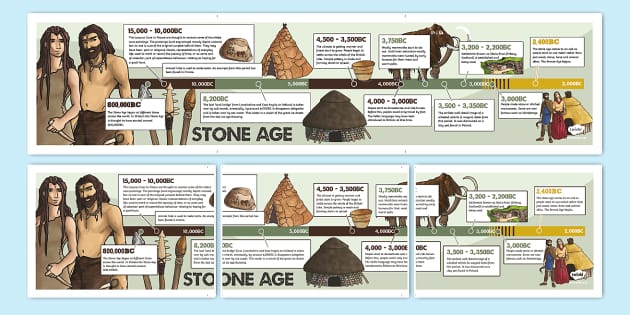
The transition to the Bronze Age, characterized by the use of bronze (an alloy of copper and tin) for tools and weapons, typically began around 3,300 BCE in the Near East and spread outwards. The Iron Age, marked by the smelting of iron ore, followed later, generally starting around 1,200 BCE in the Near East.
However, and this is where it gets interesting (and perhaps a little ironic), not everyone transitioned at the same time. Think about it: while some parts of the world were already forging bronze swords, other communities were still perfectly content, and very effective, using their stone tools.
Some isolated communities continued to use stone tools for practical purposes for thousands of years after the widespread adoption of metalworking elsewhere. For example, some indigenous groups in Australia, for a long time, continued to rely heavily on stone tools, only encountering metal technologies through European colonisation much later in history. So, in a technical, albeit perhaps overly broad sense, the Stone Age could be argued to have persisted in certain pockets of the world until relatively recently.
But generally, when we talk about the end of the Stone Age in a broad historical context, we’re looking at the period when metalworking became the dominant technology. So, for most of the world, we’re talking about the end of the Neolithic period, around 2,000 BCE, marking the beginning of the Bronze Age as the dominant force.
The Takeaway: A Very, Very Long Time
So, to circle back to our original question: How long did the Stone Age last? If we’re talking about the entire span, from the first chipped stone tool to the widespread adoption of metal, it’s an incredible stretch of time: from around 3.3 million years ago to roughly 2,000 BCE. That’s over 3 million years of human development, innovation, and survival, all fundamentally linked by the humble, yet revolutionary, stone tool.
It’s a humbling thought. Our entire recorded history, the rise and fall of empires, the invention of the internet – it all fits into the tail end of the Stone Age’s existence. It really puts our fleeting human lifespans into perspective, doesn’t it?
So, the next time you pick up a smooth pebble on the beach, or even just admire a well-crafted piece of modern technology, take a moment. Remember Grunk and Flit, and the incredible journey of our ancestors. The Stone Age wasn’t just an era; it was the foundation upon which everything else was built. And that, my friends, is pretty darn monumental.

