How Long Can Red Wine Stay Open
Ah, red wine. The sophisticated sip. The cozy companion. It’s the drink that transforms a Tuesday night into a mini-vacation. But then comes the question, the one that haunts every wine lover’s cooler: how long can this glorious nectar stay open?
Let’s be honest, we’ve all been there. You open a beautiful bottle. You savor a glass. Then life happens. The dog needs a walk. The kids demand snacks. Or maybe you just… get full. And that perfectly good wine is left to its own devices.
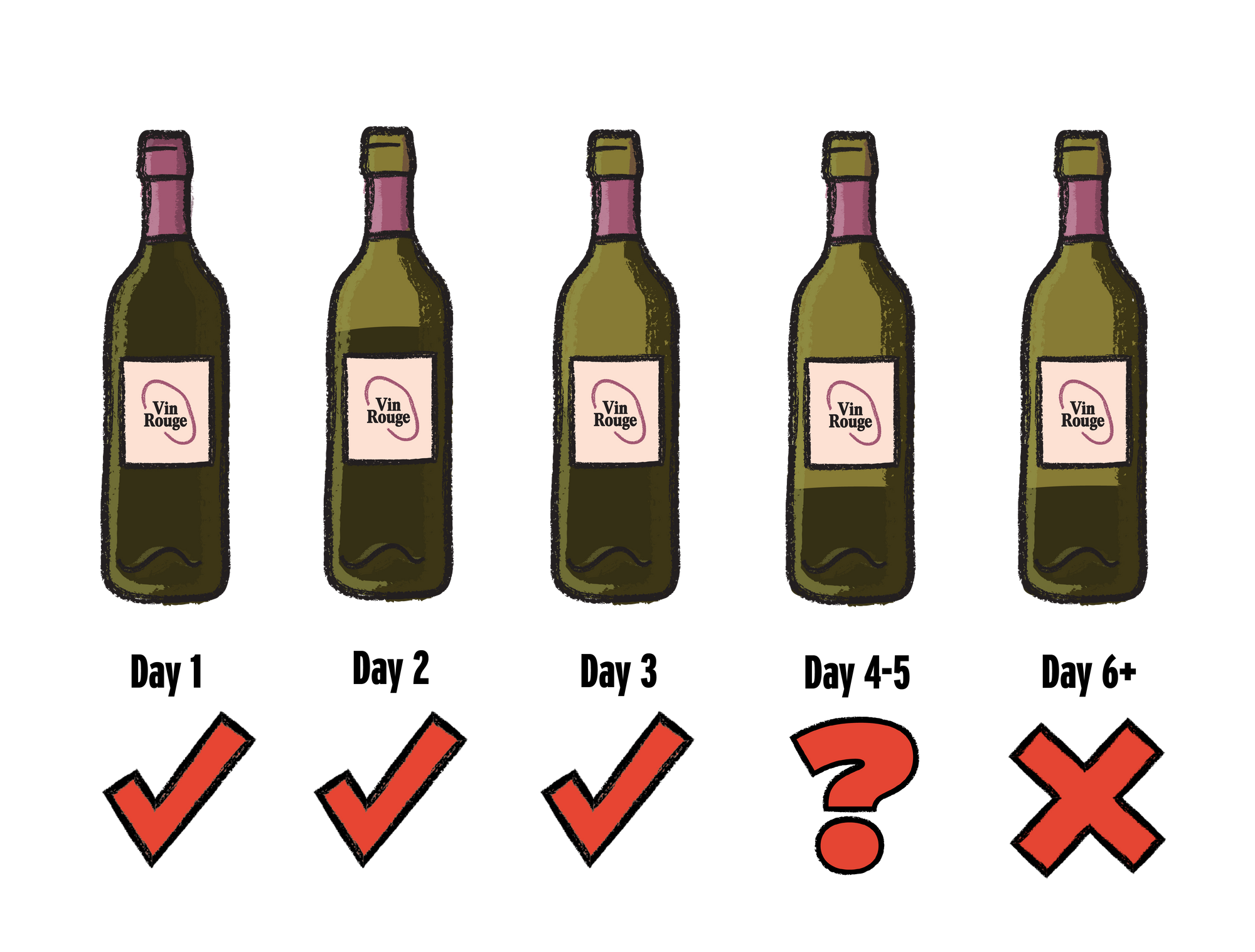
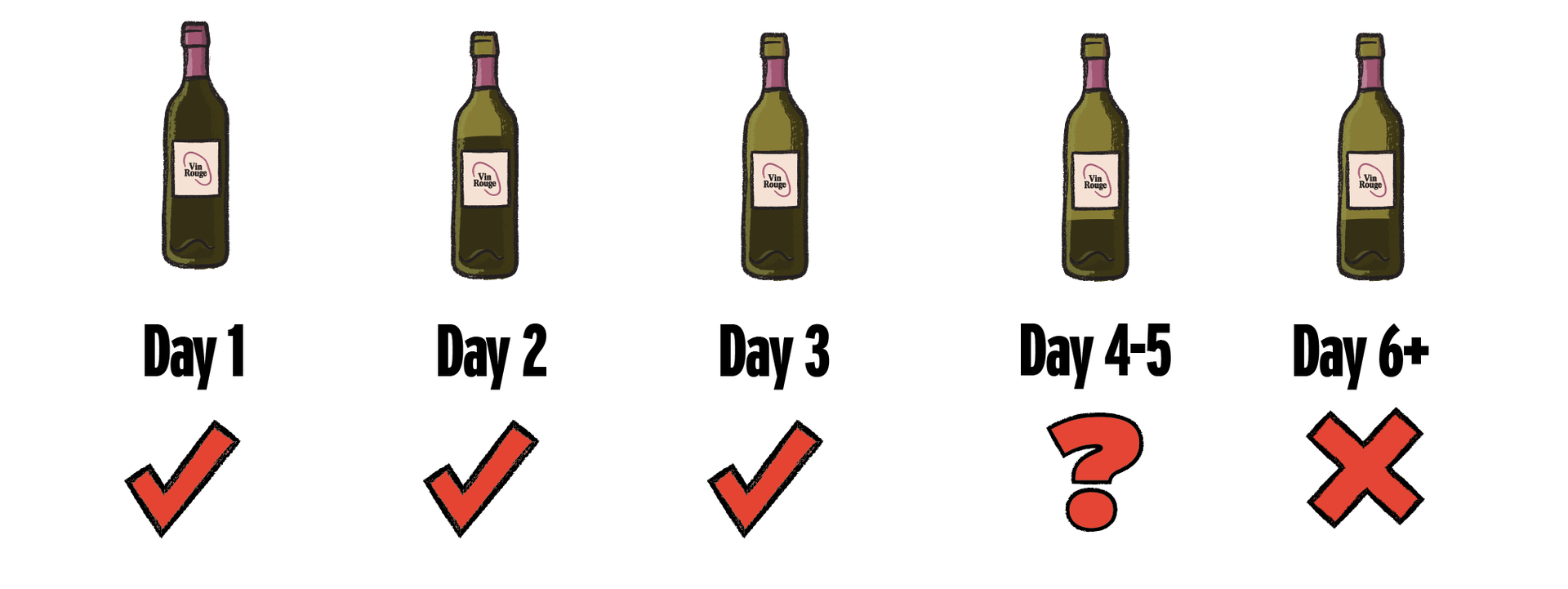
The official advice is usually quite stern. Three to five days, they’ll tell you. Maximum. But I have a confession. A rather unpopular opinion, perhaps. I believe red wine can hang around a bit longer.
Must Read
Think about it. That first glass is pure bliss. The second? Still pretty darn good. By the third glass, maybe you’re starting to notice a subtle change. But is it ruined? Is it ready for the drain? I think not.
My personal philosophy is a little more forgiving. We’re talking about flavor evolution, not a rapid descent into vinegar-ville. It’s a gentle transformation, like a wise elder gaining new perspectives.
Consider the science, in the simplest terms. Oxygen is the culprit. It’s the wine’s frenemy. A little bit of air is good for opening up the flavors. Too much, and it starts to taste… well, less delightful.
But “less delightful” is subjective, isn’t it? What one person finds a bit tired, another might find mellowed. A softened tannin here, a deeper earthiness there. It’s like re-listening to your favorite song with slightly different headphones.
Now, I’m not advocating for drinking wine that smells like a science experiment gone wrong. There are limits, of course. If it smells like nail polish remover, it’s probably time to say goodbye.
But for those bottles that are just… there, a few days after opening, let’s explore the possibilities.
My first strategy is simple: proper storage. This is key, even for my more lenient approach. Put the cork back in. Yes, the actual cork. Or better yet, a wine stopper. Something to create a bit of a seal.
Then, refrigerate it. Even your robust reds benefit from a cool environment. It slows down the oxidation process. Think of it as putting the wine in a gentle time-out. This buys you precious extra hours, even days.
So, how long can that open red wine really stay out? Let's break it down, with a wink and a nod.
The Light-Bodied Reds
Think your lighter Pinot Noirs or Gamays. These are the delicate flowers of the red wine world. They’re more sensitive to oxygen’s advances.
Officially, you’ve got maybe 2-3 days. But if you’ve corked it well and popped it in the fridge, I’ve found a slightly past its prime Pinot can still be quite pleasant on day 4. It might lose some of its bright fruit, sure. But it might gain a lovely, subtle mushroom note.
This is where the "unpopular opinion" really kicks in. Is a slightly less fruity Pinot bad? Or is it just… different? I lean towards different. A chance for new appreciation.

The Medium-Bodied Friends
This category is where my generosity really shines. Think Merlots, Sangiovese, or even a younger Cabernet Franc. These wines have a bit more backbone.
Three to five days is the standard decree. But with good sealing and refrigeration, I’ve pushed this to a solid 5-7 days. And I've lived to tell the tale!
By day six, the vibrant cherry notes might have mellowed into something more like dried fruit. The tannins might feel a touch smoother. This is often still a perfectly enjoyable drinking experience, especially if you’re not comparing it to a freshly opened bottle.
It’s like revisiting an old friend. They’ve changed a bit, but the core of who they are remains. And sometimes, those subtle shifts are actually quite interesting.
The Bold and the Beautiful
Here we’re talking about your heavy hitters. Your Cabernet Sauvignons, your Syrahs, your Malbecs. These are the wines built to last.
They have more tannins and structure, which act as natural preservatives. The usual recommendation is 3-5 days, but I’m feeling particularly bold here.

With excellent sealing and refrigeration, I’ve seen these wines hold up surprisingly well for up to a week, sometimes even 10 days. They might not have the same punch of fruit, but they can develop wonderfully complex tertiary aromas.
Think leather, tobacco, even hints of dark chocolate. These are the flavors that come with age and a little bit of oxygen exposure. It’s not degradation; it’s transformation.
This is where I feel most vindicated. These big reds are robust. They have resilience. They deserve a little more faith.
“Some wines are like old jazz records. A little crackle adds character.”
Now, let’s talk about those moments when the wine is definitely past its prime for sipping. Don't despair!
That slightly oxidized red wine is perfect for cooking. Seriously. It adds depth to stews, richness to sauces, and a delightful tang to marinades.
That bottle you thought was a goner? It can become the secret ingredient in your bolognese. The backbone of your coq au vin. The unsung hero of your beef bourguignon.

It’s a win-win. You get to use up your wine, and your food tastes amazing. It’s the circle of wine life, really.
So, next time you find yourself with a half-finished bottle, don’t immediately succumb to the pressure of rapid consumption. Assess the situation.
Does it smell… off? Like a forgotten gym sock? Then perhaps it’s time. But does it smell merely… mellowed? Does it still have some life in it?
Trust your nose, of course. But also, trust your gut. And maybe, just maybe, embrace the slightly older, wiser red wine. It might surprise you.
My unpopular opinion? Red wine is more resilient than we give it credit for. With a little care and a lot of willingness to explore, that open bottle can still offer delightful sips for longer than the experts would have you believe.
So go forth, open that bottle, and enjoy the journey. Even if the journey takes a few extra days. Cheers to that!