How Hard Is It To Learn Greek Language
Ever stared at a menu in a Greek restaurant and wondered what all those amazing-sounding words mean? Maybe you've stumbled across some ancient Greek myths and felt a pang of curiosity about the language that birthed them. If so, you're not alone! The Greek language has a certain charm, a historical weight, and a musicality that can draw you in. But then comes the big question: how hard is it, really, to learn it?
Let's be honest, no language is a walk in the park. But Greek? It's more like a delightful hike with some surprisingly interesting sights along the way. It's not about conquering a mountain; it's about exploring a vibrant, ancient landscape that's still very much alive today.
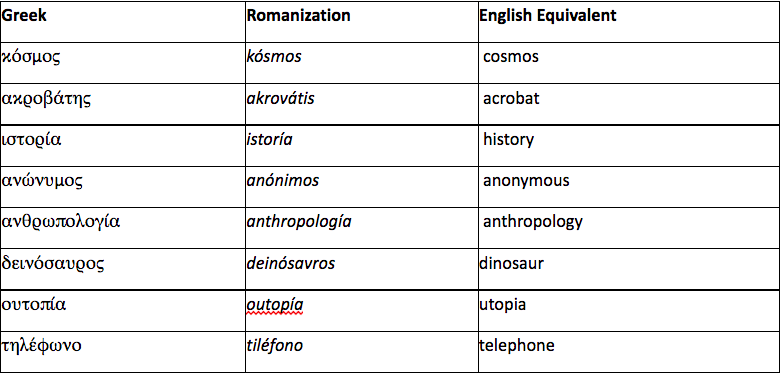
Think of it this way: learning Greek is like unlocking a secret code. You get to see the roots of so many words we use every single day in English. Words like 'telephone,' 'biology,' 'democracy,' and 'philosophy' all have their origins in Greek. It’s like finding out your favorite song has a hidden, even cooler backstory!
Must Read
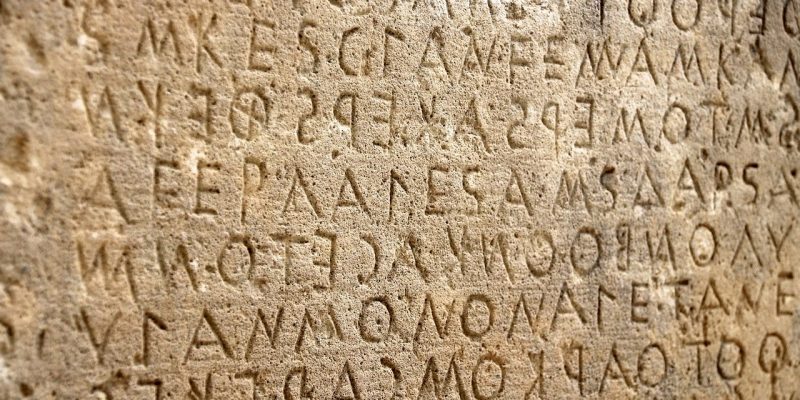
One of the first things you'll notice is the alphabet. It looks a bit different, right? We've got Alpha, Beta, Gamma – sound familiar? It’s the ancestor of our own alphabet. It might take a little practice to get your head around the new characters, but once you do, it’s like gaining a superpower. Suddenly, you can read signs, understand snippets of song lyrics, and feel a connection to centuries of written history.
The Greek alphabet has 24 letters. Some look familiar, like A (Alpha), B (Beta), E (Epsilon), K (Kappa), and O (Omicron). Others are a little quirky, like Δ (Delta) or Σ (Sigma). But don't let them scare you! They’re not hieroglyphs; they’re just a different way of writing sounds we’re already used to.
The pronunciation is generally pretty straightforward. Once you learn how each letter sounds, you can usually sound out a word. There aren't many silent letters or tricky, unpredictable pronunciations like you find in some other languages. It’s refreshingly honest in its sounds.
Now, let's talk about grammar. This is where things can get a bit more... interesting. Greek has something called "cases." Don't panic! It just means that the ending of a noun, adjective, or pronoun can change depending on its job in the sentence. Think of it like giving words little outfits for different occasions.
So, you'll encounter the Nominative case (the subject), the Genitive (possession), the Accusative (the direct object), and the Vocative (when you're talking to something). It might seem like a lot at first, but it actually helps make the sentence structure quite clear and flexible.
It’s a bit like playing with building blocks. Each word is a block, and the cases tell you how to connect them. This system, while different from English, can be incredibly logical once you get the hang of it. It’s a different way of thinking about how words relate to each other, and that’s a fun mental workout.
Then there are the verbs. Greek verbs are like master actors with many roles. They change their form to tell you who is doing the action (I, you, he/she/it, we, they), when it’s happening (past, present, future), and even how certain the speaker is about it (indicative, subjunctive). This is called conjugation, and it’s a big part of the language.
While it might sound daunting, these verb endings actually pack a lot of information into a single word. Instead of needing lots of extra words to explain who did what and when, Greek often does it with a neat little ending. It’s efficient and, dare we say, elegant.
Think of it as a language that loves to be precise. It tells you a lot with fewer words. It’s like a well-crafted sentence where every word has a purpose, adding to the richness of the meaning.
But here’s the really exciting part: the rewards! When you start to understand Greek, you're not just learning a language; you're gaining access to an incredible cultural heritage. You can read the original words of the great philosophers like Plato and Aristotle. You can dive into the epic poems of Homer without relying solely on translations, which can sometimes lose the original flavor.
Imagine reading the words that shaped Western thought and literature, as they were first written! It’s like having a direct line to some of the most brilliant minds in history. That’s a pretty powerful feeling.
And what about modern Greek? It’s a living, breathing language spoken by millions in Greece and Cyprus. It’s the language of vibrant music, delicious food, and warm hospitality. Learning it opens doors to genuine connections with people.

You can have real conversations, understand jokes, and truly immerse yourself in the culture. It's one thing to visit Greece as a tourist, and quite another to be able to chat with locals in their own tongue. That’s where the magic truly happens.
The vocabulary might seem challenging at first, with many words that don't sound like anything in English. But remember those roots we talked about? Many words do have familiar links, and the more you learn, the more you'll start to spot them. It's like finding hidden Easter eggs in a game.
And let's not forget the sheer fun of it. Learning a new language is like exercising your brain in a whole new way. It keeps your mind sharp and expands your perspective. Greek, with its unique sounds and structures, is a particularly fun workout.
There are so many resources available today to help you learn. Apps like Duolingo offer playful introductions. Online tutors can provide personalized guidance. Even just listening to Greek music or watching Greek movies with subtitles can be a fantastic way to get a feel for the rhythm and sounds of the language.
So, how hard is it to learn Greek? It’s a challenge, for sure. It requires dedication and practice. But it’s also incredibly rewarding and, for many, surprisingly fun. It’s not about insurmountable difficulty; it’s about embracing a journey into a language that is both ancient and modern, profound and playful.
If you’ve ever felt that pull of curiosity, that whisper of wonder about the Greek language, don't let the perceived difficulty hold you back. Take a small step. Learn the alphabet. Try a few basic phrases. You might just discover that this "hard" language is, in fact, one of the most enchanting adventures you can embark on.
Think of the satisfaction of understanding a sign in Athens, or ordering your souvlaki in perfect Greek. It’s about more than just words; it’s about connection, history, and the pure joy of discovery. So, is Greek hard? Perhaps. But is it worth it? Absolutely!
The journey might have its twists and turns, but the destination – a deeper understanding of a world-changing language and culture – is something truly special. So, why not give it a try? You might surprise yourself with how much you enjoy the ride.