How Do You Play F On Guitar

Ever found yourself tapping your foot to a catchy tune, only to realize your guitar is staring back at you, silent and uncooperative? For many budding guitarists, that feeling of helplessness hits hard when a song calls for that elusive, yet oh-so-important chord: the F major. It’s the gateway chord to so many fantastic songs, from classic rock anthems to mellow folk ballads. Learning to play the F chord is like unlocking a secret level in your guitar-playing journey. It might seem a little intimidating at first, a tiny hurdle that feels like a mountain, but trust me, it’s a journey worth embarking on. The satisfaction of finally nailing it and being able to strum along to your favorite tracks is immense, and it opens up a whole new world of musical possibilities.
The Mighty F Major: More Than Just a Chord
The F major chord isn't just another collection of notes; it's a fundamental building block. Think of it as the bedrock upon which countless melodies and progressions are built. Why is it so popular? Because it's incredibly versatile and sounds fantastic in a vast array of musical styles. Whether you're aiming for the driving rhythm of rock and roll, the sweet, simple strumming of folk, or the soulful progressions of blues, the F major chord is likely to be there, playing a crucial role.
The benefits of mastering this chord are plentiful. Firstly, it dramatically expands your repertoire. Suddenly, songs that were previously out of reach become accessible. You'll find yourself able to play along with many more popular songs, which is incredibly rewarding and a fantastic way to improve your timing and musicality. Secondly, it's a stepping stone to understanding more complex chord shapes and fingerings. The F chord often introduces the concept of a barre chord, a technique that might feel alien at first but is absolutely essential for playing in different keys and unlocking even more chords. Once you conquer the barre, the fretboard opens up to you in a whole new way.
Must Read
Furthermore, learning the F chord builds finger strength and dexterity. Your fingertips might feel a little sore initially, but this is a good thing! It’s your muscles developing the strength and precision needed to form clear, ringing notes. This improved dexterity will translate to playing other chords more easily and navigating the fretboard with greater confidence.
Let's Get Your Fingers Movin': The Classic F Chord Shape
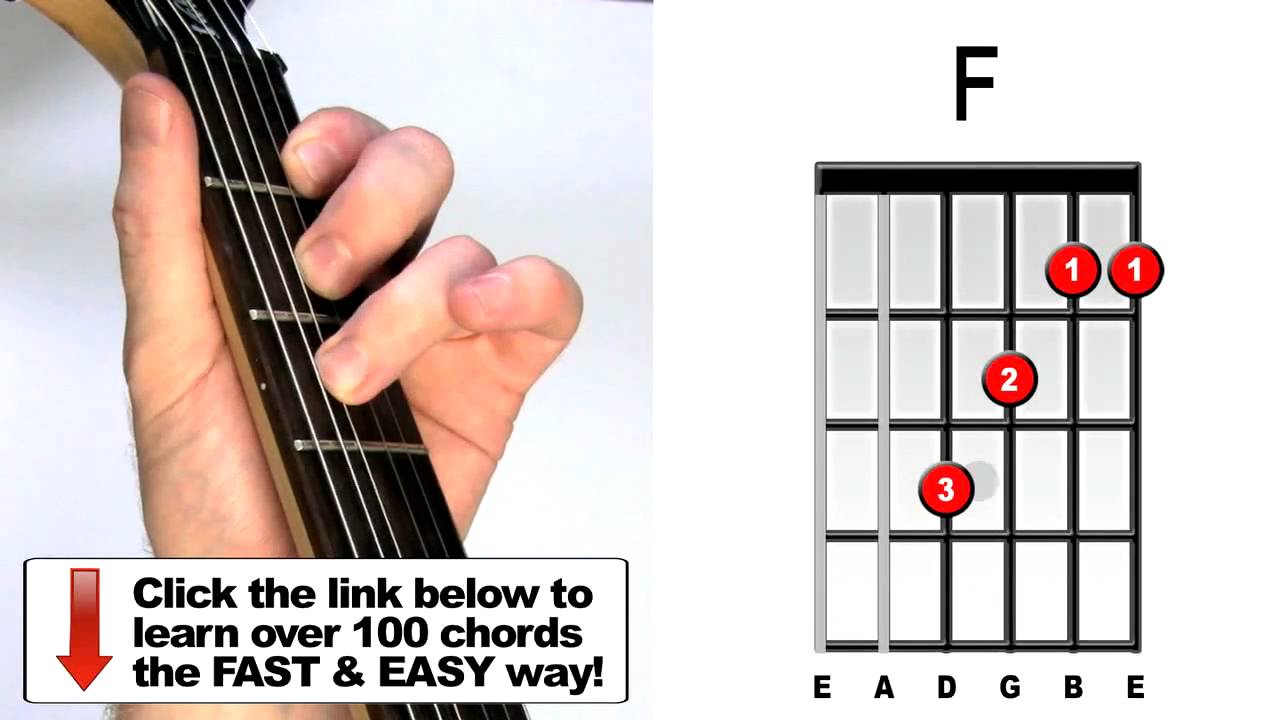
So, how do you actually play this magical chord? The most common way to play an F major chord is as a barre chord. Don't let that word scare you! It simply means using your index finger to press down all six strings at a particular fret. For the F major chord, this is usually the first fret.
Here’s a breakdown:
- Index Finger: Place your index finger across the first fret, from the thickest string (the 6th string, low E) all the way to the thinnest string (the 1st string, high E). You want to press down firmly enough so that all six strings ring clearly when plucked. This is the barre part.
- Middle Finger: Place your middle finger on the 3rd string (G string) at the second fret.
- Ring Finger: Place your ring finger on the 5th string (A string) at the third fret.
- Pinky Finger: Place your pinky finger on the 4th string (D string) at the third fret.
The result? You should have your index finger barring the first fret, your ring finger on the A string at the third fret, your pinky finger on the D string at the third fret, and your middle finger on the G string at the second fret. Strum all six strings, and if you’ve done it right, you should hear that beautiful, bright sound of an F major chord!
Common Pitfalls and How to Overcome Them
It's completely normal if your first few attempts don't sound perfect. Here are some common issues and how to fix them:
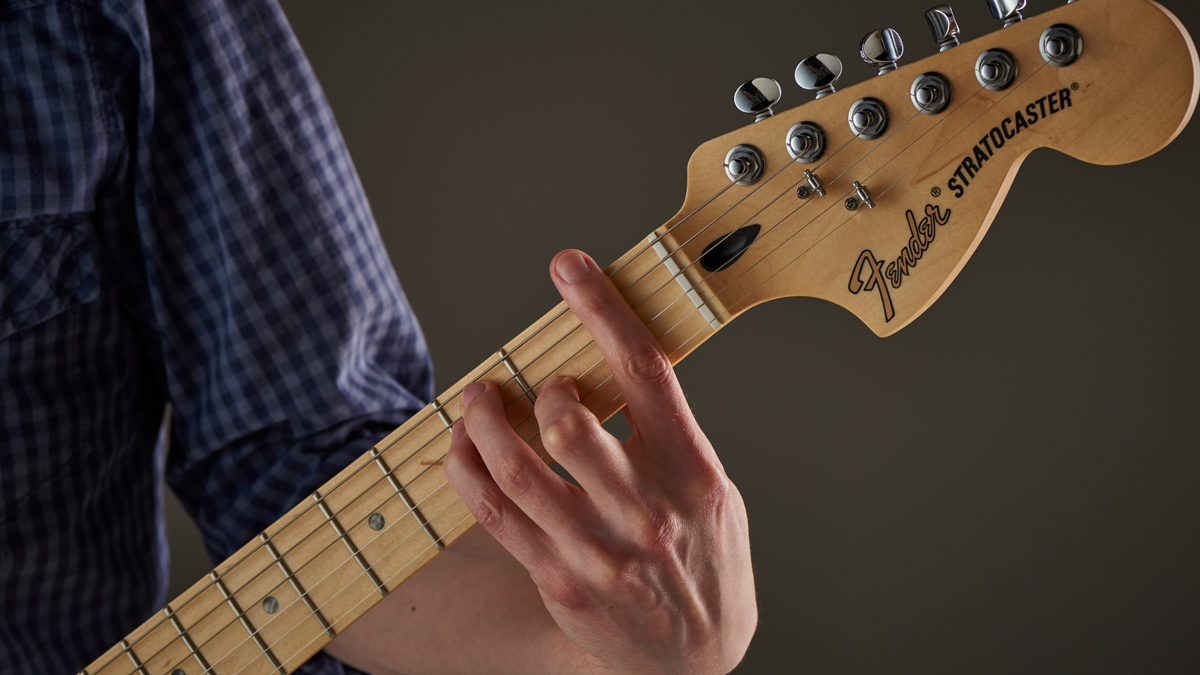
- Buzzing or Muffled Notes: This usually means you're not pressing down hard enough with your barre finger, or your fingers are touching adjacent strings. Try pressing down with more pressure, and ensure your barring finger is straight and not "curled."
- Sore Fingertips: This is a sign you're building up strength! Take short breaks, and try to focus on pressing just hard enough to get a clear note. Over time, your fingertips will toughen up.
- Difficulty Reaching: If the barre feels impossible, try slightly adjusting the angle of your index finger. Sometimes, a slight rotation or ensuring your thumb is positioned correctly on the back of the neck can help.
Don't get discouraged! Every guitarist has been where you are. The key is consistent practice. Try to play the F chord for a few minutes every day. Focus on getting each note to ring out clearly before moving on to strumming the whole chord.
Beyond the First Fret: Variations to Explore
Once you're comfortable with the F barre chord at the first fret, you'll discover that this shape can be moved up and down the fretboard to play other major chords! For instance, moving this exact shape up two frets will give you a G major chord. This is the magic of barre chords – one shape unlocks many chords.

There are also open chord versions of F major that don't require a barre. One common open F chord uses the following finger placement:
- Index Finger: 1st fret on the B string (2nd string).
- Middle Finger: 2nd fret on the G string (3rd string).
- Ring Finger: 3rd fret on the low E string (6th string).
- Strum from the 3rd fret downwards. Avoid playing the high E string (1st string) and the D string (4th string) for a cleaner sound, or aim to mute them with your other fingers.
While this open version can be easier for some beginners, the barre chord is essential for long-term guitar playing. Mastering the barre at the first fret is a crucial skill that will serve you incredibly well.
So, embrace the challenge! The F major chord is your ticket to a world of musical expression. With a little patience, persistence, and a dash of fun, you’ll be strumming along to your favorite tunes in no time. Happy playing!