How Do The Brakes On A Car Work

Ever slammed on your brakes and felt that satisfying, stomach-flipping sensation of coming to a halt? It’s like a superhero cape of stopping power, and you probably haven’t given it much thought beyond “yay, no more crashing!” But guess what? Those humble brakes on your car are actually performing a tiny miracle every single time you use them. They’re the unsung heroes of your daily commute, the guardians of your loved ones, and frankly, the reason you’re not currently playing bumper cars with the entire planet.
So, how do these magical stopping devices actually work? It’s not rocket science, but it’s definitely clever engineering. Think of it like this: when you want to stop, you’re basically asking your car to politely, but firmly, say “nope!” to the idea of moving forward. And the brakes are the ones who deliver that message. They’re like the car’s super-strong arms, grabbing onto something and refusing to let go.
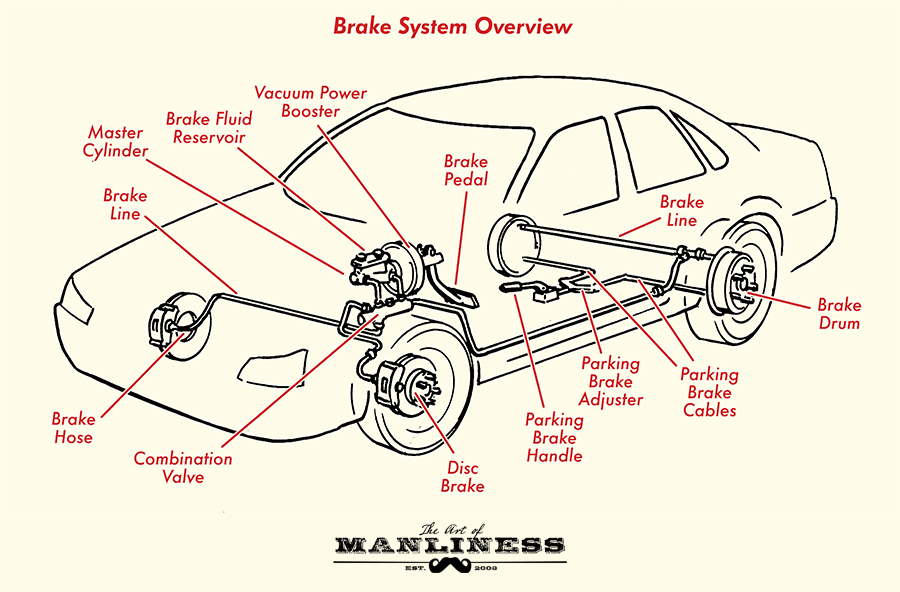
The whole process starts with your foot. That’s your command center, your tiny little pilot’s seat for decision-making. When you press down on that brake pedal, you’re not directly engaging the brakes themselves. Oh no, that would be too simple! Instead, you’re pushing on a special lever, a sort of grumpy gatekeeper, that sets a whole chain of events in motion. This pedal is like the secret handshake that tells the braking system, "Okay, team, it's go-time!"
Must Read
That pedal is connected to a rather important fellow called the brake booster. Imagine this guy is the car’s personal trainer, giving your foot’s gentle nudge a massive power-up. It uses a bit of vacuum from the engine (which is always chugging along, creating its own little world of air pressure) to multiply the force you’re applying. So, your dainty foot-press becomes a mighty shove, all thanks to this helpful assistant. It’s like getting a Hulk-sized hand to help you push that brake pedal!
Next up is the master cylinder. This is where things get a bit liquid. Inside this cylinder are little pistons, like tiny plungers, and they’re sitting in a special fluid called brake fluid. Think of brake fluid as the car’s super-slippery, ultra-powerful messenger. When the brake booster pushes the master cylinder’s pistons, they force this brake fluid through a network of tiny, metal highways – your brake lines.
These brake lines are like a circulatory system for stopping power, snaking their way from the front of the car all the way to the wheels. The brake fluid, being pretty incompressible, doesn’t mess around. It faithfully transmits the pressure from the master cylinder to wherever it needs to go. It's the ultimate in efficient communication, ensuring every part of the braking system gets the memo instantly.

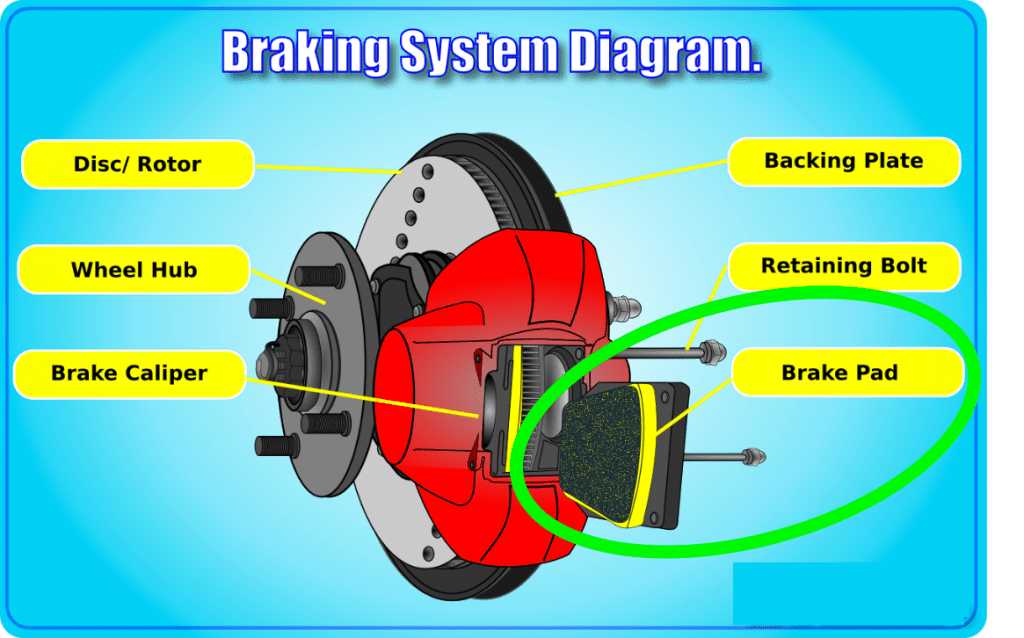
Now, at each wheel, you've got the real stars of the show: the brake calipers. These are like the car’s strong, determined hands, ready to clamp down with all their might. Inside each caliper, there are more little pistons, just waiting for that surge of brake fluid. When the fluid arrives, it pushes these pistons outwards, squeezing with incredible force.
And what are these calipers squeezing? That, my friends, is where the magic of friction comes in! Attached to each wheel’s hub is a large, spinning disc called a brake rotor. Think of this rotor as a smooth, metallic plate that’s always going for a spin with the wheel. The brake calipers, when activated, have special pads called brake pads attached to them.
These brake pads are made of a tough, grippy material that just loves to hug and slow down spinning things. So, as the brake fluid pushes the calipers, the brake pads get pressed firmly against the spinning brake rotor. It’s like giving the rotor a super-tight handshake, over and over again, very, very quickly.
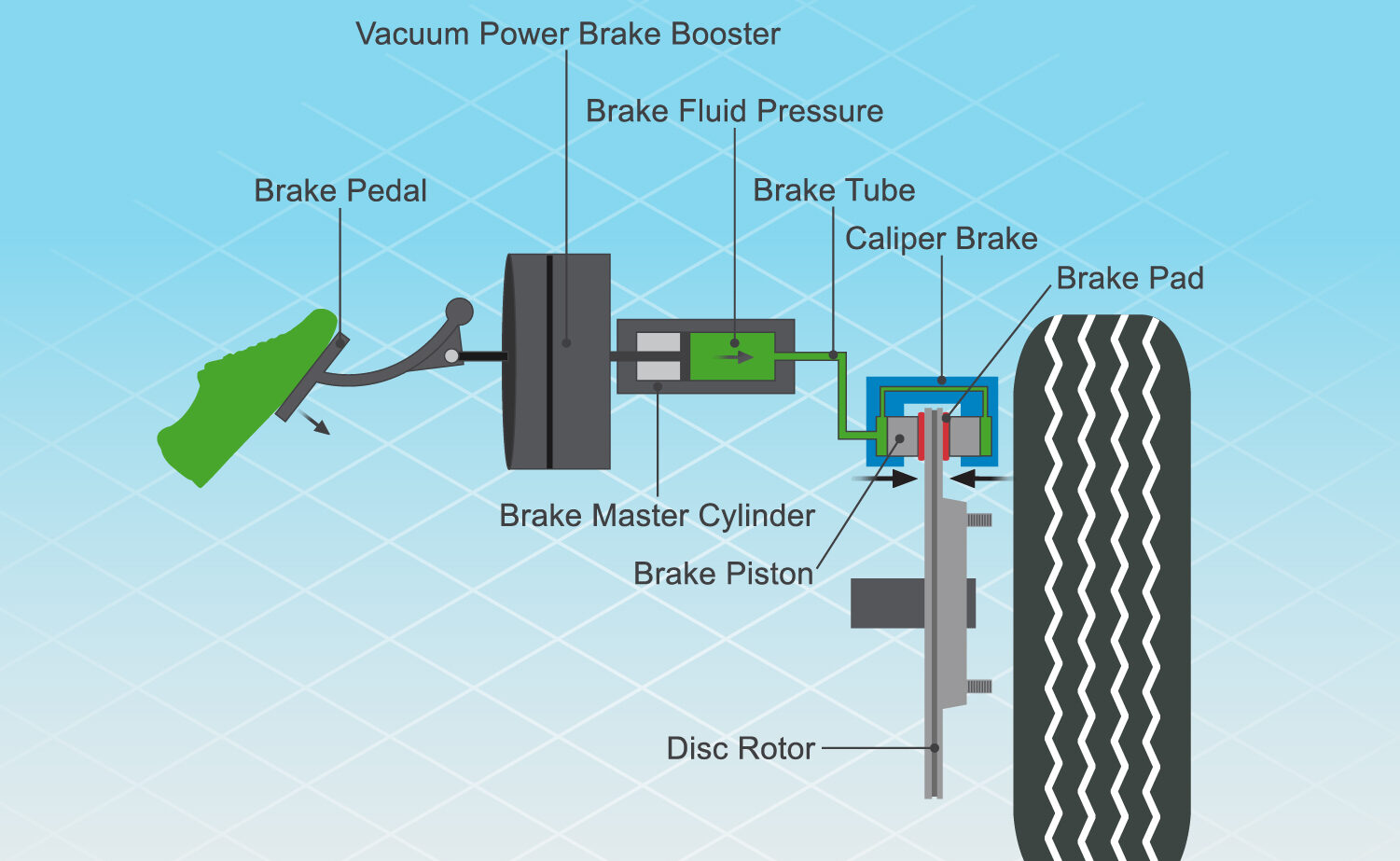
This intense friction between the brake pads and the brake rotor is what actually slows down your car. It’s a battle between motion and resistance, and the brakes are always winning that fight. All that spinning energy from the wheels is converted into heat, and then dispersed, leaving your car to gracefully decelerate. It’s the ultimate demonstration of “stop complaining and just stop!”
Imagine trying to stop a spinning bicycle wheel by rubbing your hand on the tire. It’s not the most efficient, is it? Well, the brake system is like having industrial-strength hands designed specifically for that job, and they do it with an astonishing amount of force. It’s friction, but with superpowers!
Now, there are a couple of main flavors of brakes out there: disc brakes, which we just described with the rotor and caliper hug, and older drum brakes. Disc brakes are the cool kids on the block, found on most modern cars, especially on the front wheels where most of the stopping happens. They’re generally more powerful and better at cooling down, which is important when you’re generating a lot of heat.
Drum brakes are a bit more like a metal drum that the brake shoes (think of them as curved brake pads) push outwards against the inside of. They’re like a giant internal hug. While still effective, they can sometimes get a bit hotter and less efficient than disc brakes, especially during prolonged braking. But hey, they’ve been getting the job done for a long time!

What about those times you have to slam on the brakes REALLY hard? That’s where anti-lock braking systems (ABS) come in. Without ABS, if you stomp on the brakes too hard, your wheels can lock up and stop spinning altogether. This is bad because, without the wheels spinning, your tires lose their grip on the road, and you end up skidding.
ABS is like having a super-fast, highly skilled driver’s assistant for your brakes. It uses sensors to detect if a wheel is about to lock up. If it does, ABS rapidly pulses the brakes on that specific wheel – on and off, on and off, many times a second. It’s like a rapid-fire little tap-dance on the brakes, allowing your tires to keep rotating just enough to maintain steering control. You might feel a pulsing sensation in your brake pedal when ABS is working, which is totally normal!
So, the next time you’re cruising down the road, remember the incredible journey your brake pedal initiates. It’s a symphony of hydraulics, mechanical action, and a whole lot of friction, all working together to keep you safe. It’s a testament to human ingenuity, allowing us to zip around in our metal boxes with a reasonable expectation of being able to stop when we need to. Pretty cool, right?

It’s the unsung hero of every journey, the silent guardian, the reason your pizza delivery guy can actually stop in time. These brakes are working tirelessly behind the scenes, waiting for your command. So, give them a little mental nod of appreciation next time you bring your ride to a smooth, controlled halt. They deserve it!
From your foot’s gentle pressure to the powerful clamp of the brake pads, it’s a dance of physics and engineering designed for one crucial purpose: keeping you safe. It's a fascinating system, really, and it's amazing how reliably it performs. It’s the difference between a smooth stop and a runaway adventure, and we should all be thankful for that.
So there you have it! A peek behind the curtain of your car’s stopping power. It’s a simple concept at its heart – turning motion into heat through friction – but the execution is pure genius. And honestly, who doesn't love a bit of well-engineered magic happening every time they hit the road?
It's not just about stopping; it's about control. Your brakes are the ultimate expression of that control.