
How Do I Test A Starter Relay
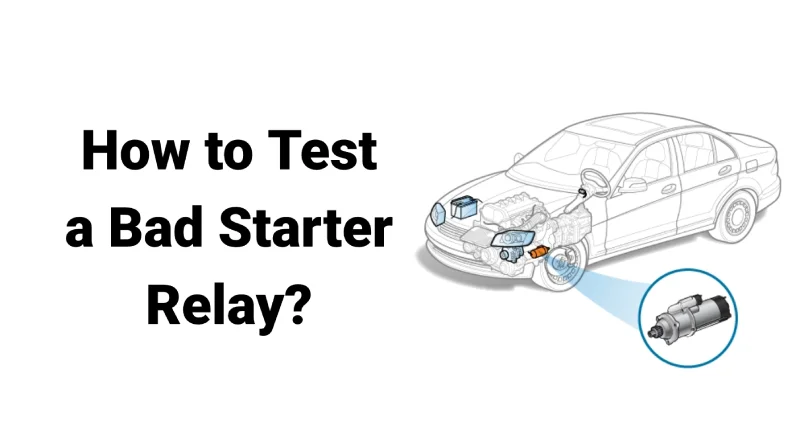
Ever stare at your car, ready to embark on a grand adventure, only to have it respond with a disheartening click instead of the roar of the engine? It's a moment that can put a damper on even the sunniest of days. And more often than not, lurking behind that stubborn silence is a tiny, unsung hero (or villain, depending on its mood): the starter relay.
So, what exactly is this mysterious little box? Think of it as the gatekeeper for your engine's big start. When you turn the key, a small electrical signal goes out. But the starter motor itself needs a much bigger jolt of power. The starter relay is the intermediary, the middleman who says, "Alright, little signal, I hear you! Time to unleash the full power for the starter!" It's a clever piece of engineering, essentially a robust switch that’s activated by a low-current signal to handle a high-current load. Pretty neat, right?
Now, if your car is playing coy and just clicking or not doing anything at all when you try to start it, the starter relay is definitely a prime suspect. But how do you go about figuring out if this little guy is the culprit? Well, grab a comfy seat, maybe a cup of your favorite beverage, because we're about to dive into the world of starter relay testing. Don't worry, it's not as intimidating as it sounds!
Must Read
Why Bother Testing It?
You might be thinking, "Can't I just replace it and see what happens?" Sure, you could. But that's like randomly guessing the password to a vault. It might work, but it's way more efficient (and often cheaper!) to figure out what's actually going on. Testing helps you confirm the problem. It's like being a detective for your car, gathering clues to solve the mystery of the no-start.
Plus, sometimes the issue isn't the relay itself, but something feeding it power or the signal it's supposed to receive. Testing can point you in the right direction, saving you from buying parts you don't need. It’s all about smart troubleshooting!
Let's Get Our Hands Dirty (Figuratively, Mostly)
Before we get too deep, a quick safety PSA: always disconnect your car's battery before messing with electrical components. Seriously. This isn't just a suggestion; it's a rule. You don't want to accidentally zap yourself or short something out. Safety first, always!
So, where do you find this little starter relay? It's usually tucked away in the fuse box, often under the hood, but sometimes it's inside the cabin. Consult your car's owner's manual – it's your trusty guide to where all these little components live.

The Click Test: Listening for the Whisper
This is the simplest test, and sometimes, that's all you need. With the battery connected (remember, we'll disconnect it later for more in-depth stuff), have a friend try to start the car while you listen closely near the fuse box where the relay is located.
Do you hear a distinct click coming from the relay when the key is turned?
If you hear a solid click, that's a good sign! It means the relay is getting the signal and its internal mechanism is trying to do its job. This might point towards a problem with the starter motor itself, or maybe the connections to the starter.
If you hear no click at all, or maybe a weak, hesitant sound, then the relay is likely not receiving the signal, or it's failing to activate. This is where we might have a relay problem.
The Paperclip Trick (Handle with Extreme Care!)
Okay, this is where things get a little more hands-on, and you need to be extra careful. This method bypasses the relay to see if the starter motor can be activated directly. It's like giving the starter motor a direct phone call, skipping the switchboard operator.

First things first: disconnect the battery! Seriously, I can't stress this enough. Then, locate the starter relay. You'll need to pull it out of its socket. Most relays have a diagram on the side showing the terminals. You're looking for two large terminals and two smaller ones. The large terminals are the ones that connect the battery to the starter.
Grab a sturdy piece of wire or a paperclip (hence the name!) and bridge the two large terminals on the relay socket. Think of it as a temporary, direct wire. Once the battery is reconnected (carefully!), and your friend tries to start the car, if the starter motor whirs to life, then your original relay was indeed the problem.
Important caveat: This bypasses all safety features. Make absolutely sure the car is in neutral or park and the parking brake is engaged. And have your friend ready to turn the key only when you signal them. This is a quick test; don't leave it bridged for long!
Using a Multimeter: The Techy Approach
If you're feeling a bit more adventurous and have a multimeter handy, this is a more precise way to test. A multimeter is like a diagnostic tool that measures voltage, current, and resistance. It’s super handy for all sorts of car electrical issues.

Again, start by disconnecting the battery. Pull out the relay and identify the terminals. You'll typically have: * Battery terminal: Receives power from the battery. * Starter terminal: Sends power to the starter. * Ignition/Solenoid terminal: Receives the signal from the ignition switch (the small current). * Ground terminal: Connects to the chassis for a return path.
With the relay out, you can test the continuity of the internal switch. Connect the multimeter leads to the two large terminals (battery and starter). If the relay is good, you should get a reading that indicates continuity (a very low resistance, often represented by a "0.00" or a beep on some multimeters). If you get no continuity, the internal contacts are likely fried.
Then, you can test if the coil inside the relay is working. Connect your multimeter to the two smaller terminals (ignition and ground). Then, apply a 12V source (like a separate battery, or even carefully use your car's battery with jumper wires, ensuring correct polarity!) to these terminals. You should see a change in resistance or hear a click as the coil energizes.
Consulting your car's service manual is a goldmine here, as it will show you the specific pinouts for your relay and the expected resistance values. It’s like having the secret handshake for your car’s electrical system.
When It's Not the Relay
What if all your testing points away from the starter relay? Don't despair! As we touched on, the problem could be elsewhere.
Bad Battery: A weak or dead battery might not have enough juice to even activate the relay properly, or to power the starter.

Faulty Ignition Switch: The signal might not be reaching the relay in the first place if the ignition switch is kaput.
Wiring Issues: Corroded wires, loose connections, or a broken wire between the ignition switch, the relay, and the starter can all cause starting problems.
Starter Motor Itself: The relay might be doing its job perfectly, but the starter motor could be worn out or have a bad solenoid.
Fuse Problems: Even though we're talking about a relay, there's often a fuse protecting the starter circuit. A blown fuse can stop everything in its tracks.
Testing the starter relay is a fantastic first step in diagnosing a no-start condition. It’s a relatively simple component, and by understanding how it works and how to test it, you can often pinpoint the problem yourself. It’s a small victory that can save you time, money, and the frustration of a car that won’t wake up. So next time you hear that dreaded click, you'll know exactly where to start looking!

