How Do I Invest In Ftse 100
So, picture this: my mate Dave, bless his cotton socks, decided he was going to get rich quick. You know the type. He’d been scrolling through some online forum, the kind where everyone sounds like Warren Buffett but probably just owns a lot of Beanie Babies. Anyway, Dave declared, with the conviction of a man who’d just discovered the secret to cold fusion, that he was going to invest in the FTSE 100. My initial thought? “Dave, are you sure you don’t mean Fiji 100? Because that sounds like a more plausible holiday destination than financial genius.”
He looked at me, slightly offended. “No, no, it’s the FTSE 100! The big companies! The ones that make… stuff!” His eyes were wide with the thrill of impending wealth. I chuckled, patting him on the shoulder. “Right, Dave. ‘Stuff’ investors. Sounds like a solid strategy.” But then it hit me, not the ‘get rich quick’ part, but the genuine curiosity. How does one actually invest in the FTSE 100? It sounds so… official. Like something you’d only do if you wore a pinstripe suit and had a secret handshake. But is it really that complicated? Let’s dive in, shall we?
So, the FTSE 100. What is this magical index, anyway? Think of it as a big, beefy list of the 100 largest companies by market capitalization that are listed on the London Stock Exchange. We’re talking household names, the giants of British industry. Companies like Tesco, BP, Unilever, HSBC – the sort of businesses that are so ingrained in our daily lives, you probably don’t even think about them as investments. They’re just… there. Making biscuits, powering our homes, letting us borrow money for that slightly-too-expensive car. And when these big guns do well, the FTSE 100 generally goes up. Simple, right? Well, mostly. The stock market has a funny way of throwing curveballs, doesn't it?
Must Read
Now, Dave’s initial idea was a bit… abstract. He wasn’t entirely clear how he was going to "invest in" it. Was he going to buy a little piece of each of the 100 companies? Because that sounds like a lot of paperwork, and frankly, a recipe for a very diluted portfolio. The good news is, there are much more streamlined ways to get your fingers in the FTSE 100 pie. You don’t need to be a finance whizz, although a basic understanding never hurt anyone. (But then again, neither did a good cup of tea, and we all know how to make that, right?)
The Direct Route? Not Quite
Okay, so let's address the elephant in the room. Can you literally just ring up the FTSE and say, "Hi, I'd like to buy a tiny fraction of all of you"? Unfortunately, no. The FTSE 100 isn't a company you can buy shares in directly. It’s an index, a benchmark. It represents the collective performance of those 100 companies. So, Dave’s initial thought was, shall we say, a conceptual misunderstanding. It’s like wanting to invest in "the weather" – you can’t buy shares in sunshine, but you can invest in companies that benefit from sunny days, like ice cream makers or solar panel manufacturers. See the difference?
This is where most people get a bit confused. They hear "invest in the FTSE 100" and think it means buying shares of the FTSE 100. But the reality is you invest in things that track the FTSE 100. Think of it as wanting to follow a recipe. You don't buy a piece of the cookbook itself, you buy the ingredients and follow the instructions to make the dish. The FTSE 100 is the recipe, and we're looking for the ingredients (and the cooking method!) to get us there.
Enter the Heroes: Funds and ETFs
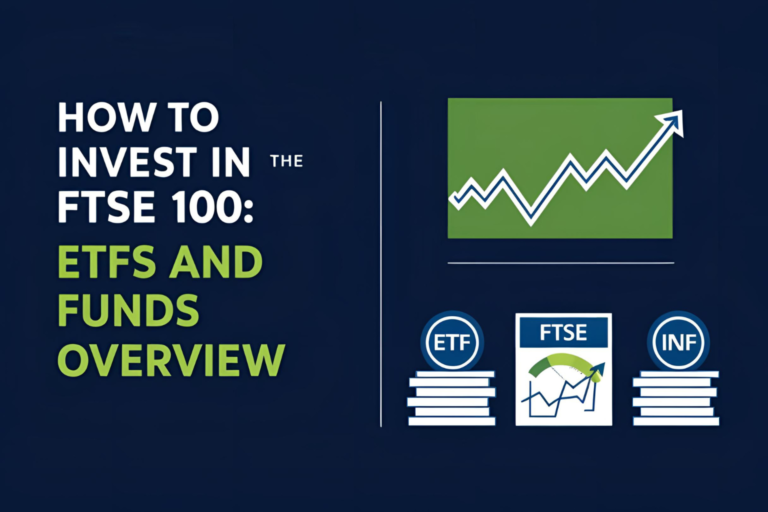
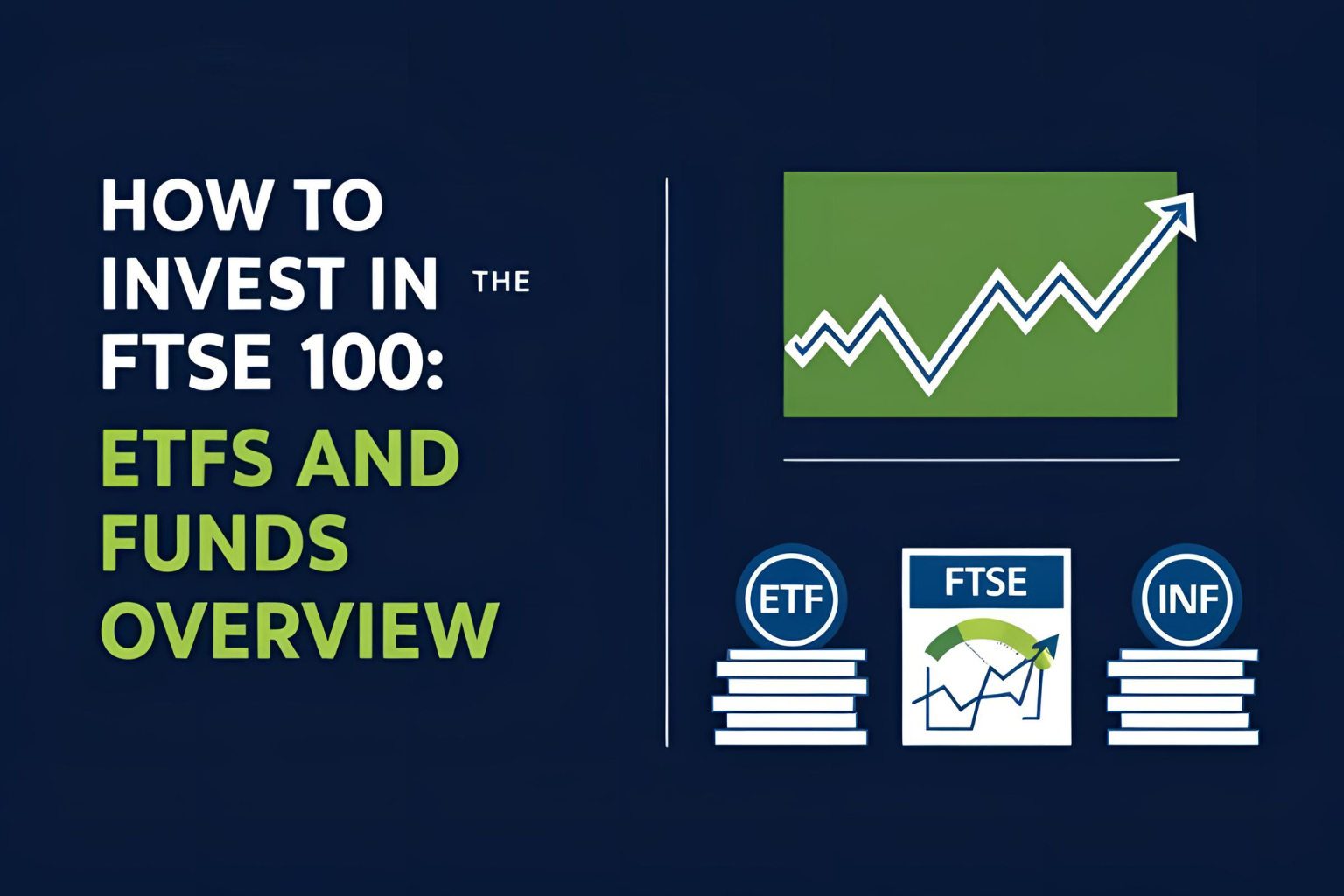
This is where the magic happens, and where Dave, with a bit of guidance, could actually achieve his dream of "investing in stuff." The most common and accessible ways to invest in the FTSE 100 are through what are called Index Funds and Exchange-Traded Funds (ETFs). These are your trusty sidekicks in this investment adventure.
Index Funds: The Steady Eddie
Imagine you want to bake a cake, and you want it to taste exactly like your Grandma’s famous Victoria sponge. An index fund is like a pre-mixed cake batter that’s designed to replicate the exact flavour (performance) of your chosen recipe (the FTSE 100). These funds aim to mirror the performance of the index as closely as possible. They do this by holding a basket of shares that are representative of the FTSE 100’s constituents. So, if a company is in the FTSE 100, chances are, the index fund will hold a bit of it.

The beauty of index funds is their simplicity and their low costs. Because they’re not actively managed by a fund manager trying to pick winners and losers (which is expensive!), their fees, or ‘expense ratios,’ are typically very low. This means more of your money stays invested and working for you. Think of it as getting a fantastic cake without paying for a celebrity chef’s flamboyant presentation. It’s just good, honest cake.
You can usually buy index funds through a stocks and shares ISA or a pension. These are tax-efficient wrappers that shield your investment gains from the taxman. Super handy! So, instead of buying individual shares in, say, GlaxoSmithKline and Barclays, you buy a slice of an index fund that already owns a bit of both (and 98 other companies!). Much more efficient, wouldn’t you agree? It’s like buying a curated box of the best ingredients for a banquet, rather than hunting down every single item yourself. Less stress, more deliciousness.
ETFs: The Trendy Cousin
ETFs are like the modern, cooler version of index funds. They also aim to track an index, like the FTSE 100, by holding a basket of underlying assets. The key difference is how they are traded. While index funds are typically bought and sold at the end of the trading day at their net asset value (NAV), ETFs trade on stock exchanges throughout the day, just like individual shares. This means their price can fluctuate during the day based on supply and demand.
For the average investor, this intraday trading might not be a huge deal, but it’s good to know the distinction. ETFs often have very low fees too, making them a popular choice. You can buy ETFs through a standard trading account or a stocks and shares ISA. They offer that same broad diversification across the FTSE 100 without the headache of picking individual stocks. It’s like having access to a beautifully organized marketplace where all the best bits of the FTSE 100 are readily available for purchase.
So, if Dave wants to invest in the FTSE 100, he’s looking at either a FTSE 100 index fund or a FTSE 100 ETF. These are the vehicles that will actually get him exposure to those big 100 companies. He won’t be buying the FTSE 100 itself, but rather a fund that aims to perform like it. Makes sense, right? It’s a bit like wanting to travel to Rome. You don’t buy a piece of the Colosseum; you buy a plane ticket and maybe a hotel room. The ticket and the hotel are your ‘investment’ in the Rome experience.

What You'll Need: Your Investment Toolkit
Alright, so you've got your sights set on the FTSE 100. What gear do you need for this expedition? Don't worry, it's not a full Everest climbing kit.
1. An Investment Account
First off, you’ll need a place to hold your investments. The most common options are:
- Stocks and Shares ISA: This is brilliant for UK residents. Any profits you make within your ISA are tax-free. You can invest up to a certain annual limit. Think of it as a special savings account for investments where the government says, "Don't worry about taxes on this, it's all yours!"
- Pension (SIPP): If you’re investing for the long term, like retirement, a Self-Invested Personal Pension (SIPP) is a great option. Contributions get tax relief, and your investments grow tax-free. It’s like getting a government top-up for your future self.
- General Investment Account (GIA): If you've maxed out your ISA or pension, or you're not a UK resident, a GIA is your standard investment account. You'll need to pay Capital Gains Tax on profits above an annual allowance, and Income Tax on any dividends.
For most people dipping their toes in, a Stocks and Shares ISA is the go-to. It’s user-friendly and tax-efficient. You can open one with many different providers – think banks, online brokers, or investment platforms.
2. A Broker or Investment Platform
Once you have your account type sorted, you’ll need an intermediary to actually buy and sell investments. This is where a broker or investment platform comes in. These are companies that provide you with access to the stock market.
There are tons of them out there, from big high-street banks with investment arms to newer, slicker online-only platforms. Some popular ones include Hargreaves Lansdown, AJ Bell, Interactive Investor, Fidelity, Vanguard (which also offers its own index funds), and many more. Do your research! Look at their fees, the range of investments they offer, and how easy their platform is to use. A good platform makes the whole process feel less daunting.
3. The Actual FTSE 100 Investment (Index Fund or ETF)
This is the product you’ll buy through your broker. You’ll be searching for something like a "FTSE 100 Index Tracker Fund" or a "FTSE 100 ETF." Make sure the fund’s objective is specifically to track the FTSE 100 index. You'll see plenty of options. Look at their Total Expense Ratio (TER) or Ongoing Charges Figure (OCF) – that’s the annual fee. The lower, the better! You’ll also see a fund name, a ticker symbol (a short code like `FTSE`, `UKX`, etc., although this can vary per provider), and the fund manager’s name (e.g., Vanguard, iShares, Lyxor).
The Process: Step-by-Step (Because We Like Clarity!)
So, you’re ready. You’ve got your account and you know what you want to buy. What’s next? It’s surprisingly straightforward.
Step 1: Choose Your Investment Platform
This is your starting point. Do you want a big, established provider, or a more digital-native one? Think about what’s important to you: customer service, app functionality, investment choice, fees. Websites like MoneySavingExpert.com often have great comparisons.
Step 2: Open Your Investment Account
This usually involves an online application. You’ll need to provide personal details, proof of identity, and your National Insurance number. They’ll ask you about your investment experience and your goals. Be honest! It helps them recommend suitable products (though ultimately, the decision is yours).
Step 3: Fund Your Account
Once your account is open and verified, you’ll need to transfer money into it. This is usually done via bank transfer or debit card. Decide how much you want to invest. Remember, it’s generally advisable to start with an amount you’re comfortable with, especially if you’re new to investing.
Step 4: Find Your FTSE 100 Fund or ETF
Log into your investment platform. There will be a search function. Type in "FTSE 100" or look under their "UK Equities" or "Index Funds/ETFs" sections. You'll see a list of options. Click on them to see their details: fees, past performance (though remember past performance isn't a guarantee of future results!), and what they track.

Step 5: Place Your Buy Order
Once you’ve chosen your fund or ETF, you’ll go to the ‘buy’ section. You’ll specify how much money you want to invest. For ETFs, you might also be able to choose to buy a specific number of units. For funds, you’ll typically invest a monetary amount.
You’ll usually have a choice between a market order (buy at the current best available price) or a limit order (buy only if the price reaches a specific level you set). For index funds and ETFs, a market order is generally fine for most investors. Just double-check everything before you hit ‘confirm’!
Step 6: Monitor Your Investment
And that’s it! You’re now invested in the FTSE 100. Congratulations! Now, the important part: don’t obsess over it daily. Markets go up and down. That’s normal. Your investment platform will show you how your investment is performing. You can check it periodically (weekly, monthly, quarterly) to see its progress. Resist the urge to panic sell if the market dips, and don’t get overly excited if it surges. Long-term investing is often about patience and consistency.
A Word to the Wise: Risks and Considerations
Now, before you go all Dave on me and think this is a guaranteed path to riches, let’s be real. Investing in the stock market, even in a diversified index like the FTSE 100, comes with risks. It’s not a savings account; your capital is at risk.
- Market Risk: The FTSE 100 can go down. Economic downturns, political instability, global events – all these can impact company performance and stock prices.
- Fees: While index funds and ETFs are low-cost, fees do add up over time. Even a small percentage difference can make a significant impact on your returns over decades.
- No Guarantee of Returns: There's no promise of profit. You could get back less than you invested.
- Diversification within the FTSE 100: While the FTSE 100 is diversified across many companies, it’s still heavily weighted towards certain sectors, like financials and energy. If those sectors perform poorly, it will drag the whole index down. It’s not as diverse as, say, a global stock market index.
So, while it’s a great way to get broad exposure to large UK companies, it’s important to understand these risks. Don't invest money you can't afford to lose. And remember Dave's initial enthusiasm? Channel that into making informed decisions, not blind optimism. (Though a little bit of optimism never hurt anyone, did it?)
Investing in the FTSE 100 is a fantastic way for many people to gain exposure to the UK’s largest companies. It’s accessible, relatively low-cost, and offers broad diversification. You don’t need to be a financial guru or have a secret handshake. With a bit of research and the right tools – an investment account, a broker, and a FTSE 100 index fund or ETF – you can absolutely do it. So, next time Dave starts talking about investing, maybe you can explain it to him. Or, you know, just point him towards this article. 😉