
How Can You Tell A Real Diamond
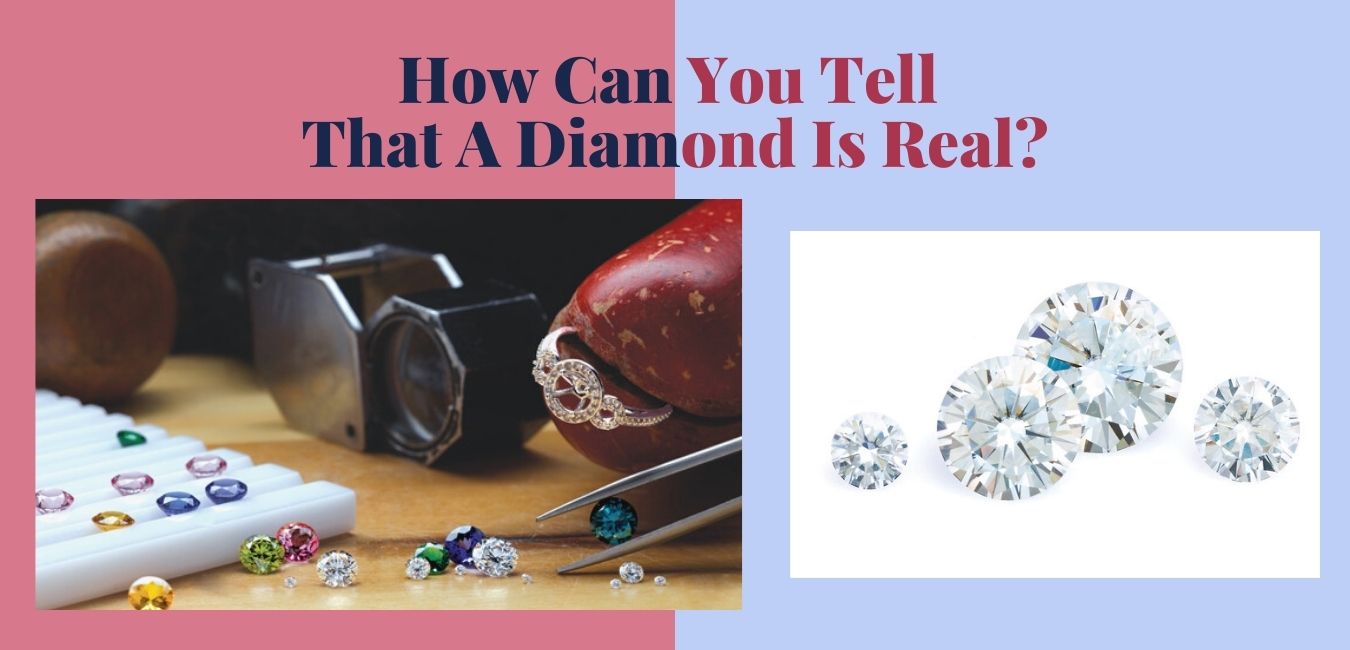
So, you've found a sparkly thing. Maybe it was in a vintage jewelry box. Perhaps your sweet Aunt Mildred left you a "mystery" brooch. Whatever the case, it's got that oomph. It gleams. It glitters. It makes you wonder, "Is this the real deal?"
Let's be honest, the idea of a genuine diamond is pretty exciting. Images of fabulous movie stars and grand romantic gestures probably flash through your mind. But before you start planning your red carpet debut, let's have a little fun figuring out if your treasure is truly a gem.
My first, and admittedly most unscientific, test involves the good old fog test. Take a deep breath, hold it, and exhale a cloud of warm air onto the stone. If it’s a real diamond, the fog will disappear almost instantly. Think of it like a super-fast evaporating situation.
Must Read
Why does this happen, you ask? Well, diamonds are excellent heat conductors. They disperse that warm breath like a champ. A fake, on the other hand, will stay foggy for a bit longer. It’s like it’s a little shy and wants to hang onto that cloud. So, if your stone’s fog lingers like a forgotten memory, it might be time for a re-evaluation.
Next up, let’s talk about the "read-through" test. This one is a bit tricky and works best with loose stones, but we can adapt it. If you have a round brilliant diamond, and you place it flat side down on a piece of paper with some text, you shouldn't be able to read the text through it. It’s like the diamond is too good at bending light.
The light gets bounced around so much inside a real diamond that it obscures whatever’s underneath. If you can clearly see the letters, or even just a blurry outline, that’s a bit of a red flag. It’s like the diamond is saying, "Nope, can't see anything here, move along!" A fake might be more transparent, allowing those letters to peek through.
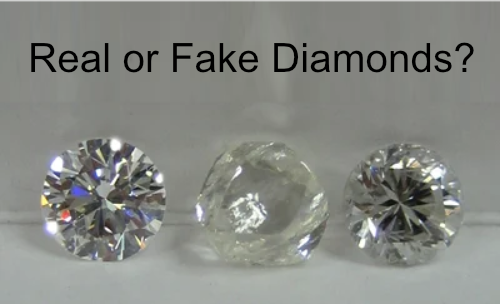
Now, I’m not saying you should go around scratching your precious possessions. That would be a terrible idea! But historically, people have used things like sandpaper to test diamonds. Real diamonds are incredibly hard, the hardest natural substance on Earth, in fact. They wouldn't be scratched by something like that.
Of course, this is not a test you should ever perform on a stone you suspect might be real. We are all about preserving the sparkle, not creating new, unwanted textures. But it's a fun fact to remember about their amazing resilience. It's like they have a built-in superhero shield.
Let’s consider the setting. Is your potential diamond nestled in a precious metal like gold or platinum? This can be a good sign. While fakes can be put in nice settings, it's generally less common. Cheaper stones are often found in less expensive metals.
Look for hallmarks or stamps on the metal. They usually indicate the purity of the metal, like "14K" or "PT." If you see those, it suggests the piece might be of higher value and therefore more likely to hold a real diamond. It’s like the metal is whispering, "I’m serious business, and so is what I'm holding!"
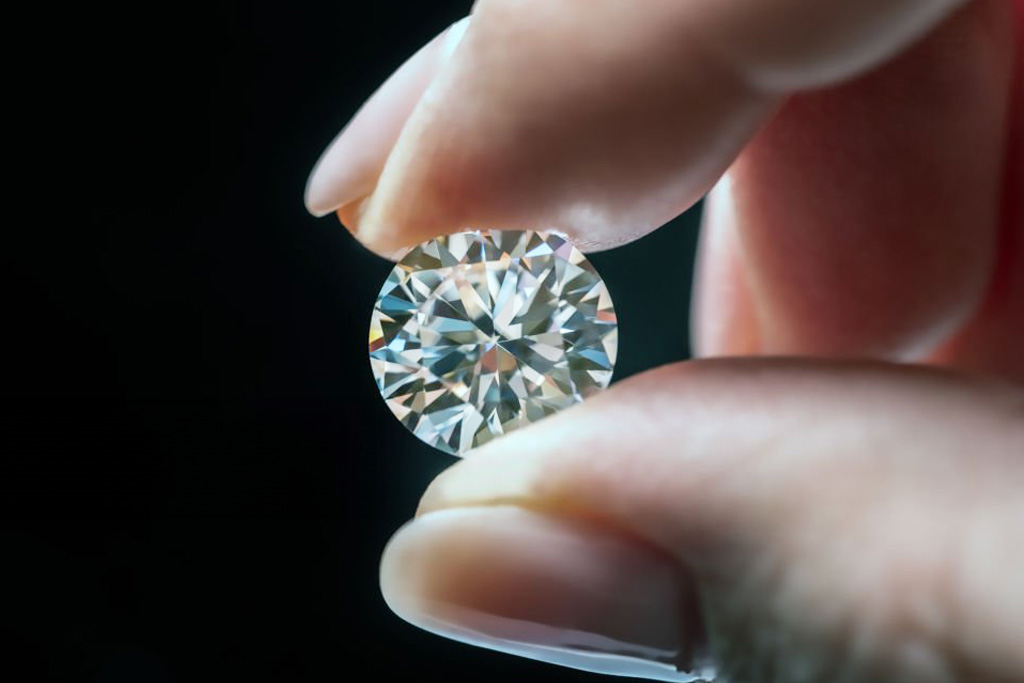
The sparkle itself is a huge clue, though it's subjective. Real diamonds have a unique brilliance and fire. They reflect light in a dazzling way, showing flashes of both white light (brilliance) and rainbow colors (fire). This is due to their incredible refractive index.
Think of it like a tiny disco ball, but way more sophisticated. If the sparkle looks a bit dull, or the colors are weak, it might not be a diamond. Sometimes, imitations have a bit too much fire, looking almost unnaturally colorful. It’s like they're trying a little too hard to impress.
What about weight? Diamonds have a specific density. If you were to compare two stones of the same size, one a diamond and one a common imitation like cubic zirconia, the cubic zirconia would feel lighter. This is something a jeweler would use a precise scale for, of course.
But you can get a feel for it. If you’re holding a stone and it feels surprisingly light for its size, it’s worth a second thought. It’s like the stone is playing a little trick on your senses. "Am I heavy? Am I light? Who knows!"

Then there’s the "dot" test. This is another one best for loose stones, but imagine it. If you draw a small dot on a piece of white paper and place the stone flat-side down over it, a real diamond should obscure the dot completely. Again, it’s that amazing light refraction at play.
The light bends so much that you can’t see through it to the dot. It’s like the diamond is a tiny, very effective black hole for that little ink mark. If you can still see the dot, even faintly, it’s a clue that it might be something else.
Now, for the most reliable method: a professional appraisal. Yes, I know, it’s not as fun as doing your own detective work with a breath cloud. But a jeweler or gemologist has the tools and the expertise to tell you definitively. They have fancy machines and magnifying glasses that see things we can only dream of.
They can check for inclusions, which are natural imperfections found in most real diamonds. These tiny marks are like a diamond's birth certificate, proving its origin. While flawless diamonds exist, they are exceedingly rare and, shall we say, pricey.

Also, consider the source of the stone. Did you buy it from a reputable jeweler? Was it a flea market find? While amazing treasures can be found anywhere, the context can offer a hint. A well-known jewelry store is more likely to sell genuine goods than a seller of questionable repute.
My personal, rather unpopular opinion? Don't stress too much. If a stone makes you smile, if it brings you joy, and if it feels special, then maybe its intrinsic value is less important than the happiness it provides. Sometimes, the "imitation" is just as beautiful.
After all, a dazzling CZ can be just as sparkly and bring just as much delight as a mined diamond. And if it means you can afford to buy a lovely bracelet to go with it, well, that’s a win in my book. Let’s celebrate the sparkle, whatever its origin.
So, while those tests are fun little party tricks, and good to be aware of, remember that the most important thing is the feeling a piece of jewelry gives you. If it makes you feel like a million bucks, then for all intents and purposes, it probably is. Embrace the bling, no matter the carbon structure!

