Do Birds Have A Sense Of Smell
So, you're sitting there, maybe with a cup of coffee that’s just the perfect temperature, watching a robin peck around your lawn. You've probably wondered, "Does that little feathered fiend have a nose?" And if so, does it actually, you know, smell things? Like, can it sniff out a juicy worm from a mile away, or does it just sort of hope for the best?
For the longest time, the prevailing wisdom was a resounding "Nope!" Birds were considered these aerial marvels, all about sight and sound, with their olfactory senses essentially locked away in a tiny, dusty attic. Imagine a world where your nose is just… there. A decorative accessory. Pretty bleak, right? Scientists, bless their curious hearts, used to trot out arguments like, "Well, their brains are tiny!" or "They’re too busy looking at shiny things!" Fair points, perhaps, but also a little like saying a Michelin-star chef can't cook because they wear a fancy hat.
But plot twist! The bird world, much like my dating history, is full of surprises. It turns out, we’ve been underestimating these winged wonders. It’s not quite a bloodhound's superpower, no, but they’re definitely not wandering around in a scent-free bubble. Think of it more like having a really, really good sense of taste, but for smells. Subtle, but definitely there.
Must Read
The Case of the Olfactory Underdogs
For ages, the evidence was pretty circumstantial. We’d see birds congregating around food sources, and we’d assume they saw it. We’d see them navigating with impressive accuracy, and we’d chalk it up to stellar eyesight. The nose was basically the uninvited guest at the scientific party, always lurking in the background, never getting a proper introduction.
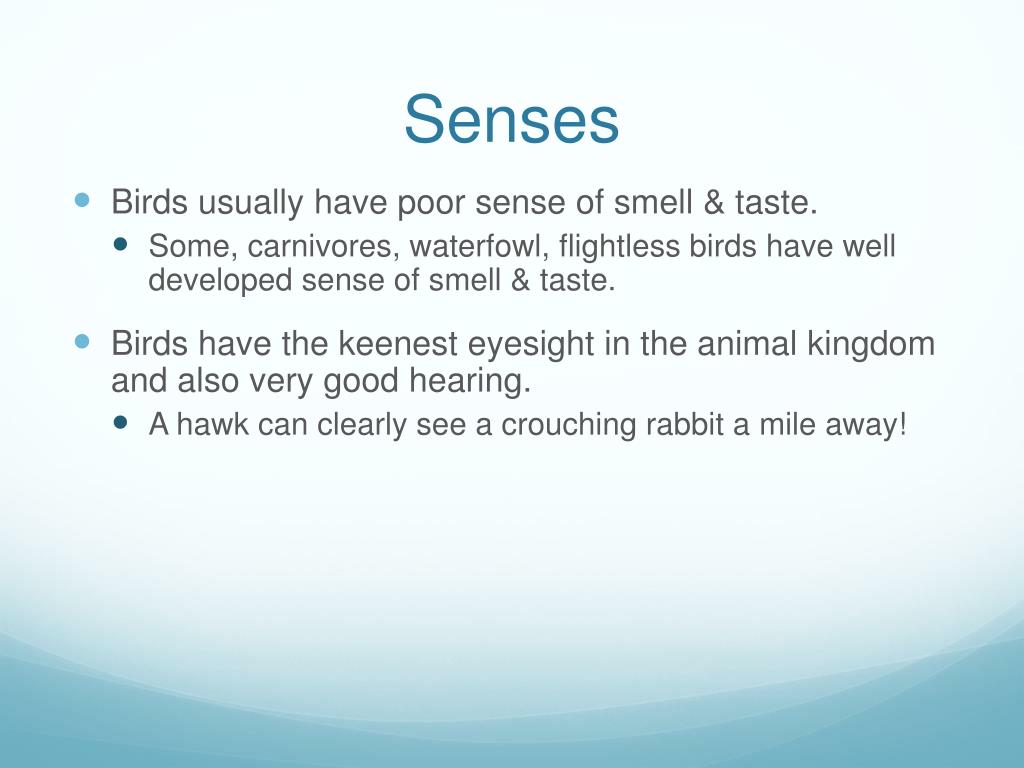
One of the big early holdouts was the idea that birds didn't have the right kind of brain structures for smelling. They didn't have those big, bulbous olfactory bulbs that make mammals, like us (and my dog, who can smell a dropped crumb from three rooms away), such sniffing sensations. But here's the thing: evolution is clever. It doesn't always use the same blueprint twice. Birds have found their own ingenious ways to get the job done.
It's like if you wanted to bake a cake. One person might use an electric mixer, another might use a whisk, and a third might just… vigorously stir with a wooden spoon and still end up with a delicious dessert. Different tools, same delicious outcome. Birds are the wooden spoon bakers of the scent world.
Enter the Kiwi: The Smelly Superstars
Now, if you want to meet the undisputed champions of birdy smell, you’ve gotta go down under to New Zealand and meet the kiwi. These flightless, nocturnal birds are basically walking, waddling noses. Seriously, their nostrils are at the very tip of their long beaks. Imagine trying to find a donut hole by sniffing from the outside. That’s essentially what the kiwi does!
They use their beaks like a divining rod for deliciousness, poking them into the soil to sniff out juicy earthworms and grubs. It’s estimated that their sense of smell is actually more important than their eyesight, which, let's be honest, isn't exactly eagle-eyed to begin with. They're the proof in the pudding, or rather, the proof in the earthworm.

Scientists did these clever experiments where they would blindfold kiwis, and guess what? They still found their food! Then, they’d block their nostrils, and suddenly, the kiwi was as lost as a tourist in Times Square. It was like they’d suddenly been plunged into a world of blandness. Talk about a wake-up call for the scientific community.
Beyond the Kiwi: Subtle Scents for Savvy Swallows
But it's not just the kiwis! Many other birds have a surprisingly good sense of smell, even if they’re not using it to unearth invertebrates quite as dramatically. Take seabirds, for instance. Imagine trying to find your way back to your tiny island home in the middle of a vast, blue ocean. How do you do it? Well, it turns out, they can smell their colony!
Yes, you read that right. Certain seabirds, like albatrosses and petrels, can detect the unique scent of their nesting grounds from miles away. This scent is a complex cocktail of guano (bird poop, in case you were wondering), decaying fish, and, I’m sure, the subtle aroma of slightly stressed parents trying to keep their chicks in line. It’s a potent perfume, I’d wager!
This is especially useful when they're flying over the open ocean, where landmarks are a bit… scarce. They’re essentially following their noses home. It's like a feathered GPS, but way smellier. Imagine your car’s navigation system telling you, "In 500 feet, turn left at the irresistible aroma of stale crab bait."
And it’s not just about finding home.
Some birds use their sense of smell for finding food too. Vultures are the poster children for this. While they have incredible eyesight to spot a carcass from thousands of feet up, they also have a highly developed sense of smell that can detect the faint whiff of decomposition. This is particularly useful in cloudy weather or when the carcass is hidden in dense foliage. They’re basically nature’s airborne detectives, sniffing out the clues.

Even birds we might consider less… glamorous, like pigeons, have been shown to possess a decent olfactory ability. They can use it for navigation, distinguishing between different smells in their environment. It might not be as dramatic as a kiwi digging for lunch, but it's a vital part of their survival toolkit.
So, What's the Takeaway?
The next time you see a bird, don't just think about its beady little eyes or its cheerful chirp. Give a little nod to its often-overlooked nose. It might not be constantly twitching like a bunny's, but it’s working, silently and effectively, helping them navigate, find food, and get back to where they belong.
Birds are far more complex than we often give them credit for. They’re not just pretty flying machines; they’re sophisticated creatures with a range of senses that help them thrive in their often challenging environments. So, the next time you’re enjoying your coffee and contemplating the universe, spare a thought for the humble avian nose. It's a tiny, unsung hero, playing a much bigger role than we ever imagined.