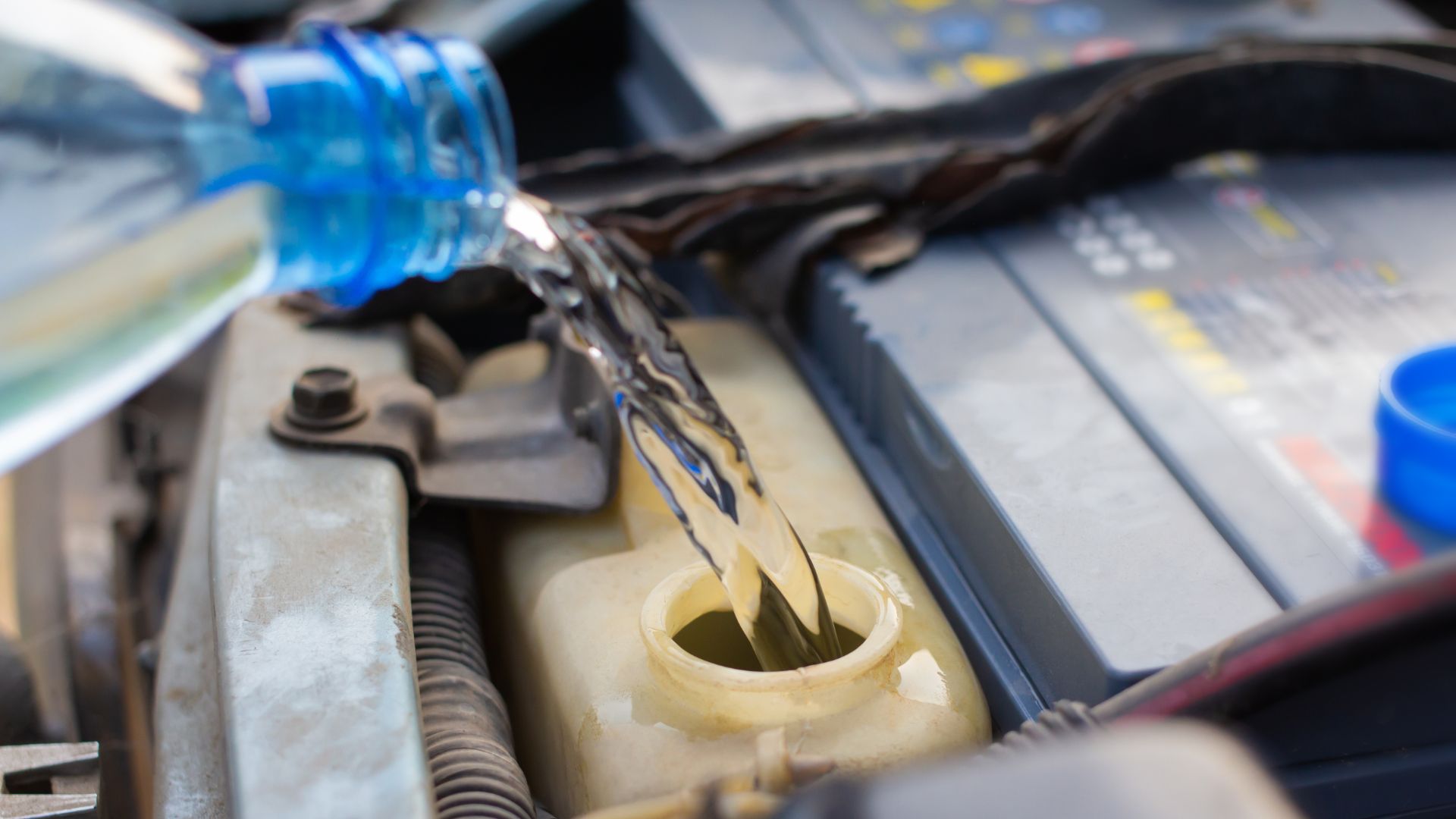
Can I Use Water As A Coolant

Hey there, fellow tinkerer! Ever found yourself staring at a whirring contraption, maybe a computer humming away, or even a classic car engine purring, and thought, "Man, this thing is getting a bit toasty. What can I do about it?" Well, your brain, being the brilliant, problem-solving organ it is, might have just blurted out, "Water! Can I just use water to cool this thing down?" It's a totally valid question, right? Water is, after all, readily available, cheap, and generally pretty good at, you know, not being hot.
So, let's dive into this watery dilemma, shall we? Think of me as your friendly neighborhood coolant guru, minus the dusty lab coat and the intense smell of ammonia (unless you've got something really exciting going on). We're going to break down the whole "water as a coolant" thing in a way that won't make your eyes glaze over. No complex thermodynamics jargon here, just good old common sense and a sprinkle of science. Grab a cuppa, settle in, and let's get our hands metaphorically wet!
The Big Question: Can Water Actually Cool Things Down?
The short and sweet answer? Yes, absolutely! Water is actually a pretty fantastic coolant. It's got a high specific heat capacity, which is a fancy way of saying it can absorb a whole lot of heat before its temperature starts to skyrocket. Think of it like a sponge for heat. You can dump a bunch of heat into it, and it’ll just soak it up like a champ. This is why we use it in so many things, from your trusty kettle to those massive power plants that keep the lights on.
Must Read
So, why isn't every single engine and electronic device just drowning in a reservoir of H2O? Ah, my friend, this is where things get a little more nuanced. While water is great at absorbing heat, it's not perfect, and it can also be a bit of a troublemaker if you're not careful. It's like inviting a really helpful, but slightly clumsy, guest to your party. They'll definitely help, but you might want to keep an eye on them.
Water's Superpowers (The Good Stuff!)
Let's talk about why water is even on the table as a coolant. Firstly, it's ubiquitous. You can find it practically anywhere, from your tap to a puddle (though I wouldn't recommend using puddle water for anything critical, trust me on this!). This makes it incredibly accessible and cost-effective. No need to hunt down specialized fluids when a trip to the grocery store will do.
Secondly, as I mentioned, its heat absorption capability is top-notch. When water evaporates, it takes a significant amount of heat with it. This is the principle behind sweating – your body uses evaporation to cool down. Pretty neat, huh? This latent heat of vaporization is a powerful cooling mechanism.
Thirdly, it's non-toxic (in its pure form, at least!). You don't have to worry about breathing in nasty fumes or accidentally spilling it and creating an environmental hazard. This is a huge plus, especially when you're working with machines that are a part of your daily life.
And finally, it's readily available in different forms. You can have it as liquid, steam, or even ice. Each of these states can be utilized for cooling in different scenarios. Think of ice packs for injuries – a simple, effective cooling solution!
The Not-So-Superpowers (The Tricky Bits)
Alright, now for the reality check. While water is a fantastic heat sponge, it also has a few quirks that can cause headaches, especially in more sensitive applications. Imagine trying to use a regular kitchen sponge to wash a delicate, antique vase. It might work, but you might also cause some unintended damage.

One of the biggest culprits is freezing. Water turns into ice at 0°C (32°F). And if water freezes inside a closed system, like the cooling system of your car or a computer's water block, it expands. This expansion can exert incredible pressure, strong enough to crack metal, burst pipes, and generally wreak havoc. Nobody wants a frozen disaster, right? It’s like a snowman built inside your engine – not ideal.
Then there's the issue of boiling. While evaporation is great, uncontrolled boiling can be a problem. Water boils at 100°C (212°F) at standard atmospheric pressure. If the system you're cooling reaches this temperature, the water will start to boil, forming steam. This steam is less effective at transferring heat than liquid water, and it can create pockets of superheated vapor that can lead to localized hotspots and inefficient cooling. Plus, all that steam escaping can be a bit of a messy situation.
Another significant concern is corrosion. Tap water, especially, is not pure H2O. It contains minerals, salts, and other dissolved impurities. These impurities can accelerate the rusting and corrosion of metal components within the cooling system. Over time, this can lead to leaks, reduced efficiency, and eventual failure of the system. It’s like leaving your iron tools out in the rain all the time – they’re not going to be happy campers.
And let's not forget about biological growth. In stagnant water, especially if it's exposed to air and sunlight, algae and other microorganisms can start to multiply. This gunk can clog up cooling channels, reduce flow, and generally make a mess of things. Nobody wants to deal with slimy green stuff in their high-tech equipment!
So, Where Can Water Shine?
Despite its limitations, water is still a fantastic coolant in many situations. If you're just looking for a quick and dirty way to cool something down that isn't super sensitive or expensive, water can be your best friend.
Think about DIY cooling projects. If you're building a small, experimental setup or a temporary cooling solution for a hobby project, a simple water loop might be perfectly adequate. For instance, cooling a small hobbyist 3D printer part that gets a little warm might be fine with a simple water reservoir and pump. Just make sure you're not dealing with extreme temperatures or delicate components.

Evaporative cooling is another area where water truly excels. Think of swamp coolers or misting fans. These systems rely on the evaporation of water to significantly lower the ambient temperature. They're incredibly effective and energy-efficient in dry climates. The principle is simple: as water evaporates, it pulls heat from the surrounding air, making things cooler.
And then there's the classic example: radiators in cars. Now, car radiators don't just use plain water, but water is the primary heat transfer medium. The reason they work so well is that they are part of a carefully engineered system that addresses many of water's drawbacks. We'll get to that in a sec!
The "Water + Additives = Magic" Equation
This is where we get to the heart of why you see "coolant" in a bottle rather than just a jug of water. Manufacturers have figured out how to take all of water's amazing cooling properties and pair them with additives that tackle its weaknesses. It's like giving your clumsy, helpful guest a set of instructions and some protective gear!
The most common additive you'll find in automotive coolant (often called antifreeze, even when it's not freezing) is ethylene glycol or propylene glycol. These chemicals are brilliant because they dramatically lower the freezing point of water and raise its boiling point. So, your engine can stay cool in the summer and not turn into a solid block of ice in the winter.
But that's not all! Coolant also contains corrosion inhibitors. These are special chemicals that form a protective layer on the metal surfaces within the cooling system, preventing rust and other forms of corrosion. They're like tiny metal superheroes, fighting off the rust monsters!
You'll also find anti-foaming agents. These help to prevent the formation of bubbles and foam in the coolant, which can reduce its efficiency and cause air pockets that lead to overheating. Nobody wants a foamy mess sloshing around!
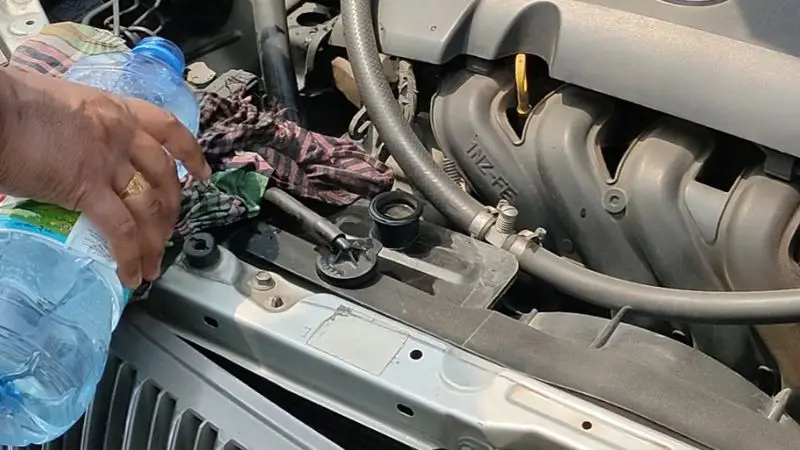
And sometimes, there are even dye added, just for kicks and to help you spot leaks. So, next time you see that brightly colored liquid, remember it's a carefully concocted blend designed for optimal performance and protection.
Why Not Just Use Plain Water in Your Car? (Seriously, Don't!)
I cannot stress this enough: DO NOT use plain water in your car's cooling system, especially if you live anywhere with even the slightest hint of a temperature change. I know it's tempting, especially if you're in a pinch and your coolant level is low. But the risks far outweigh the temporary convenience.
As we discussed, plain water will freeze in the winter, potentially causing catastrophic engine damage. It will also boil in the summer, leading to overheating and potentially serious engine problems. And the lack of corrosion inhibitors means your engine's internal components will start to rust away. It’s like inviting a polar bear and a dragon to a party in your engine block – not a good combination!
The system is designed to work with a specific blend of coolant, and using plain water is like giving a gourmet chef instant ramen noodles and expecting a Michelin-star meal. It just won't cut it.
Other Applications: Where Water is King (With Caveats)
Beyond cars, water is used in many other cooling applications, but often with the same considerations in mind.
Computer Water Cooling: This is a popular way to keep high-performance CPUs and GPUs frosty. While many enthusiasts use specialized coolants with anti-corrosive and anti-algal properties, some might opt for distilled water for its purity and excellent heat transfer. However, they often couple this with a robust system design, including proper radiators, pumps, and often biocide additives to prevent microbial growth. It's a bit like a carefully curated art gallery for your PC!
Industrial Processes: Many large-scale industrial applications use water as a coolant, especially in power plants and manufacturing. These systems are typically closed loops, highly engineered, and meticulously maintained to prevent issues like freezing, boiling, and corrosion. They often use treated water and specialized chemical treatments to keep everything running smoothly.
Household Appliances: Think about your refrigerator. It uses a refrigerant, not water, but the principle of heat transfer is similar. Your air conditioner also uses a refrigerant. However, in some simpler appliances, or temporary cooling solutions, water might be employed. For instance, an ice pack for a cooler is just water (frozen!).
The Verdict: Water is Great, But It Needs Friends!
So, can you use water as a coolant? Yes, but it depends entirely on the application. For simple, low-risk scenarios, or in systems specifically designed for evaporative cooling, plain water can be a perfectly effective and economical choice.
However, for anything involving engines, complex machinery, or systems that will be exposed to a range of temperatures, plain water is generally not recommended. The risks of freezing, boiling, and corrosion are too high. In these cases, you absolutely need to use a properly formulated coolant that has additives to address these issues.
Think of it this way: water is the foundation of a great coolant. It's the hardworking core that does the heavy lifting of absorbing heat. But to make it truly effective and safe for sensitive systems, it needs its trusty sidekicks – the glycols, inhibitors, and other marvels of chemical engineering. They’re the Avengers of the cooling world!
Ultimately, understanding the pros and cons of using water as a coolant empowers you to make the right decisions for your projects, whether you're building a high-performance PC, maintaining your beloved classic car, or just trying to keep your lunch cool on a hot day. So, go forth, be curious, and happy cooling! May your systems always run chill and your projects always be a blast!
![How Long Can I Use Water As Coolant? [Pros & Cons]](https://axlewise.com/wp-content/uploads/2022/12/how-far-can-you-drive-with-water-in-radiator-768x384.png)