Can I Bury My Dog In My Garden

So, you've reached that soul-crushing, tail-tucked-between-the-legs moment. The one where your furry best friend, your shadow, your personal four-legged vacuum cleaner, has crossed the Rainbow Bridge. And now, as you stare into the vast expanse of your backyard, a thought, perhaps born of grief and a desperate desire for control, pops into your head: "Can I just… bury Fluffy right here, next to the petunias?"
Look, we’ve all been there. The thought of entrusting your beloved companion to a sterile, impersonal pet cemetery can feel… well, a bit like sending them to a really boring, really expensive boarding kennel forever. And your garden? It's the place where you shared countless games of fetch, where they dug that mysterious hole that still hasn't been explained, and where they probably left a few honorary landmines themselves. It feels right, doesn't it?
But before you grab your shovel and start measuring for a floral wreath, let's have a little chat. Like that time your dog accidentally ate your entire birthday cake. Some things seem like a good idea at the time, but then… reality bites. And by "reality bites," I mean a whole heap of legal and logistical nightmares that could make your current sadness feel like a mild stubbed toe.
Must Read
The Great Garden Burial Debate: Is it a Thing?
Alright, so, the short answer, the very short answer, the answer that might disappoint your immediate impulse, is: it depends. It’s not a universal "yes," and it’s definitely not a universal "no." It’s more of a “well, technically you can, but you probably shouldn't without doing your homework.”
Think of it like this: Can you juggle chainsaws? Probably, if you’re a highly trained professional with a helmet and a first-aid kit. Can you, right now, after watching a YouTube tutorial? Probably not a good idea.

The legality of burying your pet in your backyard is primarily governed by local ordinances. Yes, your city or town council, in their infinite wisdom, has likely drawn up rules about what you can and cannot bury in your soil. This isn't to be a buzzkill; it's usually for public health and environmental reasons. Imagine a whole neighborhood of Fido’s and Whiskers’ underground. The earth might start to sing opera. Or, you know, get contaminated.
The "Why You Might Want to Rethink It" Section
Let’s dive into the nitty-gritty, shall we? Grab a cup of tea, maybe a comforting biscuit. Here's why your picturesque garden burial might turn into a thorny issue:

- The Depth of the Dig: Most places that do allow backyard burials will have a minimum depth requirement. We’re not talking about a light dusting to hide evidence of a midnight snack. Think at least 3-4 feet. This is to prevent scavengers (like that sly fox who’s been eyeing your prize-winning tomatoes) from digging them up, and to ensure proper decomposition without contaminating groundwater. So, get ready for some serious cardio. Your dog's final resting place might be deeper than your deepest worries about the stock market.
- Location, Location, Location (and Water): You can't just plop your pet next to your prize-winning rose bush. There are often rules about being a certain distance from water sources – wells, streams, that adorable little duck pond down the street. Nobody wants their drinking water to have a faint whiff of… well, you get the idea.
- The "No Co-mingling" Clause: Some areas have regulations against burying animals in the same place you grow your vegetables. This is for obvious sanitary reasons. You wouldn't want your lettuce to have a ghostly canine companion, would you? Or worse, have your garden become a popular spot for spectral squirrels to play fetch.
- The "What If You Move?" Conundrum: Life happens. You might get a fantastic job offer across the country, or just decide you need a change of scenery. What do you do then? Dig up your beloved pet? Leave them behind? This can be an incredibly painful decision.
- The Animal Control Authority: In some jurisdictions, animal control officers can come knocking if they receive a complaint or have reason to believe an animal was improperly buried. And trust me, dealing with them when you’re already grieving is about as fun as a root canal performed by a badger.
- The "Disease Control" Factor: While rare, some animal diseases can pose a risk to humans or other animals. Proper disposal methods are designed to mitigate these risks. So, your well-intentioned act of love could inadvertently become a tiny biohazard. Who knew a wagging tail could have such a sinister side?
And let's not forget the practicalities. Do you have a shovel? A sturdy back? The emotional fortitude to dig a grave for your best friend? Because let me tell you, digging a hole for a beloved pet is a lot harder than digging a hole for that stubborn weed. It’s like the earth itself knows this is a sad hole.
So, What Are My Other Options? (Because We All Need Options)
Okay, okay. So maybe the garden gnome's final resting place will be a bit more… formal. Don't despair! You have some excellent, and frankly, less legally fraught, alternatives:
1. The Professional Pet Cemetery:
Yes, it might sound a bit cliché, but these places are designed for exactly this. They offer beautiful plots, often with options for headstones and ongoing care. It’s a way to give your pet a dignified memorial without the potential legal drama. Think of it as a five-star resort for departed pets, complete with heavenly chew toys.

2. Cremation:
This is a very popular option, and for good reason. You can choose a communal cremation (where ashes are scattered in a memorial garden) or private cremation (where you get your pet's ashes back). Many pet owners find comfort in keeping a small urn of ashes at home, or scattering them in a place that was special to their pet.
Imagine this: your dog’s favorite hiking trail. A final run, but this time, their essence is literally carried on the wind. A bit poetic, wouldn't you say? Plus, no need to worry about the depth of the hole when you're dealing with ashes. You can basically fit them in a fancy tea cup if you wanted.
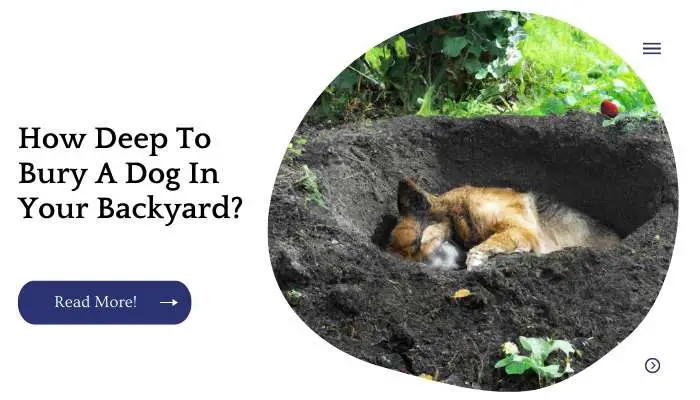
3. Backyard Burial (The Right Way):
If you are absolutely, positively set on a backyard burial, and your local laws permit it, here's how to do it the responsible way:
- Check Local Laws: This is non-negotiable. Call your local animal control or city hall. Get the official word. Don't rely on hearsay from your neighbor Brenda, who claims her poodle is buried under her prize-winning zucchini (Brenda also claims she can talk to squirrels).
- Dig Deep: Seriously, dig that hole deep. We’re talking at least 3-4 feet. Use a measuring tape. This is not the time for “eyeballing it.”
- Choose Wisely: Pick a spot far from water sources and any areas where you grow food.
- Use a Vault: Some people opt for a burial vault or a sturdy box (like a wooden chest) to further protect the remains and prevent collapse.
- Say Your Goodbyes: Once all the practicalities are sorted, take your time. Hold your pet, talk to them, tell them how much you love them. This is about closure and love, not just digging a hole.
Ultimately, the decision of how to memorialize your pet is a deeply personal one. There's no single "right" answer, only what feels right for you and your family.
But before you reach for that shovel and envision a tiny, grave-digging gnome companion for your pet's eternal rest, take a moment. Breathe. Do your research. And remember, the love you shared with your animal companion will last far longer than any physical resting place. Now, if you’ll excuse me, I think my cat is trying to bury a suspicious-looking squeaky mouse in my slipper. Wish me luck.