What Size Dog Crate For My Dog
So, you've decided it's time to introduce your furry best friend to the wonderful world of crate training. Or maybe you're just looking for a cozy den for your pup to call their own. Whatever the reason, the age-old question pops up: "What size dog crate do I actually need?" It sounds simple, right? But trust me, we've all been there, staring at a confusing chart of dimensions, wondering if your dog is more of a "miniature poodle" or a "Great Dane in disguise."
Let's be honest, it's a bit like buying shoes. You wouldn't buy a size 7 for someone who wears a size 12, and you certainly wouldn't cram a Great Dane into a carrier meant for a Chihuahua. The same logic applies to our canine companions. We want their crate to be a sanctuary, not a sardine can. A place where they can stretch out, stand up, and do a little happy wiggle without bumping their nose or their tail.
Think about your own bedroom. Do you want to feel like you're trying to perform yoga in a closet? Probably not. Your dog feels the same way about their sleeping quarters. A crate that's too small is like trying to sleep in a phone booth – not exactly conducive to a good night's rest, or a happy dog.
Must Read
On the flip side, a crate that's too big can also be a bit of a problem. Imagine if your bedroom was the size of a ballroom. Sure, you'd have plenty of space, but it might feel a bit… empty. And for a dog, especially one who's still learning the ropes, a cavernous crate can be confusing. They might be tempted to use one end as their "bathroom" and the other as their "bedroom," which is definitely not the goal of crate training. We want them to see it as their personal oasis of calm, a place for naps and feeling secure.
So, how do we navigate this sizing conundrum? Fear not, my fellow dog lovers! It's not rocket science, although sometimes it feels like it when you’re wrestling with a floppy wire crate.
The Golden Rule: Stand Up, Turn Around, Lie Down (Comfortably!)
This is the mantra you need to repeat to yourself. Your dog should be able to stand up at their full height inside the crate without their head touching the top. They should also be able to turn around comfortably. No frantic spinning or awkward contortions allowed. And finally, they need to be able to lie down in a natural, relaxed position. This means they shouldn't be all scrunched up like they're trying to fit into a too-tight pair of jeans.
To get a good measurement, grab that trusty tape measure. You’ll want to measure your dog from the tip of their nose to the base of their tail. Add a few inches to that measurement for good measure. Then, measure your dog from the floor to the top of their head (or ears, whichever is taller when they’re standing). Again, add a few inches to that. These two numbers are your magic numbers for the ideal length and height of the crate.

Imagine your dog is a furry noodle. You want to be able to lay that noodle out straight in the crate, with a little room to spare. And then, you want to be able to plop them down in a cozy ball, also with room to spare. It’s all about giving them enough space to move, but not so much that they get lost in their own little condo.
The Case of the Ever-Growing Pup
Now, what if you’re bringing home a tiny ball of fluff that you know is going to morph into a magnificent beast? This is where things get a little more strategic. It’s tempting to buy a crate that fits your puppy perfectly right now. After all, they’re so darn cute and small! But let’s be real, puppies grow faster than weeds in a well-watered garden.
Buying a crate that’s too small for your grown-up dog is a rookie mistake that’ll have you doing a second crate purchase sooner than you think. Instead, it's often wiser to invest in a crate for your dog's adult size. But how do you manage a giant crate for a tiny puppy? The answer, my friends, is the humble divider panel. Most wire crates come with these handy dandy inserts. You can use them to section off a smaller portion of the crate, creating a cozy den for your puppy.
As your puppy grows, you simply move the divider further back. It’s like giving them a magic expanding room! This saves you money in the long run and ensures your pup always has a appropriately sized space. Think of it as a DIY adjustable fort for your dog. They'll appreciate it, and your wallet will too.

When my own furry tornado, a Golden Retriever named Buster, was a pup, he was about the size of a loaf of bread. I was eyeing up a tiny crate that would have fit him perfectly for about three weeks. Then I remembered the exponential growth spurt that comes with Golden Retrievers. I ended up buying a crate big enough for a fully grown Buster, and used that divider like it was going out of style. He’d sleep in his little partitioned section, looking like a king in his miniature castle. Then, as he grew, I’d nudge that divider back, giving him more royal territory. It was a win-win!
It’s important to remember that puppies have tiny bladders and need frequent potty breaks. A crate that’s too large can inadvertently encourage them to use one end as a bathroom and the other as a sleeping area. By using a divider, you're essentially creating that "just right" space that discourages accidents.
Wire vs. Plastic vs. Fabric: Does it Matter for Size?
The type of crate you choose can also play a role, though not directly in the size calculation. Wire crates are fantastic for ventilation and visibility. You can see your dog, they can see you, and everyone feels a bit more connected. They're also usually the most affordable and come with those handy divider panels. Plastic crates (often called airline crates) are great for travel and can make dogs feel more secure and den-like. They’re sturdy and offer a bit more privacy. Fabric crates are lightweight and portable, good for older dogs or temporary use, but they're not as durable for teething puppies or determined escape artists.
For the purpose of sizing, focus on the interior dimensions. Some manufacturers might list the exterior dimensions, which can be a bit misleading. Always aim for the space your dog will actually be occupying.
When I was first looking for a crate for my Jack Russell terrier, Pippin, I was overwhelmed by the sheer variety. There were crates that looked like miniature houses, crates that folded flatter than a pancake, and crates that probably cost more than my first car. I finally settled on a good old-fashioned wire crate because I could see Pippin and he could see me, and the divider was a lifesaver during his puppy days. He’d snuggle up in his little section, and I felt like I was watching him grow into his own personal penthouse suite, one inch at a time.

The key is to ensure that whichever type of crate you choose, it meets those fundamental "stand up, turn around, lie down" requirements. Don't get too bogged down in the aesthetics or the bells and whistles if the basic dimensions aren't right. A fancy, expensive crate that's too small is still a no-go. A simple, affordable crate that's perfectly sized? That's a home run.
Common Pitfalls to Avoid
Let’s talk about the things that can trip us up when we’re on the hunt for the perfect crate. One of the biggest is guessing. "Oh, he looks about this big, this crate should be fine." Nope. Grab that tape measure, people! Your gut feeling is great for knowing when your dog needs a belly rub, but it's not the most accurate tool for crate dimensions.
Another common mistake is buying a crate that's too short. Your dog might be able to lie down and turn around, but if they can't stand up comfortably, it's no good. Imagine trying to sleep in your bed with your knees perpetually tucked up to your chin. Not ideal. They need that vertical space to stretch and adjust their position naturally. This is especially important for breeds that have a naturally upright posture, like Greyhounds or Borzois.
Then there's the temptation to buy a crate that’s just a little too small, hoping your dog will "grow into it." Again, puppies grow, but they grow fast. And a crate that’s cramped from day one can be a source of anxiety and discomfort. It's like trying to wear shoes that are a size too small in the hopes that your feet will shrink. It’s a recipe for blisters, both literal and metaphorical!
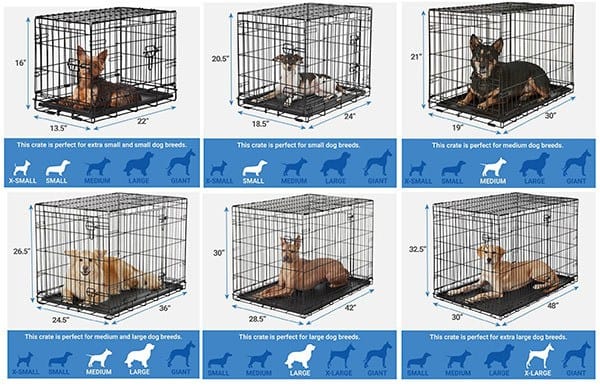
I once saw a well-meaning friend purchase a crate for their new Labrador puppy. The puppy, at eight weeks old, was a chunky little sausage. The crate was probably meant for a Beagle, at best. The poor Lab would barely fit in it to lie down, let alone stand. She was constantly trying to wedge herself in, looking utterly miserable. It was heartbreaking to watch. A few weeks later, she had to go out and buy a bigger one, essentially wasting money and causing unnecessary stress for her dog.
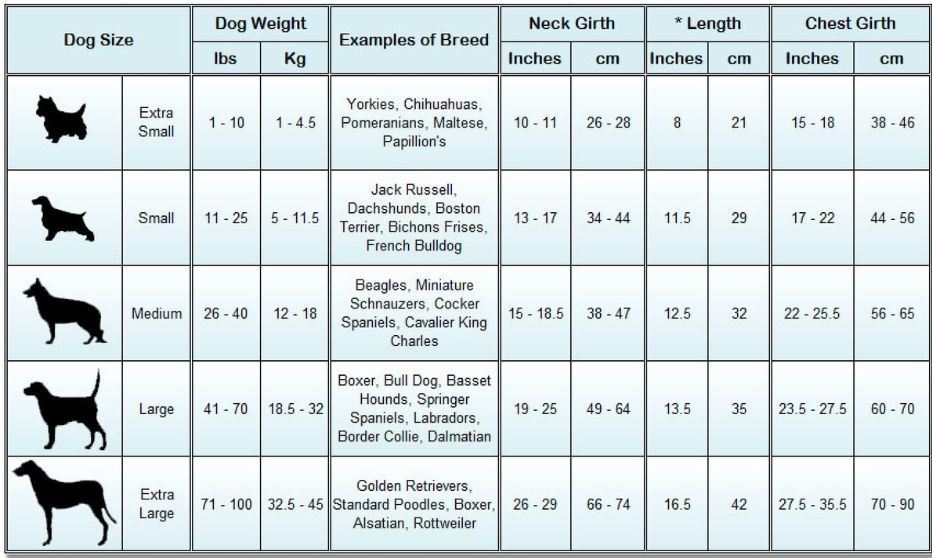
And finally, don't forget about the breed. While individual measurements are key, knowing your dog's breed can give you a good ballpark figure. A Newfoundland will need a significantly larger crate than a Yorkshire Terrier. If you're getting a puppy, a quick Google search for "adult size [your breed]" can be very helpful in planning for the future.
Making the Crate a Happy Place
Once you've got the right size crate, remember that the crate itself is just a tool. The real magic happens when you make it a positive experience for your dog. This means lots of treats, praise, and making sure the crate is a place of comfort and security. Never use the crate as punishment. It should be their happy hideaway, their personal spa, their cozy little den.
Think of it like this: if you were forced to sleep in a closet every time you did something wrong, you'd probably hate closets. But if your closet was filled with your favorite blankets, a comfy pillow, and you got treats every time you went in there, you'd probably look forward to it!
So, take a deep breath, grab your tape measure, and channel your inner dog-sizing guru. With a little bit of effort and a lot of love, you'll find the perfect crate that will make your dog feel like they've won the canine lottery. Happy crating!