What Is The Climax Of A Story

Ever feel like a story just fizzles out, like a party that ends with everyone awkwardly shuffling towards the door? Or maybe you’ve read a book that gripped you so tight, you forgot to blink? That’s all thanks to something super important called the climax. Think of it as the story’s big moment, the peak of the mountain, the crescendo of the song.
Imagine you’re planning a surprise birthday party for your best friend. You’ve been secretly buying decorations, practicing your "Surprise!" face in the mirror, and coordinating with everyone to be at the right place at the right time. The whole build-up – the hushed phone calls, the nervous glances – is like the rising action in a story. You’re getting closer and closer to the big reveal.
Then, BAM! Your friend walks through the door, everyone jumps out, and the room erupts with cheers. That moment of pure, unadulterated surprise and joy? That’s the climax of your party story. It’s the point where all the tension, all the anticipation, bursts out into something unforgettable.
Must Read
So, What Exactly IS a Climax?
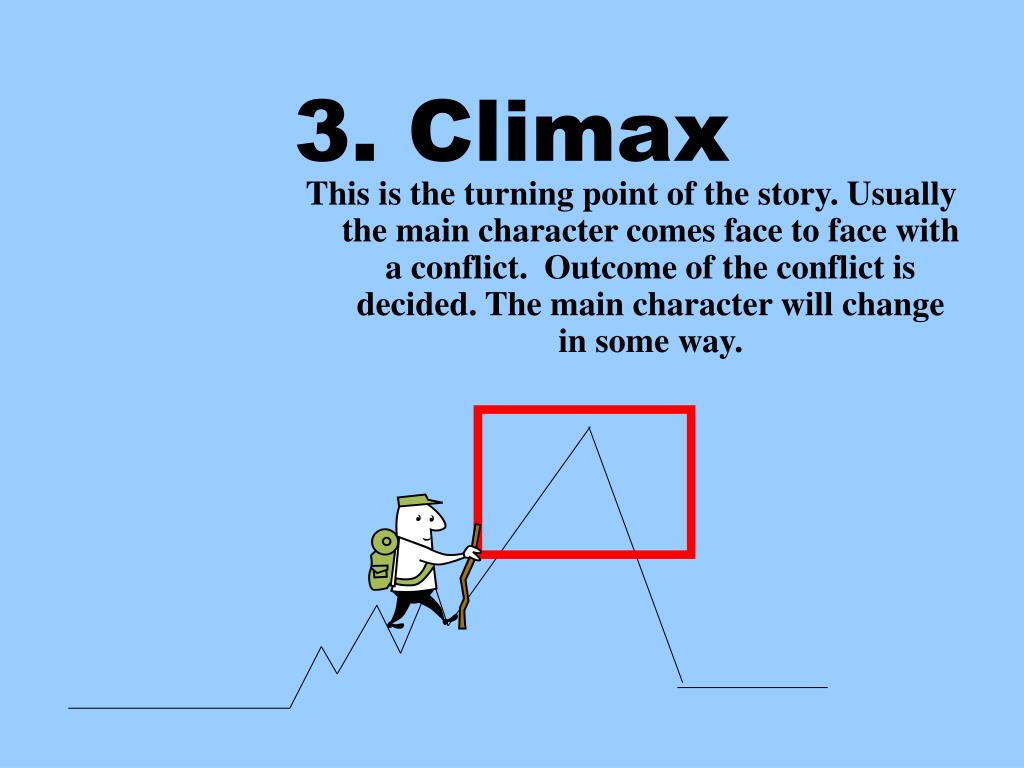
In storytelling terms, the climax is the most intense or exciting part of the plot. It's where the main conflict reaches its highest point. It’s the moment of truth, the showdown, the point of no return. Everything that came before has been leading up to this, and everything that comes after is the result of it.
Think about your favorite movie. Remember that scene where the hero finally confronts the villain? Or the moment the underdog team scores the winning goal in the last second? Or when the two people who have been dancing around their feelings finally, finally kiss? Yep, you guessed it – that’s the climax.
It's not just about action, though. A climax can be emotional, too. It could be a heartbreaking confession, a life-changing decision, or a moment of profound realization.

Why Should We Even Care About This "Climax" Thing?
Great question! Why should you, an everyday person who just wants to relax with a good book or movie, care about the nitty-gritty of story structure? Because a good climax is what makes a story memorable and satisfying. It’s what sticks with you long after you’ve finished the last page or the credits have rolled.
Imagine a story like a roller coaster. The gentle climb up the hill is the beginning, where you're building excitement. Then, you reach the very top, that brief pause before the drop. That pause is like the tension right before the climax. And then – WHOOSH! – you plummet down the steepest, fastest part of the ride. That wild descent is the climax.
If the roller coaster just slowly rolled to a stop at the top of the hill, it would be pretty anticlimactic, right? You’d feel cheated! Stories are the same way. A story without a strong climax is like a meal without a main course. It’s missing the main event, the part that makes it all worthwhile.

Climaxes in Our Own Lives
We actually experience climaxes in our lives all the time, even if we don't call them that. Think about:
- The job interview: You've prepped, you’ve rehearsed, and you finally sit down for the interview. That moment where you have to answer the toughest question, or when the interviewer gives you that knowing look? That’s a mini-climax.
- Asking someone out: The nerves, the butterflies, the rehearsed lines. When you finally blurt it out, and their answer hangs in the air? That’s a personal climax.
- Learning a new skill: You’ve been practicing that tricky guitar chord for weeks. That moment when you finally play it perfectly, clear and strong? That’s a small, triumphant climax.
These are the moments where things are decided, where the stakes are highest, and where the outcome feels most significant. Stories mirror this because, well, we’re wired to respond to these kinds of pivotal moments.
What Makes a Good Climax?
A great climax isn't just loud or fast. It needs to feel earned. It should be the natural, inevitable result of everything that’s happened before. It’s like when you’re baking a cake. You can’t just throw everything in the oven at the last minute and expect it to turn out perfectly. All those steps – mixing, sifting, measuring – build towards that final, delicious outcome.

A good climax also creates a sense of release. All that built-up tension needs to go somewhere. Whether it's relief, triumph, devastation, or understanding, the climax should deliver an emotional punch.
And here’s a fun thought: sometimes, the best climaxes are a little surprising. Not so surprising that they feel random, but just enough to make you go, "Wow, I didn't see that coming!" It’s like a chef adding a secret ingredient to a familiar dish – it elevates the whole experience.
The "Aftermath" of the Climax
Once the big moment has happened, the story doesn’t just stop. Think of it like the moments after your friend’s surprise party. Everyone is still buzzing, hugging, and laughing. This is the falling action, where the energy starts to wind down, and we see the immediate consequences of the climax.

Then comes the resolution, where things settle. Your friend has had an amazing time, the leftover cake is being divvied up, and you’re all feeling happy and content. In a story, this is where the loose ends are tied up, and we see the new normal. A story with a good climax usually leads to a satisfying resolution because the big issues have been addressed.
So, Next Time You're Reading or Watching...
Pay attention to that moment. That turning point. That peak. Ask yourself: was it exciting? Was it emotional? Did it feel like the right culmination of everything that came before? Because that, my friends, is the magic of the climax. It's what transforms a collection of words or images into an experience that resonates, that makes us feel something, and that, ultimately, makes us want to keep turning those pages or hitting 'play' again.
It’s the reason we get so invested, so engrossed, and so moved by the stories we consume. It’s the heartbeat of any good narrative, the unforgettable peak that makes the whole journey worthwhile.