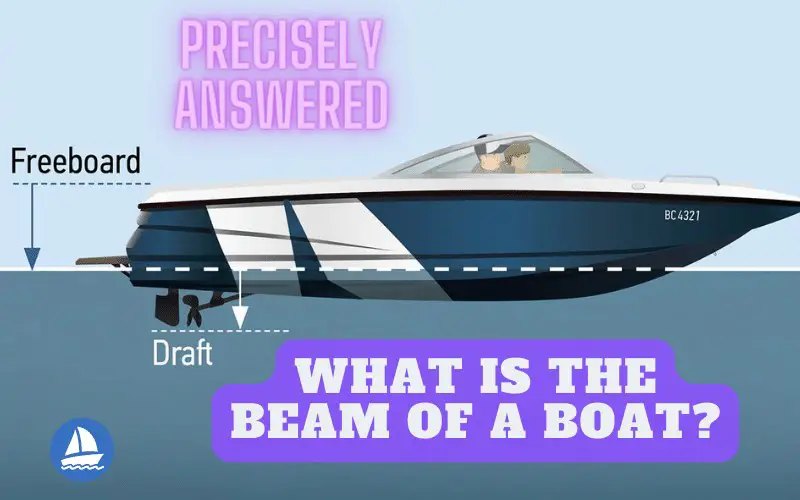
What Is The Beam Of The Boat
Ever found yourself staring out at the water, maybe watching a sleek sailboat glide by, or a sturdy fishing boat chugging along, and wondered about the different parts of a boat? We all know about the sails, the engine, the rudder, right? But have you ever heard someone mention "the beam of the boat"? It sounds kind of technical, maybe a little mysterious. But guess what? It's actually a super important and surprisingly cool part of any vessel!
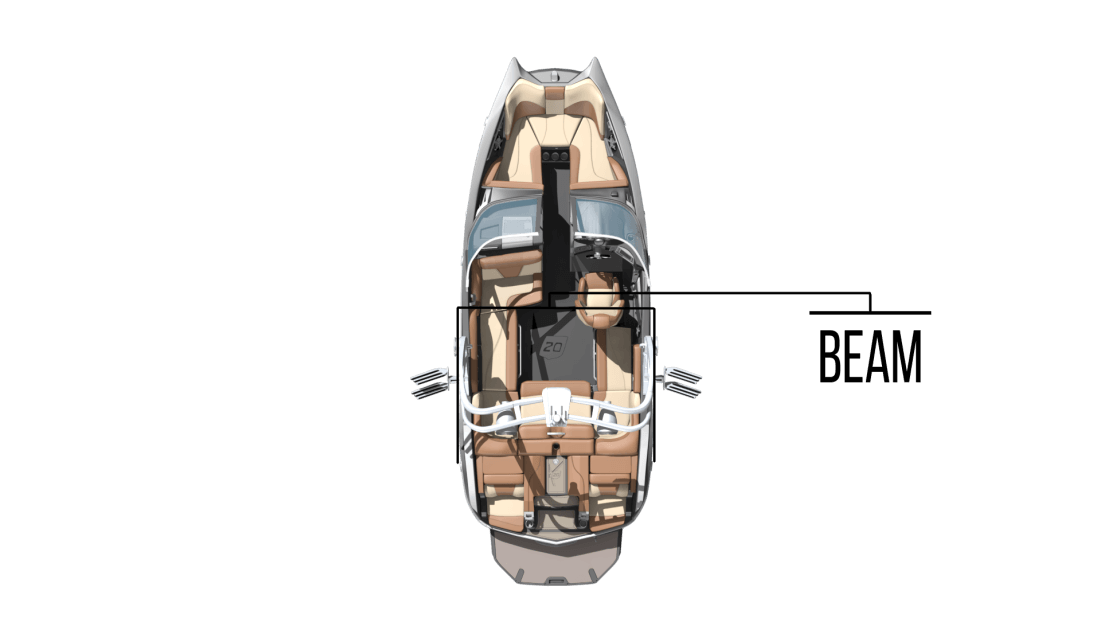
So, what exactly is the beam of the boat? Let's break it down. In the simplest terms, the beam is basically the width of the boat. Not just any width, though. It's the widest part, measured from one side of the hull to the other. Think of it as the boat's most generous measurement, its outstretched arms!
Imagine you're looking at a boat from above. See how it gets narrower towards the front (the bow) and the back (the stern)? Well, somewhere in the middle, it reaches its maximum width. That, my friends, is the beam. It's that point where the boat is at its most expansive. Pretty straightforward, right? But the implications of this width are anything but simple. It’s where a lot of the boat's magic happens!
Must Read
Now, why is this width so important? Why do we even have a special word for it? Well, think about it: would you rather be balanced on a narrow tightrope or a nice, wide plank? The wider the plank, the easier it is to stay upright. The same principle applies to boats. A wider beam generally means a more stable boat. This is super crucial, especially when you're out on the open water where things can get a little bumpy.
When waves hit a boat, they try to rock it. A boat with a wider beam has a lower center of gravity relative to its width, making it much harder for those waves to tip it over. It’s like having a wider stance when you’re standing on a wobbly surface – you’re just naturally more secure. So, that beam isn't just a measurement; it's a key player in keeping the boat (and everyone on board!) safe and sound.
Stability is King (or Queen!)
Let's dive a little deeper into stability. For larger ships, especially cargo ships that carry tons of heavy goods, a wide beam is absolutely essential. Imagine trying to balance a giant stack of boxes on a pencil versus a sturdy table. The table, with its wider base, is going to be way more stable. Similarly, a wide-beamed ship can handle a lot more weight and adverse conditions without feeling like it’s going to capsize.
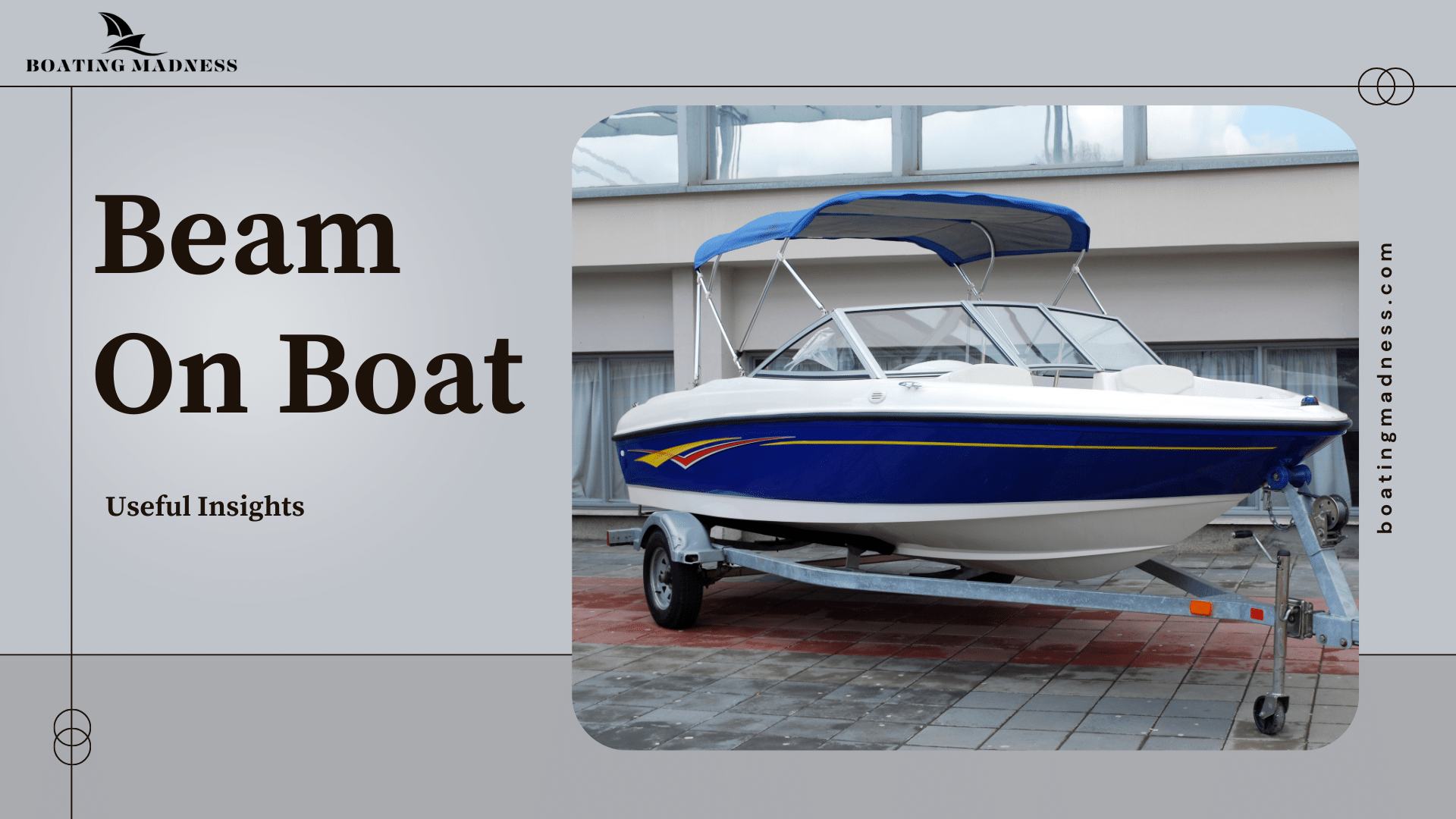
Even for smaller boats, like a dinghy or a kayak, the beam matters. A wider dinghy might be a bit slower, but it will feel a lot more secure, especially if you’re a beginner or if you’re carrying gear. A narrower kayak might be faster and more agile, but it’ll demand a bit more skill to keep it upright. It’s a trade-off, and the beam is a big part of that equation.
Think about it like designing a chair. You can make a chair with really thin legs, and it might look elegant, but it wouldn't be very comfortable to sit in if you're worried about it tipping. A chair with a wider base, however, feels more solid and inviting. The beam of a boat is its design foundation for stability.
Speed vs. Stability: The Age-Old Boat Dilemma
Here’s where things get really interesting. While a wider beam brings stability, it often comes at the cost of speed. Why? Well, a wider boat means more surface area pushing against the water. It's like trying to drag a wide plank through the water versus a thin knife. The wide plank is going to create a lot more drag, making it harder to move quickly.
This is why you see such a difference in beams between different types of boats. Racing yachts, designed for maximum speed, often have relatively narrower beams. They’re built to slice through the water. On the other hand, a sturdy trawler, designed for long fishing trips and carrying heavy catches, will have a much wider beam for stability and cargo capacity.
![Boat Beam [What Is It and Its Relation to A Boat's Stability]](https://boatinggeeks.com/wp-content/uploads/2020/10/beam-on-a-boat.jpg)
It's a constant dance between these two important factors in boat design. Naval architects spend a lot of time figuring out the perfect beam for a particular purpose. They’re basically asking: “How stable does this boat need to be, and how fast do we want it to go?” The answer to that question directly influences the beam.
More Than Just Width: The Beam and How a Boat Behaves
The beam doesn’t just affect stability and speed; it also influences how a boat moves in the water. A wider beam can mean a more comfortable ride in choppy seas. Instead of feeling every little bump as the boat pitches and rolls, a wider hull can absorb some of that motion, providing a smoother experience for those on board.
Imagine walking on a very narrow bridge versus a wide boardwalk. The narrow bridge, even with railings, will make you feel every sway. The wide boardwalk, however, feels much more grounded and secure, even if there's a bit of wind. That’s the difference a good beam can make!
![Boat Beam [What Is It and Its Relation to A Boat's Stability]](https://boatinggeeks.com/wp-content/uploads/2020/10/what-is-the-beam-of-a-boat.jpg)
Furthermore, the beam can affect how a boat handles. For example, a wider boat might be a bit slower to turn compared to a narrower one. Think of trying to turn a wide truck versus a nimble sports car. The truck needs more space and a wider arc. It’s not necessarily bad, it’s just a different characteristic of how the boat behaves.
Looking at the Beam in Different Boats
Let's take some examples. A classic sailboat, like a modest day cruiser, might have a beam that’s about a third of its length. This gives it a good balance of stability for recreational sailing and enough efficiency to catch the wind.
Now, think about a massive container ship. These giants can be hundreds of feet long, and their beams can be over 100 feet wide! That enormous width is crucial for carrying all that cargo safely across oceans.
And what about something like a speedboat? They often have a narrower beam, especially at the waterline, to minimize drag and maximize speed. However, they might have chines or chines that extend outwards, creating a wider effective beam at higher speeds for stability. It's clever design at work!
![Boat Beam [What Is It and Its Relation to A Boat's Stability]](https://boatinggeeks.com/wp-content/uploads/2020/10/boat-beam.jpg)
Even catamarans, with their two parallel hulls, have a beam defined by the distance between those hulls, and the overall width of the structure connecting them. This wide separation of hulls is a key reason why catamarans are known for their incredible stability.
The "Beam-to-Length Ratio" – A Designer's Secret Code
Sailors and boat designers often talk about the "beam-to-length ratio." This is simply the beam divided by the length of the boat. It’s a quick way to get a feel for a boat’s proportions. A higher ratio means a wider boat relative to its length, and a lower ratio means a narrower boat.
So, when you hear about a boat having a "generous beam" or a "slender beam," now you know they're talking about its width and what that implies about its performance and how it will handle the water. It’s like understanding the difference between a wide, comfortable sofa and a sleek, minimalist stool – both have their purposes!
The beam is one of those fundamental aspects of boat design that you might not think about at first, but it’s so, so important. It’s the foundation of a boat's stability, a major factor in its speed, and it dictates how it will behave in the water. Next time you’re by the water, take a look at the boats. Try to spot their widest point. You’ll start to see how the beam tells a story about the boat's intended purpose. Pretty cool, huh?