What Is A Tier 2 Visa Uk

Hey there! Grab a cuppa, settle in, and let's chat about something that might sound a bit…official. We're talking about the UK Tier 2 Visa, or what it used to be, anyway. You've probably heard whispers, maybe seen a confused-looking person staring at a government website. It’s not as scary as it sounds, I promise. Think of it as your golden ticket, your backstage pass, to working in the UK. Well, not exactly a golden ticket, maybe more of a… well-researched and approved ticket. 😉
So, what was this mysterious Tier 2 Visa? Basically, it was the main route for skilled workers from outside the European Economic Area (EEA) – so, folks like you and me, if we’re not from the EU, Switzerland, Iceland, Liechtenstein, or Norway – to come to the UK and get their work on. If you had a job offer from a UK employer, and that employer was willing to sponsor you (big sigh of relief if they are!), then this was probably your jam.
Imagine you've got this amazing skill, right? Like, you can code like a wizard, or you’re a world-class chef who can make a single Brussels sprout taste like a Michelin-star dish. The UK says, "Hey, we need that talent!" And if they can’t find someone already in the UK with those skills (which is a whole other hoop to jump through for the employer, by the way), then voilà, you can apply. Easy peasy, right? Well, maybe not peasy, but definitely doable.
Must Read
Now, a little housekeeping. The Tier 2 Visa is actually no more. Shocker, I know! They’ve rebranded it, and it’s now called the Skilled Worker visa. So, if you see "Tier 2" floating around, just mentally swap it out for "Skilled Worker." It's like when your favorite band changes their name – a bit confusing at first, but the music (or in this case, the immigration rules) is mostly the same. They did this as part of a bigger shake-up of the UK's immigration system. Think of it as a glow-up for visas!
But let's dive into what made the Tier 2 tick, because understanding its legacy helps understand the current system. The Tier 2 was split into a few different categories, kind of like different levels in a video game. You had:
Tier 2 (General)
This was the big daddy, the most common route. If you were a skilled worker with a job offer from a UK employer who was approved by the Home Office to sponsor migrants, this was your gateway. Your job had to be on a list of eligible occupations, and you needed to meet a minimum salary requirement. Oh, and you had to prove you could speak English. Because, you know, it’s the UK. We like our English spoken!
The eligible occupations list was quite extensive, covering everything from doctors and nurses (much needed, bless 'em!) to IT professionals, engineers, and even some creative roles. It was designed to fill gaps in the UK labor market. So, if your skills were in demand, and a UK company was willing to take a chance on you, this was your path. They’d issue you a Certificate of Sponsorship (CoS). Think of this as your official invitation from your future boss. Without it, you were pretty much nowhere. It was like trying to get into a VIP club without a guest list. You need that name on the sheet!
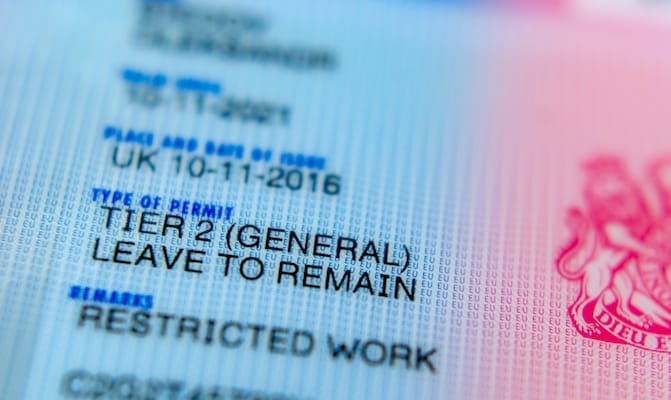
The salary thing was a bit of a sticking point for some. The government wanted to ensure that people coming in weren't just taking the lowest-paid jobs. So, there was a minimum salary threshold, and this threshold would often change. It was like a moving goalpost, keeping everyone on their toes! You had to check the latest figures to make sure your salary was up to scratch. No slacking off on the research, people!
Tier 2 (Intra-Company Transfer)
Now, this was a bit different. Imagine you work for a big multinational company, right? And your company has offices in, say, India, and also in London. If your employer wants to move you from the Indian office to the London one to share your invaluable expertise (because, let's face it, you’re a rockstar at what you do), then this was your visa. You had to have been working for the company overseas for a certain period, usually at least 12 months, and your role in the UK had to be similar to your old one.
This was great for companies wanting to transfer their existing talent. It meant they didn't have to go through the whole process of finding and training someone new in the UK. It was like an internal shuffle of superheroes. And for the employee, it was a fantastic opportunity to work abroad, gain new experiences, and maybe even pick up a posh British accent. Cheerio!
Tier 2 (Sportsperson)
Okay, this one’s a bit more niche, but still important! If you were a talented sportsperson or a coach, and you were coming to the UK to work for a recognised sports governing body or a club, then this was your ticket. Think of your favorite football players, your Olympic athletes, the ones who make us all cheer (or groan in agony). They’d often come in on this visa.
It wasn't just about being good; you had to be at the top of your game, internationally recognised. So, your local pub league star might not qualify, but a bona fide professional definitely could. It’s all about bringing top-tier talent to the UK, whether it’s on the pitch or in the coaching box. Imagine the excitement! Plus, it gave UK sports fans access to the best talent from around the world. Win-win, right?
Tier 2 (Minister of Religion)
And finally, for those in the spiritual realm, we had the Minister of Religion visa. This was for people coming to the UK to undertake religious work for a religious organisation. So, if you were a pastor, an imam, a rabbi, or any other religious leader, and you were coming to serve a congregation or a religious community in the UK, this was your route. It’s about ensuring that religious communities in the UK have access to spiritual guidance and leadership.
It’s a really specific category, of course, but it’s an important part of making sure diverse communities in the UK can practice their faiths freely and with appropriate support. So, a little bit of peace and spiritual guidance for everyone!
Now, let's talk about the nitty-gritty, the stuff that made people scratch their heads. To even think about applying for a Tier 2 Visa, your prospective employer had to have a Sponsor Licence. This wasn't something they could just get on a whim. It meant the Home Office had vetted them and decided they were trustworthy enough to bring foreign workers into the country. It was a rigorous process, and some businesses just couldn't or wouldn't go through it. So, even if you had the skills, you were dependent on your employer's sponsorship status. Talk about a dependency!
Once you had your CoS from a licensed sponsor, you then had to meet various requirements yourself. These included:
English Language Proficiency
Yep, you guessed it. You had to prove you could speak, read, write, and understand English. Usually, this was done through an English language test, or by having a degree taught in English. Because, you know, tea, crumpets, and fluent English conversations. It’s all part of the charm!
Financial Requirements
You had to show you had enough money to support yourself when you arrived in the UK. This was to make sure you wouldn’t become a burden on the state. The amount changed from time to time, so again, research was key! It was like packing for a trip; you needed to make sure you had enough cash for your adventures. No one wants to be stranded and broke!
Meeting the Job's Requirements
Your job had to be at a certain skill level (RQF level 3 or above, which is basically A-level standard or equivalent). And, as we touched upon, there was a salary threshold. The salary had to be the higher of two figures: the general salary threshold for that job code, or the 'going rate' for that specific occupation. This was to prevent employers from undercutting the wages of UK workers. It was a careful balancing act, ensuring fairness for everyone.
The application process itself could be a bit of a marathon. You’d fill out an online form, upload a shedload of documents (birth certificates, passports, bank statements, qualifications, the works!), and then attend a biometric appointment to give your fingerprints and photograph. It was all very official and very… thorough. Sometimes it felt like they wanted to know your grandmother’s maiden name and your favorite childhood pet’s middle name. Just kidding! (Mostly.)
The visa was typically granted for a period of up to 5 years. And here’s the good news: after a certain period, usually 5 years, you could apply to become a settled worker, also known as indefinite leave to remain. This is the ultimate goal for many, isn't it? The freedom to stay and work in the UK without the constant worry of visa renewals. It’s like graduating from a demanding course; you’ve earned your stripes and can now relax (a bit!).
So, why the change to the Skilled Worker visa? Well, the government wanted to simplify the system, make it more streamlined, and focus on attracting the brightest and best talent. The Tier 2 system, while effective, had become a bit complex with its various sub-tiers and specific rules. The Skilled Worker visa aims to be more straightforward, while still maintaining the core principle of needing a job offer from a licensed sponsor and meeting skill and salary thresholds.

Think of it like this: the Tier 2 was a well-loved, slightly worn-out pair of jeans. They did the job, but they were maybe a bit baggy in places and the pockets weren't quite right. The Skilled Worker visa is the shiny, new, perfectly tailored designer jeans. They look sleeker, they fit better, and they're supposed to be more efficient. Let’s hope so, anyway!
The underlying principles are very similar. You still need a job offer from a licensed sponsor. That sponsor still needs to prove they can’t find a suitable candidate from the UK resident labor market. And you, the applicant, still need to meet a minimum salary requirement and demonstrate you can speak English. The specific salary thresholds and eligible occupation codes might have changed a bit, so always, always check the latest official guidance. The Home Office website is your best friend here, even if it’s not always the most cheerful read. It's better than getting a rejection letter, right?
The introduction of the Skilled Worker visa also coincided with other changes, like the abolition of the resident labour market test for many roles. This used to be a big hurdle for employers, requiring them to advertise the job extensively in the UK before they could even consider sponsoring someone from overseas. Now, for many positions, that test is gone. This has, in theory, made it easier for businesses to recruit the skills they need from abroad. It’s like they’ve removed a pesky level boss from the game!
So, while the name has changed and some of the finer details have been tweaked, the essence of the Tier 2 Visa lives on in the Skilled Worker visa. It’s still the primary route for skilled individuals from around the world to come to the UK and contribute to its economy and society. If you’re dreaming of working in the UK, understanding this pathway, even its previous iteration, is super important. It’s your roadmap, your guide, your… well, you get the picture.
Don’t let the jargon scare you. It’s a process, for sure, but millions of people have successfully navigated it. It’s about being organised, doing your research, and having that all-important job offer. So, if you’ve got the skills, the ambition, and a dream of a life in the UK, don’t despair. Just make sure you’re looking at the Skilled Worker visa rules now. Happy hunting, and may your applications be ever in your favour!