What Does Re Mean On An Email

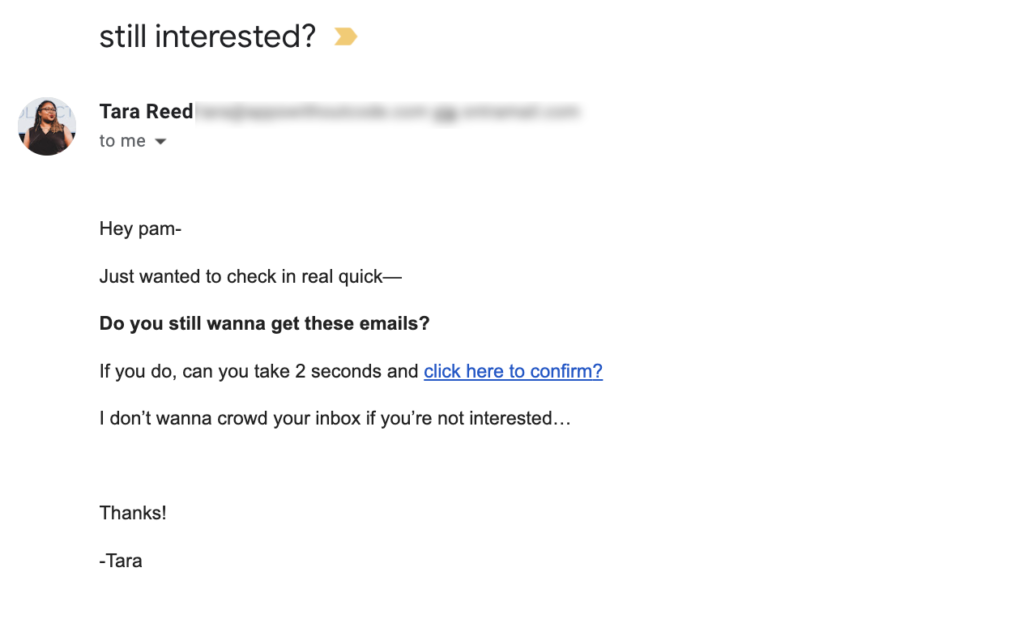
I remember a time, not too long ago, when I was pretty new to the whole email thing. Like, really new. I’d just gotten my first AOL account – remember those days? The dial-up screeches, the little running man icon… ah, nostalgia. Anyway, I was getting emails from friends, mostly just “LOL, you won’t believe this!” or pictures of their cats (which, let’s be honest, was the primary function of the internet back then). Then, one day, I got an email from my aunt. It had a subject line that just said “Re: Dinner Plans.”
My brain, still a novice in the digital communication arena, went into overdrive. “Re?” What did that mean? Was it a typo? Did my aunt accidentally hit a bunch of random keys? Was it some kind of secret code? I spent a good ten minutes trying to decipher it, convinced it was a cryptic message about my questionable life choices or something. My aunt, bless her heart, was probably just trying to be efficient. Little did I know, “Re:” was about to become a fundamental part of my digital existence.
So, what does “Re:” mean on an email? If you’ve ever found yourself staring at that little prefix with a similar sense of bewilderment, you’re in good company. It’s one of those seemingly simple things that can be a bit of a mystery if you haven’t been told. But don’t worry, we’re about to demystify it together. Think of me as your friendly neighborhood email guru, here to shed some light on the digital darkness.
Must Read
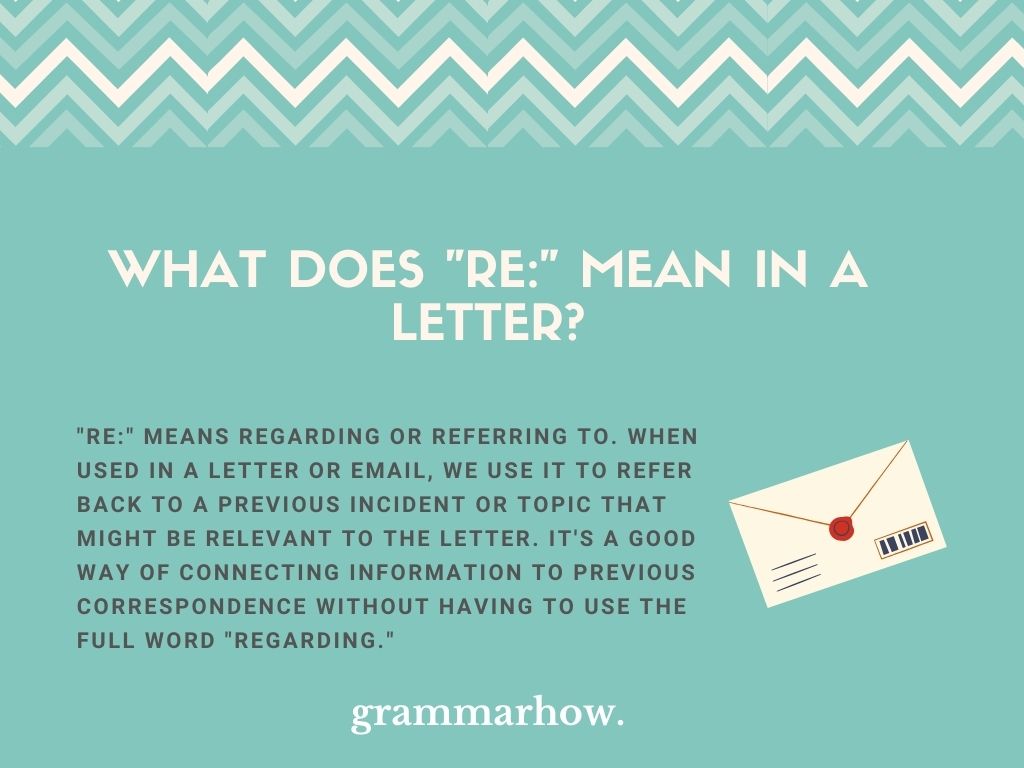
At its core, “Re:” is a simple abbreviation. It stands for the Latin word “res”, which translates to “regarding” or “about”. So, when you see “Re:” in your inbox, it’s essentially telling you that this email is about something that has already been discussed. It’s a way of threading conversations together, like a digital breadcrumb trail.
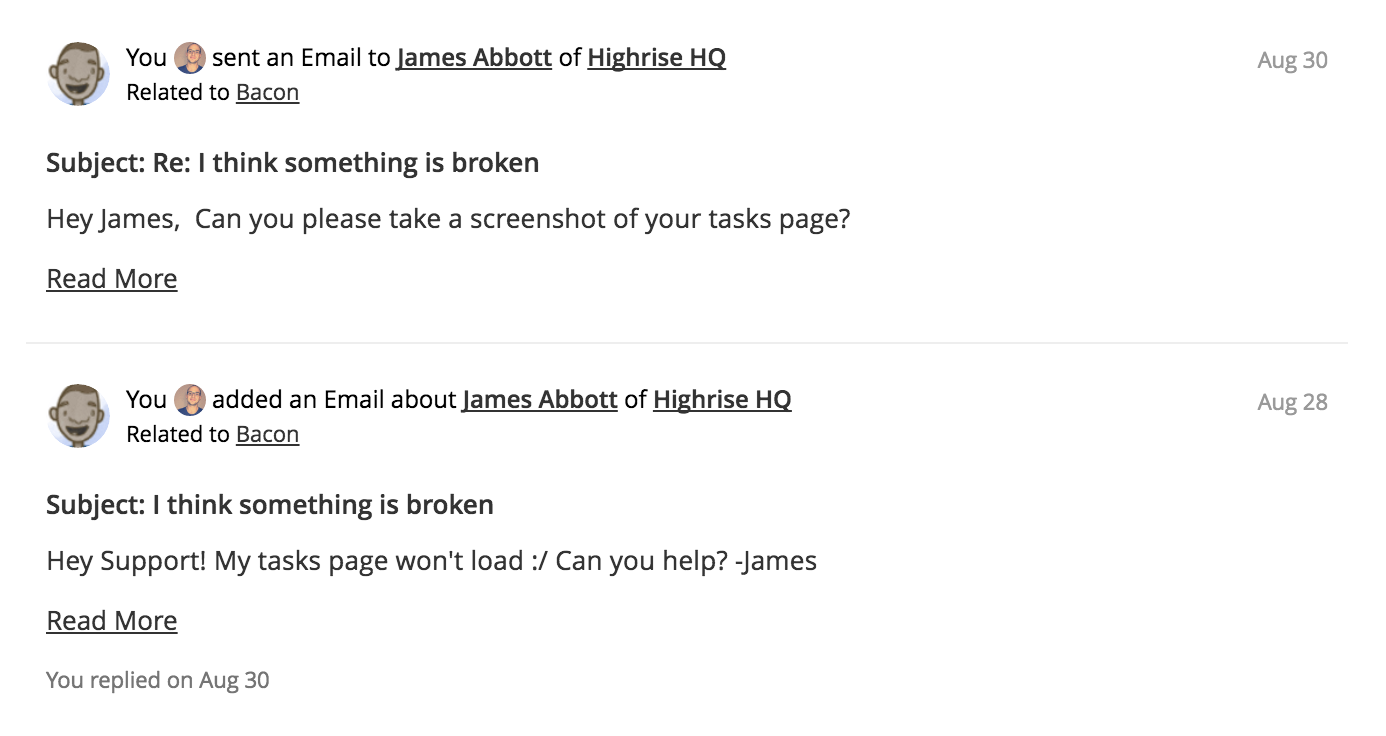
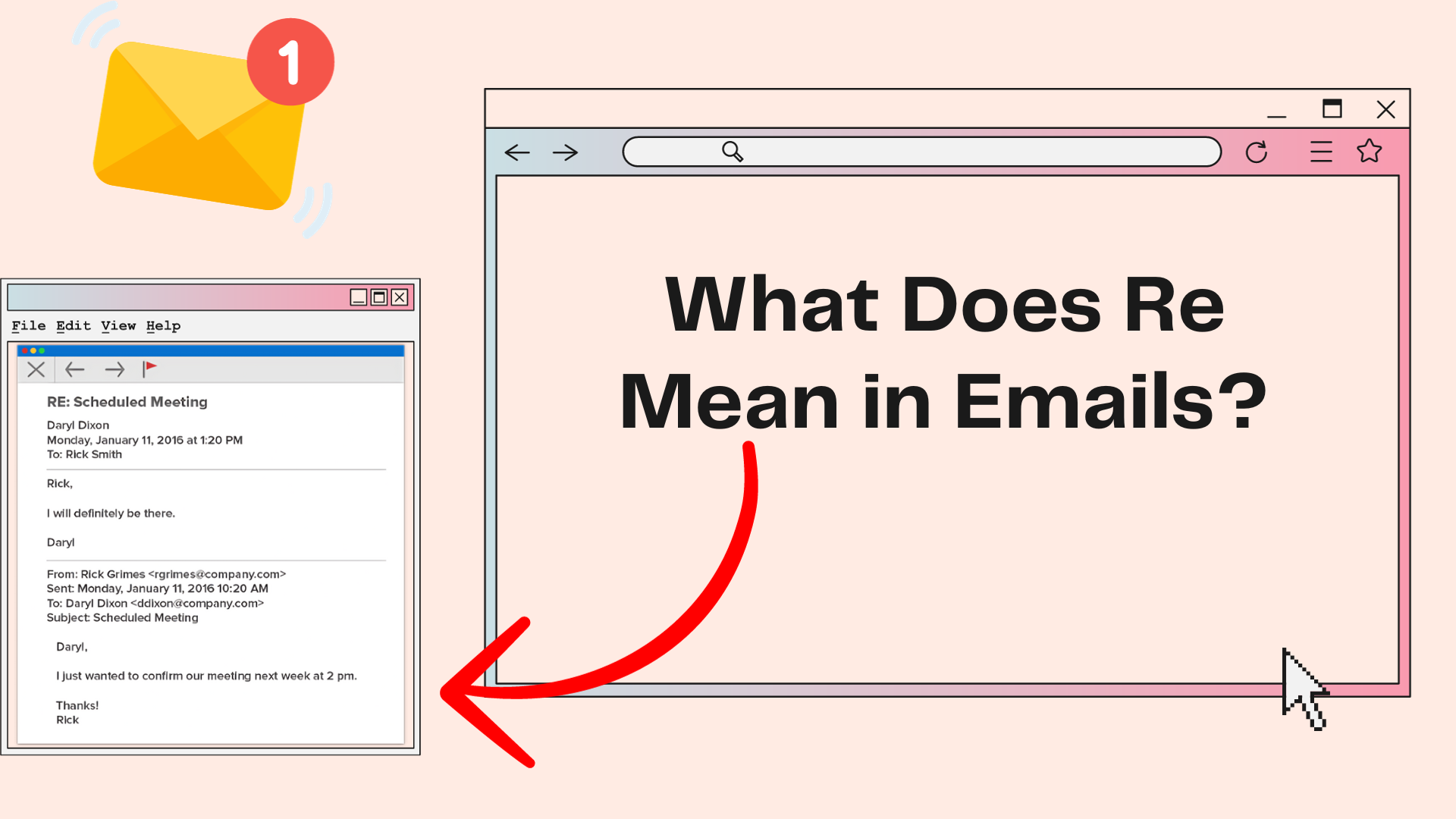
Imagine you’re having a conversation with a friend. You ask them about their weekend plans. They reply. Then you reply back to their reply, asking a follow-up question. The email client, being the smart little piece of tech it is, keeps all these messages together. The original email might have had a subject like “Weekend Plans?” When your friend replies, their email will likely show up as “Re: Weekend Plans?”. And if you reply again, it might become “Re: Re: Weekend Plans?”. See the pattern emerging?
It’s a fundamental part of how email clients organize conversations. Without it, our inboxes would be an absolute chaotic mess of individual messages, each floating in its own digital sea. You’d never know which message was a reply to which, and tracking a back-and-forth would be like trying to find a needle in a haystack… a very large, very digital haystack.
The beauty of the “Re:” system is its simplicity. It’s universally understood by all email providers, from Gmail to Outlook to, well, the ancient AOL of my youth. It’s a silent agreement among email users that says, “Hey, this is part of an ongoing discussion.”
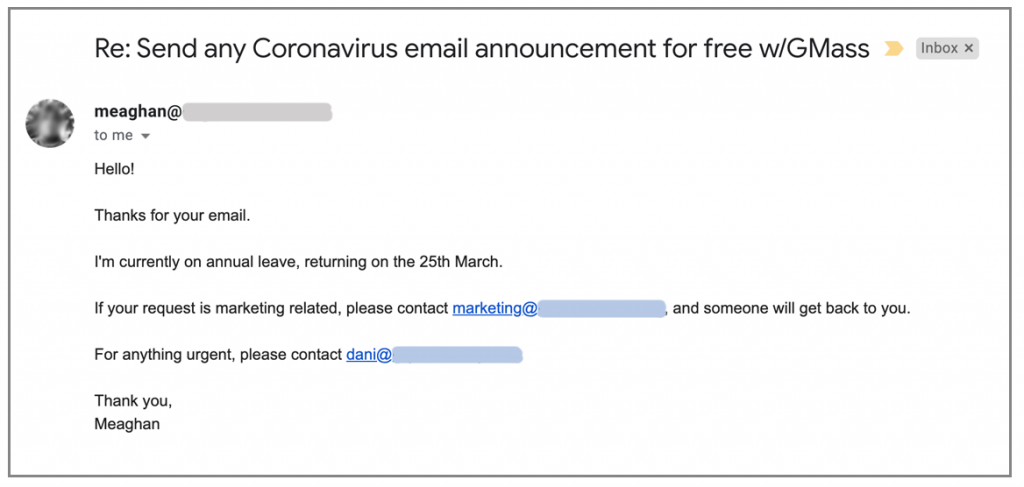
So, why is it so important? Well, let’s break it down. For starters, it improves organization. When you see “Re:” in the subject line, you immediately know that this isn’t a new topic. It’s a continuation of something you’ve already engaged with. This allows you to quickly decide if you need to open it, archive it, or perhaps just skim it because you already know the context.
Think about it from a professional standpoint. Imagine you’re working on a project, and there are dozens of emails flying back and forth about different aspects. If each new email was a completely new subject, you’d be lost. But because they’re threaded with “Re:”, you can easily see the entire history of the discussion, understand who said what, and pick up where you left off. It’s a lifesaver for project management and collaborative work.
It also saves you time. Instead of reading through a long email chain to find the original message or the latest update, the “Re:” prefix gives you an instant clue. You can prioritize your inbox based on what’s new versus what’s a continuation. Plus, it helps you avoid sending duplicate emails. If you see an email with “Re:” you can be pretty sure the sender has already seen your previous message and is responding to it.
And let’s not forget about clarity. When you receive an email that starts with “Re:” you know exactly what to expect. You can mentally prepare yourself for the context, recall the previous conversation, and formulate your response accordingly. No more “Wait, what are we talking about again?” moments.
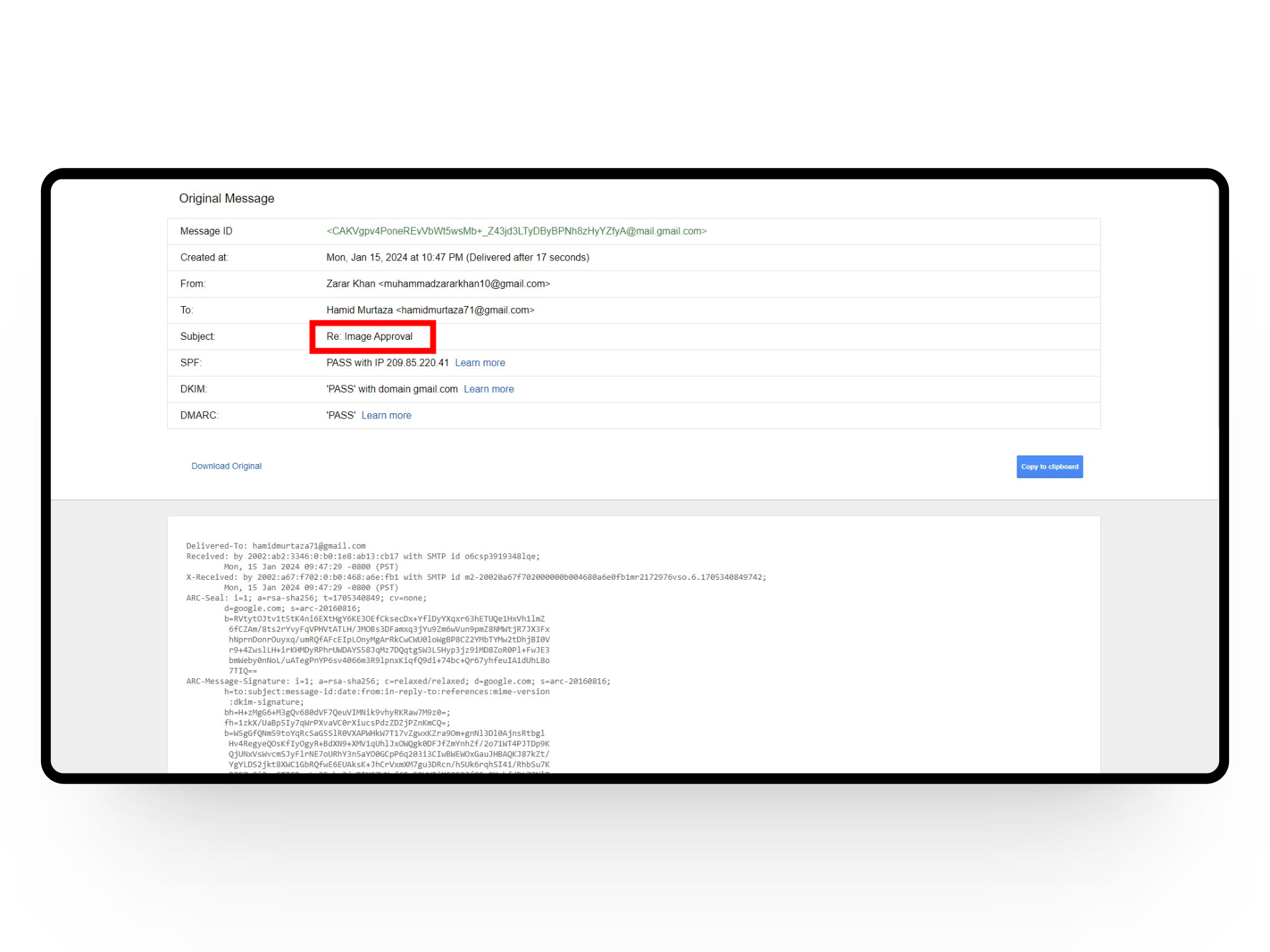
Now, you might be wondering, “But what about the first email? The one that starts the conversation?” That’s a great question! The very first email in a chain won’t have a “Re:” prefix. It will have its own original subject line. For example, if you’re initiating a discussion about booking a holiday, your subject line might be “Holiday Planning!” or “Vacation Ideas.” Once someone replies to that initial email, their reply will then have the “Re: Holiday Planning!” subject line.
And then, the real fun begins. As the conversation continues, the “Re:” prefix can multiply. You might see something like: “Re: Re: Re: Holiday Planning!”. This might look a little silly, and it’s often a source of mild amusement for many. It’s like a visual representation of a very chatty conversation. Some email clients are smarter than others and might consolidate these into a single threaded view, but the “Re:” technically stacks up with each reply.
There’s a bit of an unspoken etiquette around using and managing these “Re:” threads. When you reply to an email, your email client usually automatically adds the “Re:” and keeps the original subject line. This is generally the preferred way to go. It maintains the thread’s integrity.
However, there are times when you might want to change the subject line. This can be a bit of a grey area, and it’s important to use your judgment. If the conversation has completely shifted gears, and the original subject line is no longer relevant, it can be helpful to create a new subject line for your reply. For instance, if you were discussing holiday plans and then the conversation veered off into discussing a completely different, unrelated topic, starting a new thread with a relevant subject might be a good idea. You can do this by simply typing a new subject line instead of letting the email client auto-fill it.
But be cautious! If you’re replying to a client about a specific project and you remove the “Re:” and change the subject to something generic, they might miss the connection. Always consider the recipient and the context before deciding to break a thread or change a subject.
Conversely, if you are the one starting a new email and you want it to be a reply to a previous conversation (perhaps one that wasn’t threaded automatically, or one you’re bringing back up), you can manually add “Re:” to your subject line. This can be a subtle way of signaling to the recipient that you’re referencing something they’ve sent before. It’s a bit of a ninja move in the email world!
Sometimes, people get a little too enthusiastic with the “Re:” prefixes, leading to hilariously long subject lines. You’ll see emails that are ten or fifteen “Re:”s deep! While it’s a sign of an active conversation, it can also make the subject line unreadable. Most modern email clients do a decent job of collapsing these into a neat, threaded view, so you don’t have to scroll through them all the time. But if you’re sending an email and notice your “Re:” count is getting out of hand, it might be a sign that a new, more focused email thread is in order.
Another thing to consider is when you’re forwarding an email. If you forward an email that already has a “Re:” prefix, the forwarded email will usually start with “Fwd: Re:”. This is another indicator that it’s a forwarded message that was part of an ongoing conversation. It’s like a layered cake of communication!
It’s funny how these small, seemingly insignificant abbreviations can have such a profound impact on how we communicate. “Re:” is more than just a few letters; it’s a cornerstone of efficient digital dialogue. It’s the silent glue that holds our conversations together, preventing them from unraveling into a chaotic jumble of unrelated messages.
So, the next time you see “Re:” in your inbox, you’ll know it’s not some ancient digital riddle. It’s simply your email client politely telling you, “This is about something we’ve already talked about.” And isn’t that just wonderfully efficient? It’s a small piece of linguistic magic that makes navigating the often-overwhelming world of email just a little bit smoother.
Think about all the conversations you’ve had via email. From planning birthday parties with friends to coordinating complex work projects, the “Re:” has been there, silently guiding you through. It’s a testament to how much we rely on these digital cues, even when we don’t consciously realize it.
And if you ever find yourself sending an email and wondering if you should start a new subject or reply to an existing one, just ask yourself: does this email directly relate to a previous discussion? If the answer is yes, then embracing the “Re:” is probably the best course of action. It’s not just about being polite; it’s about being clear.
So, there you have it. The humble “Re:” – the often-overlooked hero of email communication. It’s a small abbreviation with a big job, and it’s a reminder that even in the fast-paced digital world, a little bit of organization and context can go a very long way. Next time, maybe I’ll tackle the enigma of “Fwd:”. Stay tuned! (Or, you know, just keep an eye on your inbox.)