Use Symmetry To Evaluate The Double Integral

Let's be honest, math can sometimes feel like a chore. We're all familiar with those intimidating equations that look like they were written by a secret society. Double integrals? Ugh. Just saying the words can bring on a cold sweat. But what if I told you there's a secret weapon? A little trick that can make these beasts much, much easier? It's called symmetry, and it's the unsung hero of calculus.
Think about it. You're staring at this giant, double-barreled integral, and your brain starts to do that little fluttery thing. You're picturing all sorts of complicated boundaries and funky functions. But then, you take a step back. You squint. You tilt your head. And you notice something. Something beautiful. Something... symmetrical.
It's like when you're trying to cut a cake. If you want two perfect halves, you cut right down the middle, right? That's symmetry. It's an easy way to divide and conquer. And guess what? The same principle applies to your double integrals.
Must Read
Imagine you've got a function that looks the same on both sides of an axis. Or maybe it's got a pattern that repeats itself perfectly. That's your cue. Instead of calculating the whole messy thing, you can often just calculate half (or a quarter!) of it and then, poof, multiply it by two (or four). It's like getting a discount at the mathematical store.
Now, I know what you might be thinking. "But I don't always see the symmetry!" And that's okay! It's not always as obvious as a perfectly mirrored image. Sometimes you have to coax it out a little. You might need to do a quick little substitution, a little algebraic wiggle, to reveal the underlying elegance. It's like finding a hidden message in a crossword puzzle.

But once you spot it, oh boy, is it rewarding. Suddenly, that impossible-looking integral shrinks down to something manageable. You're not wrestling with the whole beast anymore; you're just dealing with a smaller, friendlier chunk.
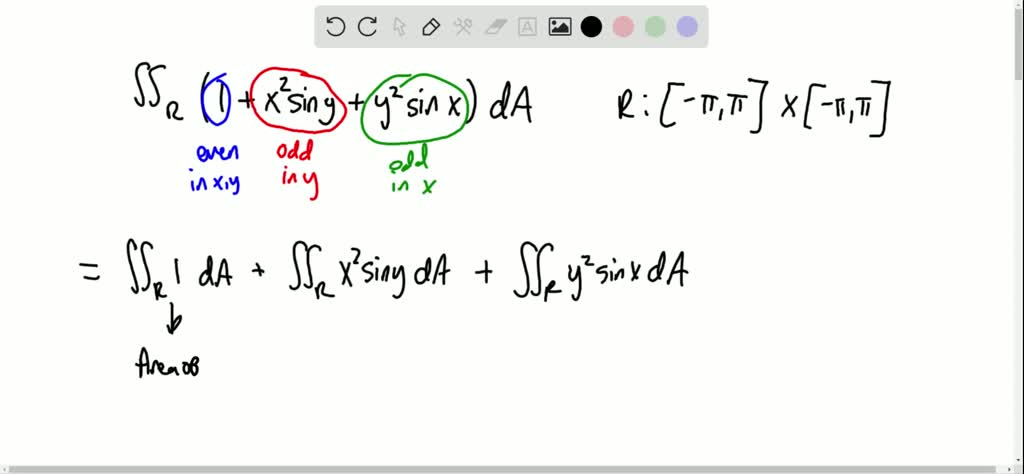
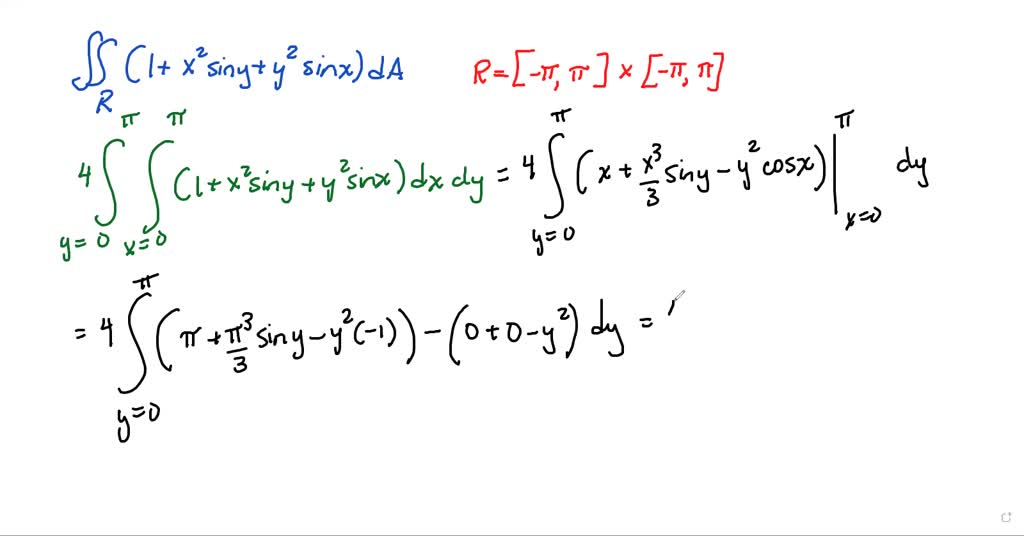
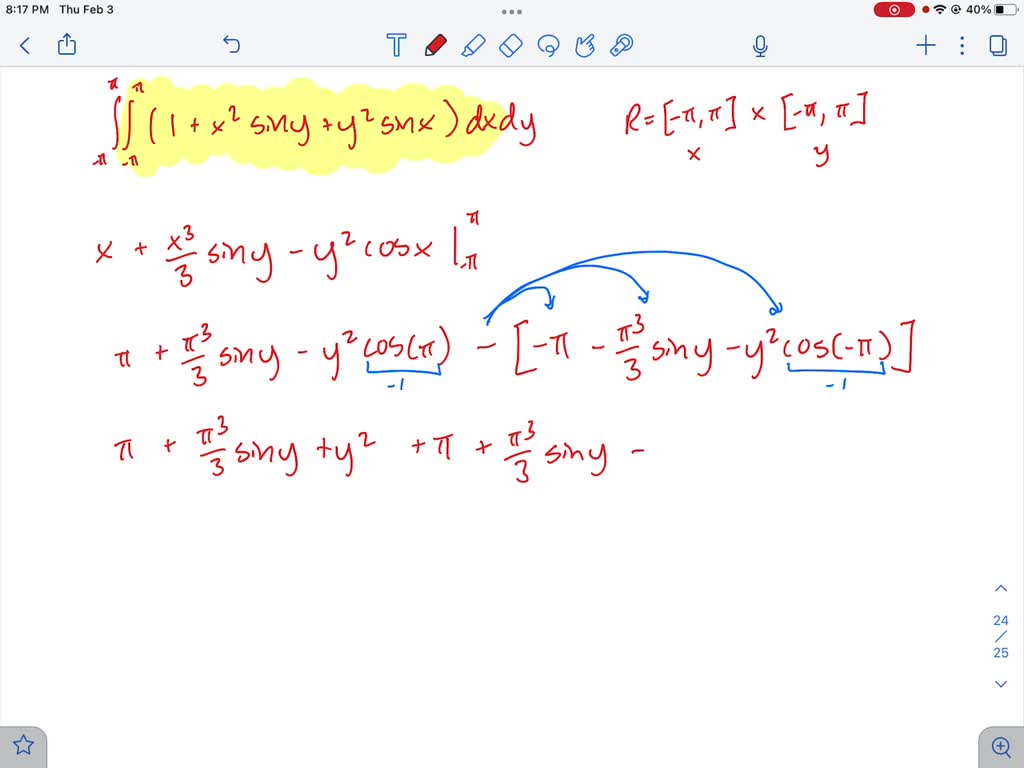
Let's say you're integrating over a circular region. If your function is even with respect to both x and y, meaning f(-x, y) = f(x, y) and f(x, -y) = f(x, y), then you can exploit the symmetry. Instead of integrating over the whole circle, you can integrate over just one quadrant and multiply by four.
It's like having a secret decoder ring for integrals.
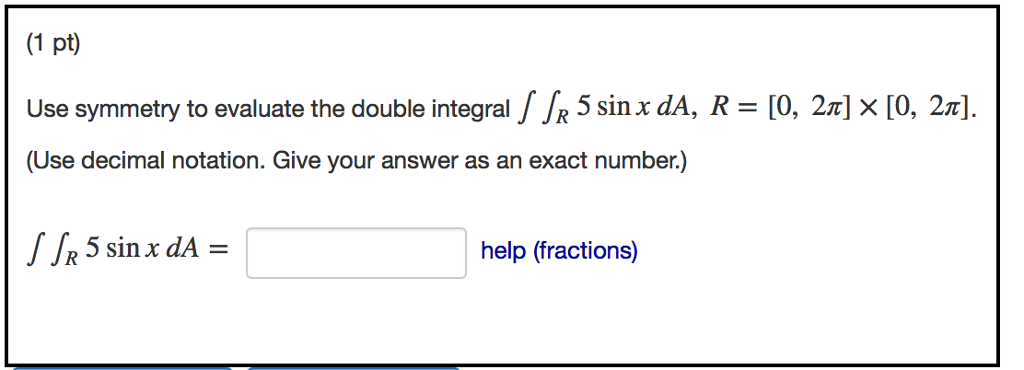
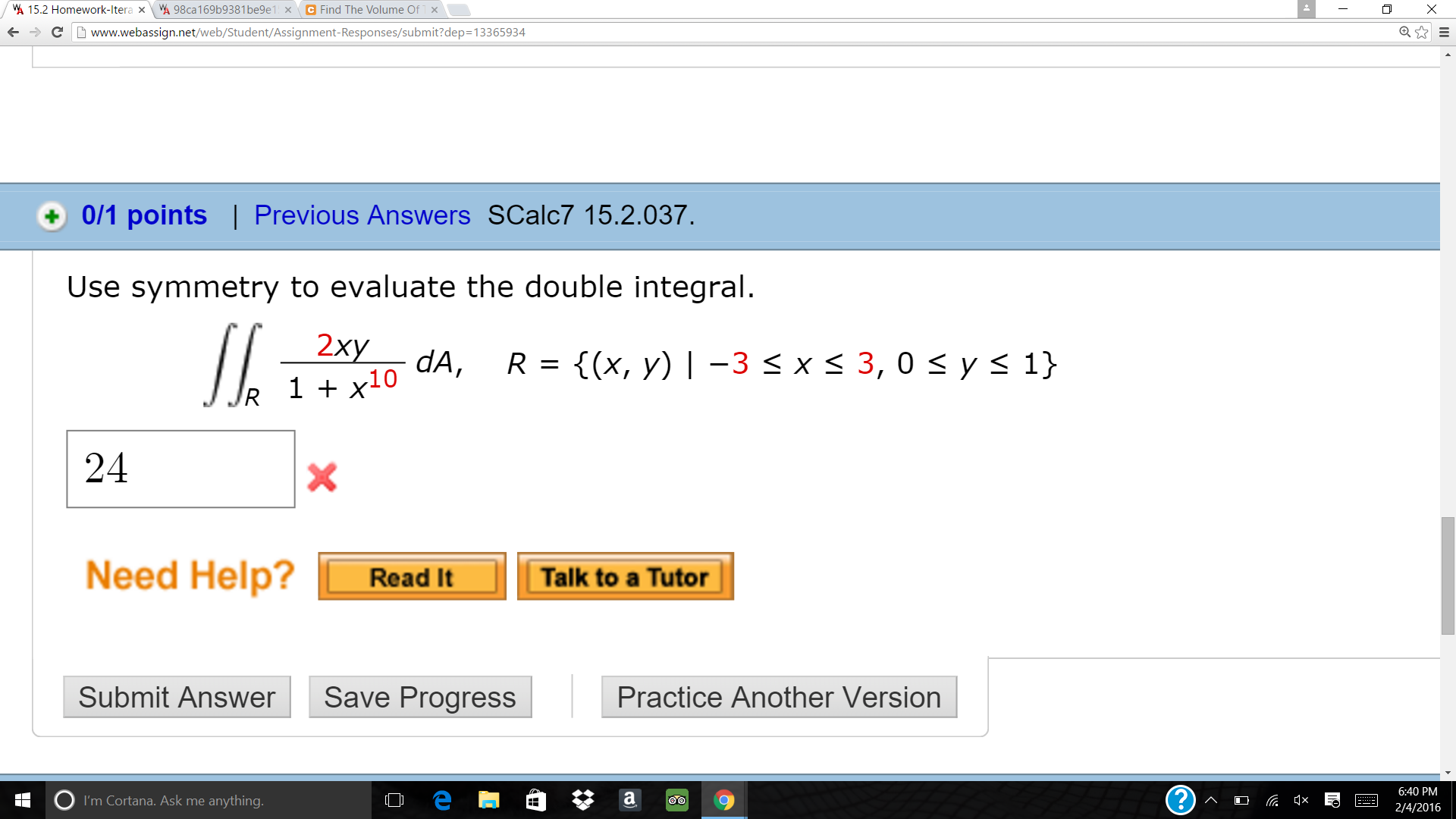
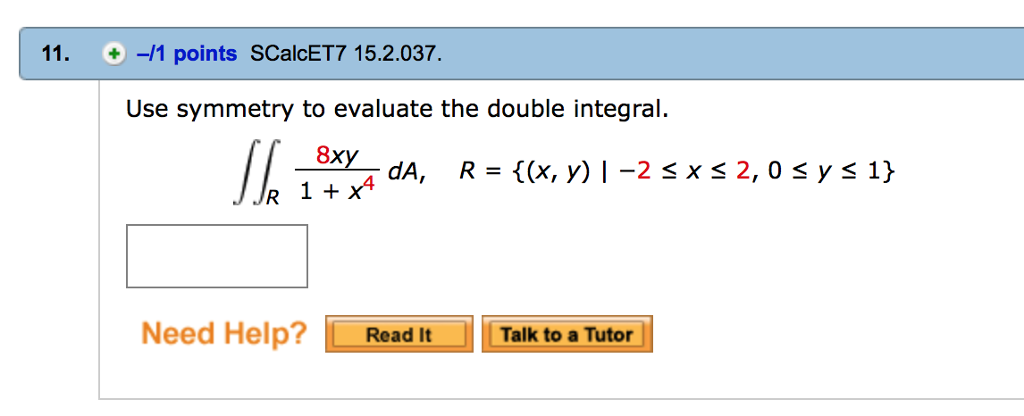
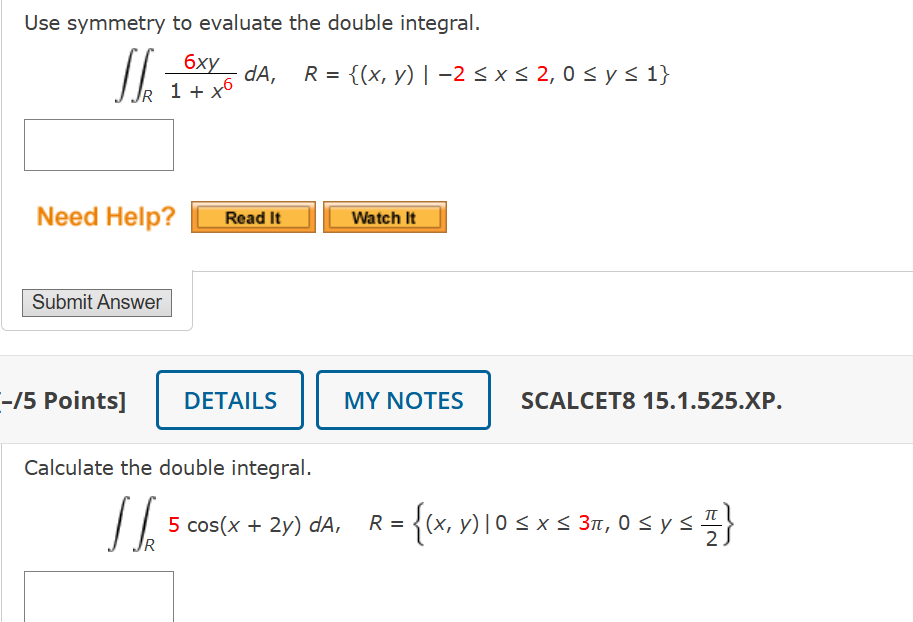
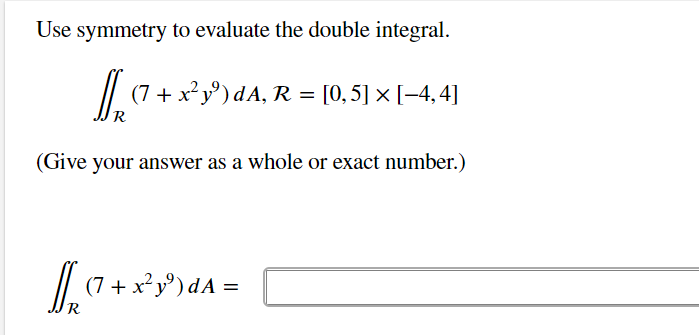
Or what about a rectangular region centered at the origin? If your function is odd with respect to one variable, say f(-x, y) = -f(x, y), and you're integrating over a symmetric interval for x, like from -a to a, then the integral is automatically zero! Boom. Done. No calculation needed. How cool is that? It's like finding a free pass in a board game.
It’s not magic, although it sometimes feels like it. It’s just understanding the underlying properties of the functions and the regions you’re working with. It’s about seeing the patterns, the reflections, the rotations. It’s about realizing that the universe of mathematics often repeats itself in predictable ways.
And here's my unpopular opinion: sometimes, mathematicians make things harder than they need to be. They present these complex problems with elaborate solutions, when a simple glance at the symmetry could have saved them a whole lot of ink and brainpower. It's like building a rocket ship to go across the street when a bicycle would do just fine.
So, the next time you're faced with a double integral, don't just dive into the calculation. Take a breath. Look for the symmetry. See if your region has nice, balanced properties. Check if your function behaves nicely when you flip the signs of your variables. You might be surprised at how much easier it becomes.
Think of it as a mental shortcut. A little cheat code for your brain. And who doesn't love a good cheat code? It's the difference between slogging through a swamp and strolling through a perfectly manicured garden.
This isn't about being lazy; it's about being smart. It's about working with the problem, not against it. It's about recognizing that sometimes, the most elegant solution is also the simplest. And in the world of double integrals, symmetry is your best friend. So, embrace it. Play with it. And enjoy the sweet, sweet relief of a simpler calculation. Your brain will thank you. And who knows, maybe you’ll even crack a smile.