Signs Of Dyslexia In 5 Year Old
Hey there, super-parent! So, your little whirlwind is hitting the big 5. They’re probably zipping around like a tiny superhero, maybe even debating with you about why broccoli is the devil’s vegetable. It’s a wild, wonderful age! But sometimes, as they start dipping their toes into the world of letters and words, you might notice a few things that make you pause. And if you're wondering about dyslexia, you're in the right place! Let's have a friendly chat about what to look out for in a 5-year-old, without any of the scary jargon. Think of this as your friendly neighborhood guide, not a super-serious medical textbook. We’re just here to shine a little light, okay?
First off, let's take a deep breath. There's a lot of stuff happening in a 5-year-old's brain. They're learning a gazillion new things every single day, from how to tie their shoelaces (or at least try to, bless their hearts) to the intricate social dynamics of the playground. So, some things might look a bit wobbly, and that's totally normal. We're not looking for red flags that scream "DISASTER!" We're just looking for patterns, little whispers that might suggest something's a bit different in how their brain processes language. It’s like noticing your kiddo has a favorite crayon color – it’s just a preference, but sometimes those preferences tell us something interesting!
So, What Exactly Is Dyslexia, Anyway?
Before we dive into the signs, let’s get a super-basic understanding. Dyslexia isn't about being "dumb" or "lazy" – seriously, let's chuck those old-fashioned ideas right out the window! It's a neurological difference. It means a person's brain is wired a little differently when it comes to reading, writing, and spelling. Think of it like having a slightly different operating system. Everything works, but the way it processes information, especially language, is unique. It’s like some people are born with innate talent for math, and others for art. For kids with dyslexia, their brain just takes a different route to get to the land of words. And guess what? This route can be just as valid, and often leads to incredible creativity and problem-solving skills!
Must Read
It's important to remember that dyslexia exists on a spectrum. Some folks might have very mild difficulties, while others might struggle more. And a 5-year-old is still so, so young! Their brains are like little sponges, soaking up everything, and they’re still building those crucial foundational skills. So, what we're looking for at this age are early indicators, potential signs that might blossom into something more noticeable down the road. It’s not a diagnosis at 5, it’s just an observation. Like noticing your toddler is really into stacking blocks in a specific order – it doesn't mean they're going to be the next great architect, but it's a cool observation about their preference!
Let's Talk About the "Little Things" – Early Signs to Keep an Eye On
Alright, let’s get down to the nitty-gritty, but in a super chill way. Here are some things you might notice in your 5-year-old that could be related to dyslexia. Remember, one or two of these alone aren't a big deal. It's when you see a combination and a consistent pattern that it's worth a gentle nudge of your parental intuition.
Trouble with Rhymes and Sounds (The "Phonological Awareness" Game)
This is a biggie! Phonological awareness is basically your child's ability to hear and play with the sounds in words. Think of it as the building blocks of reading. Can they hear that "cat," "hat," and "mat" all rhyme? Can they pick out the first sound in "sun" (which is /s/)?
What to look for:

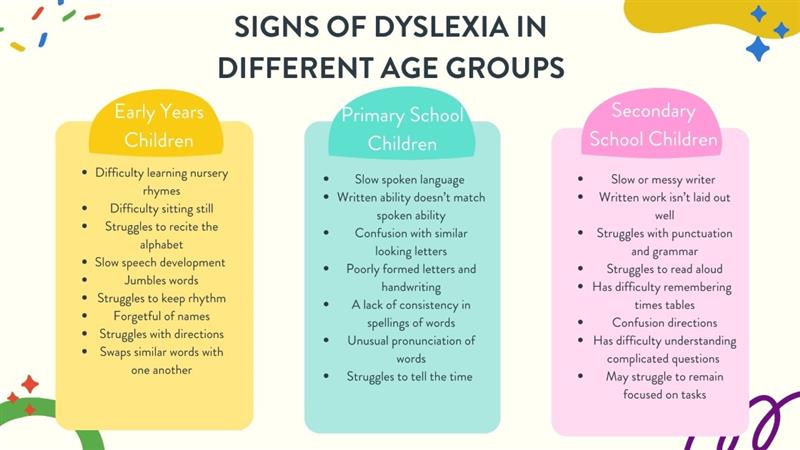
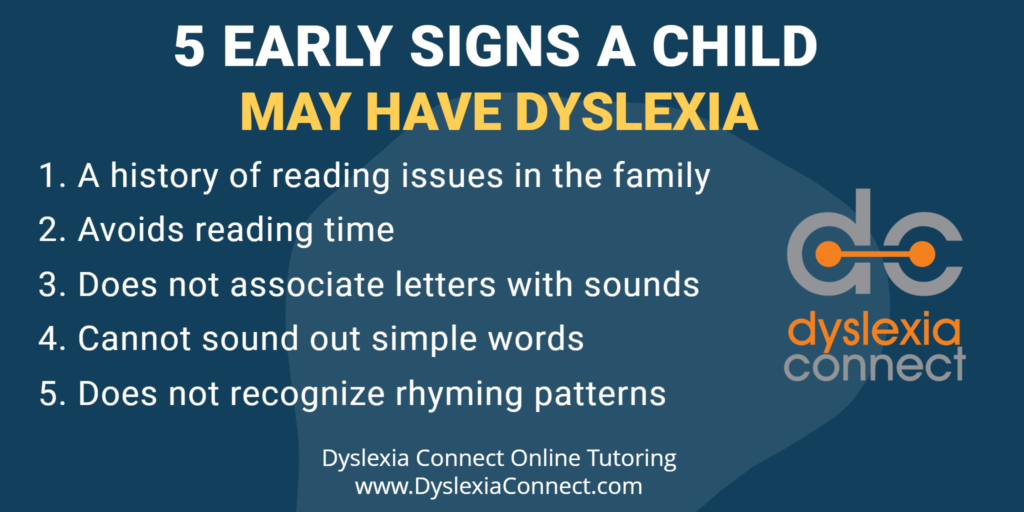
- Struggling with rhyming games: You might be reading a book that ends with a rhyme, like "The cat sat on the mat," and your child just doesn't seem to get that "cat" and "mat" sound alike. Or when you play "I spy with my little eye, something that rhymes with blue," they draw a blank. It’s not that they don’t know what a cat or a mat is, it’s just that the sound connection isn’t clicking easily.
- Difficulty identifying or producing sounds: Ask them to say a word that starts with the /b/ sound. If they struggle to isolate that sound or come up with a word like "ball" or "boy," that could be a sign. It’s like trying to find a specific Lego brick in a giant bin – it’s hard when you can’t easily distinguish the colors or shapes.
- Pronouncing words incorrectly or leaving out sounds: They might say "pajamas" as "jamas," or "banana" as "nana." Or when you say "dog," they might say "doh" and miss the final "g" sound. It's not just a cute toddler pronunciation; it’s a consistent pattern of not fully hearing or articulating all the sounds in a word.
- Confusing similar-sounding words: They might mix up words like "sit" and "set," or "go" and "no." This is because the subtle differences in the sounds are harder for them to distinguish.
Think of it this way: learning to read is like building with LEGOs. You need to be able to recognize and manipulate individual LEGO bricks (sounds) before you can build a sturdy structure (words). If they’re having trouble with the individual bricks, the whole building process might be a bit trickier.
Letter Recognition Hiccups (The Alphabet Tango)
Letters are symbols, right? And understanding that a symbol represents a sound is a HUGE leap. At 5, many kids are starting to recognize some letters, especially those in their name. For a child with dyslexia, this can be more challenging.
What to look for:
- Slow or inconsistent letter recognition: They might know "A" one day and then seem to have forgotten it the next. Or they might consistently mix up letters that look similar, like "b" and "d," or "p" and "q." This isn't about being stubborn; it's about their brain having a harder time making that visual distinction stick. It’s like trying to remember which twin is which when they both have the same haircut – a visual puzzle!
- Difficulty learning letter names and sounds: You might be going through the alphabet song, and while they can sing along, they struggle to connect the letter "M" with the /m/ sound. Or they might know the name of the letter "B" but not know it makes the /b/ sound.
- Confusing uppercase and lowercase letters: They might not understand that "A" and "a" are the same letter. This is understandable at this age, but for some, it’s an added layer of confusion.
- Struggling to write their name (or starting letters of their name): While many 5-year-olds are just starting to scribble, if they show a consistent and significant struggle with forming the letters of their own name, even with guidance, it’s something to note.
It’s like trying to sort a pile of mixed-up playing cards. Some kids can sort them by suit and number with ease. Others might take a bit longer to differentiate between the suits or numbers, especially if they look similar.
Memory and Sequencing Struggles (The "What Came Next?" Game)
Remembering things in order is key for learning. Think about remembering the steps to brush your teeth, or the sequence of a story. For kids with dyslexia, this can be a bit of a bumpy road.
What to look for:
- Difficulty remembering sequences: This could be remembering the order of the days of the week, the months of the year, or even simple instructions. "First, put on your shoes, then grab your backpack." If they consistently struggle with following multi-step instructions, it’s worth noticing.
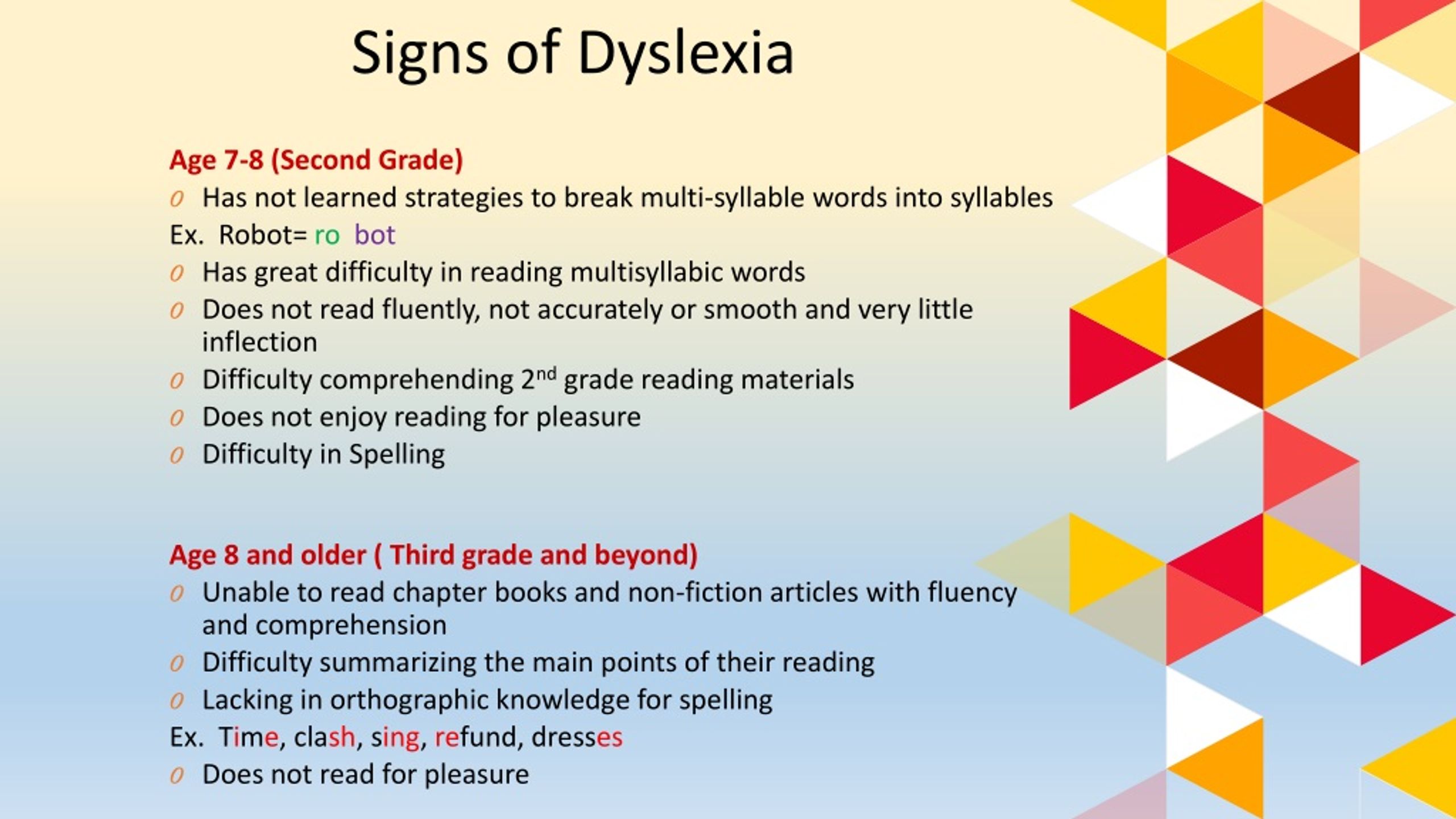
- Trouble recalling learned information: You might have practiced sight words (like "the," "and," "is") just yesterday, and today they seem to have no recollection. Or they might forget how to spell simple words they’ve recently learned.
- Difficulty with storytelling or retelling events: When asked to tell you about their day at preschool, they might jump around, miss key parts, or struggle to form coherent sentences that follow a logical timeline.
- Confusing directionality: This can manifest as mixing up "left" and "right," or struggling with prepositions like "on," "in," and "under." This is also related to how their brain processes spatial information, which can sometimes be linked to language processing.
Imagine trying to put together a puzzle without seeing the box lid. You know the pieces are there, but figuring out which piece goes where and in what order can be a real challenge. It’s a bit like that for kids struggling with sequencing.
Speech and Language Quirks (The "Word Wandering")
Sometimes, difficulties with reading and writing can show up in how a child speaks, too. It's all connected, remember?
What to look for:
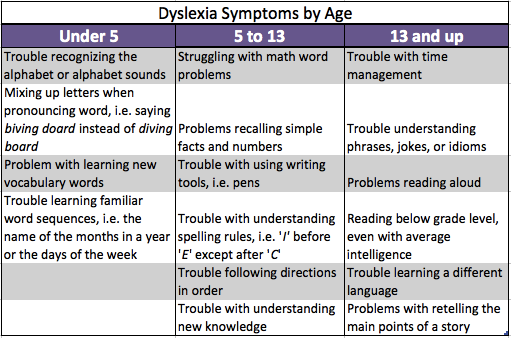
- Delayed speech development: While not all children with dyslexia have delayed speech, some do. If your child’s speech seems significantly behind their peers in terms of vocabulary or sentence structure, it’s worth discussing with a professional.
- Frequent mispronunciations or word substitutions: We touched on this in the rhyming section, but it’s worth repeating. If they consistently mispronounce common words, or substitute one word for another that sounds similar (e.g., "apartment" for "parent," "pasghetti" for "spaghetti"), it can be an indicator.
- Trouble finding the right word (word retrieval): You ask, "What do you want for snack?" and they might say, "Um, you know... that thing... the crunchy one." They know what they want, their brain just has a little trouble grabbing that specific word from its vast lexicon.
- Stuttering or fluency issues: While stuttering can have many causes, sometimes it can be associated with the effort of processing language.
- Difficulty with abstract language: Understanding jokes, idioms, or figurative language might be harder. They tend to take things very literally.
It's like having a fantastic library in your brain, but sometimes the card catalog is a little jumbled. You know the book is there, you just have to work a bit harder to find it!
Behavioral Clues (The "Frustration Factor")
Let’s be honest, when something is hard, it’s frustrating. And 5-year-olds are not always the best at managing frustration.
What to look for:
- Avoidance of reading or writing activities: If they actively resist looking at books, drawing letters, or any activity that involves print, it’s a sign they might be finding it difficult and therefore unpleasant. They might "suddenly" need to go to the potty or find a more pressing toy to play with the moment you pull out a book.
- Getting easily frustrated or upset during literacy tasks: Tears, tantrums, or shutting down completely during these activities could be a signal that they’re struggling. It's not about being "difficult"; it's about their internal frustration boiling over.
- Appearing easily distracted or daydreaming during lessons: Sometimes, if a child finds a task too hard, their brain checks out to cope. They might seem disengaged because they’re overwhelmed, not because they’re not interested.
- Preference for hands-on activities: They might be brilliant at building, drawing, or problem-solving with physical objects, but when it comes to anything involving letters, they seem to lose interest. This isn't a flaw; it often highlights their strengths in other areas!
It's like trying to force a square peg into a round hole. Eventually, the peg (or the child!) is going to get frustrated. It's their way of saying, "Hey, this isn't working for me!"
What To Do Next: Gentle Steps, Not Giant Leaps
Okay, so you've read through this list, and maybe you've noticed a few things that resonate. First of all, take a breath and give yourself a pat on the back. You are a super-observant parent, and that’s amazing! Remember, this is not a diagnosis. This is you gathering information and noticing potential patterns.
The best thing you can do right now is to continue fostering a love of reading and learning. Make it fun! Read aloud together, sing songs, play rhyming games, use playdough to make letters. Celebrate every little success, no matter how small!
If you have persistent concerns after observing these things over time, the next best step is to chat with your child's pediatrician or their preschool teacher. They see a lot of kids and can offer their professional perspective. They might suggest further observation or a screening by a specialist, like a speech-language pathologist or an educational psychologist.
Early identification and support are key. And the good news? With the right strategies and support, children with dyslexia thrive! They learn to read, they excel in school, and they go on to do incredible things. Dyslexia is just one part of who they are, and it doesn't define their potential. It's like having a superpower that just needs a bit of specialized training!
So, go forth, amazing parent! You’re doing a wonderful job. Keep nurturing that curious little mind, and remember that every child learns at their own pace, in their own unique way. And that uniqueness is what makes them so incredibly special. You’ve got this!