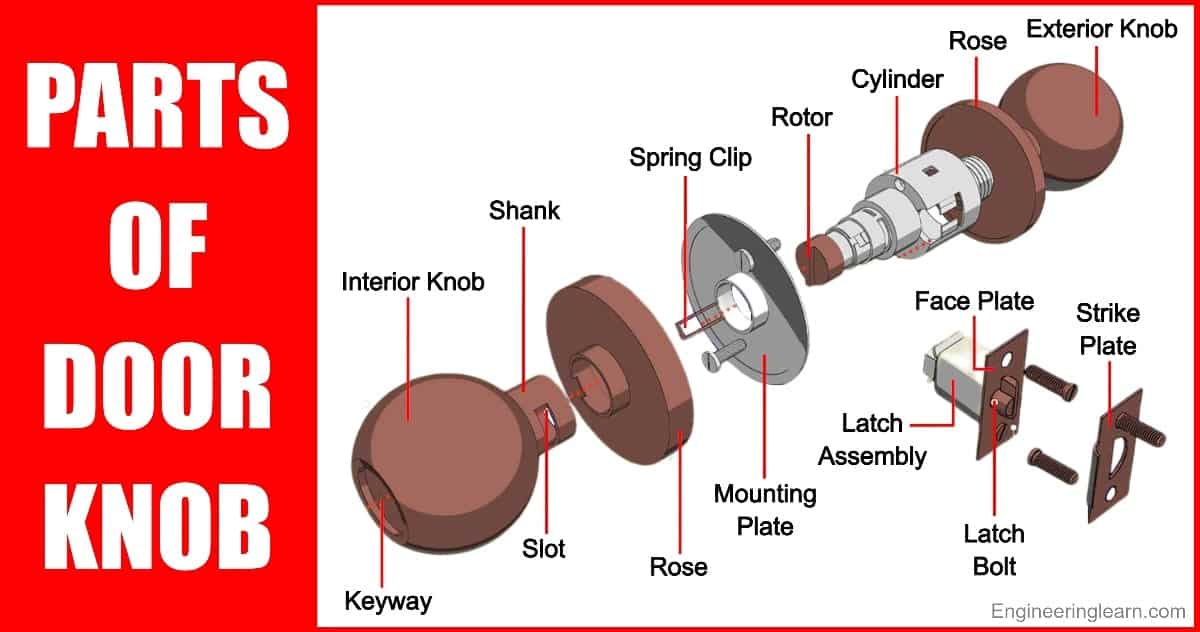
Parts Of A Door Handle And Lock

Ever stopped to think about the humble door handle and lock? They’re the silent guardians of our homes, the effortless way we navigate between rooms, and often, the unsung heroes of our daily lives. While they might seem like simple fixtures, these everyday objects are actually a fascinating blend of engineering and design, keeping us safe and providing convenient access. Let’s pull back the curtain and explore the nooks and crannies of these essential components!
Think about it: every time you leave your house, your trusty door handle is there to give you that satisfying grip and turn. It’s your gateway to the outside world. And when you return, it’s the familiar touch that welcomes you back. But beyond its convenience, the door handle is an integral part of the entire locking mechanism. It’s the lever that engages and disengages the bolt, the smooth interface between your hand and the intricate workings within the door.
The real magic, however, lies in the lock. This ingenious device is what provides security, peace of mind, and a sense of personal space. Whether it’s a simple deadbolt or a more complex system, the lock’s purpose is paramount: to prevent unauthorized entry. It’s a barrier, a challenge, and a testament to human ingenuity. The benefits are clear: security for your belongings, safety for your loved ones, and the freedom to relax knowing your home is protected.
Must Read
The Anatomy of Access: What Makes a Door Handle Work?
So, what exactly are these components that make our doors function so smoothly and securely? Let’s break down the key players:
At the forefront, we have the door knob or lever. This is the part you interact with directly. Door knobs are typically round, while levers are elongated. They can be made from a variety of materials like brass, stainless steel, or even glass, adding to the aesthetic of your door. The main job of the knob or lever is to rotate.
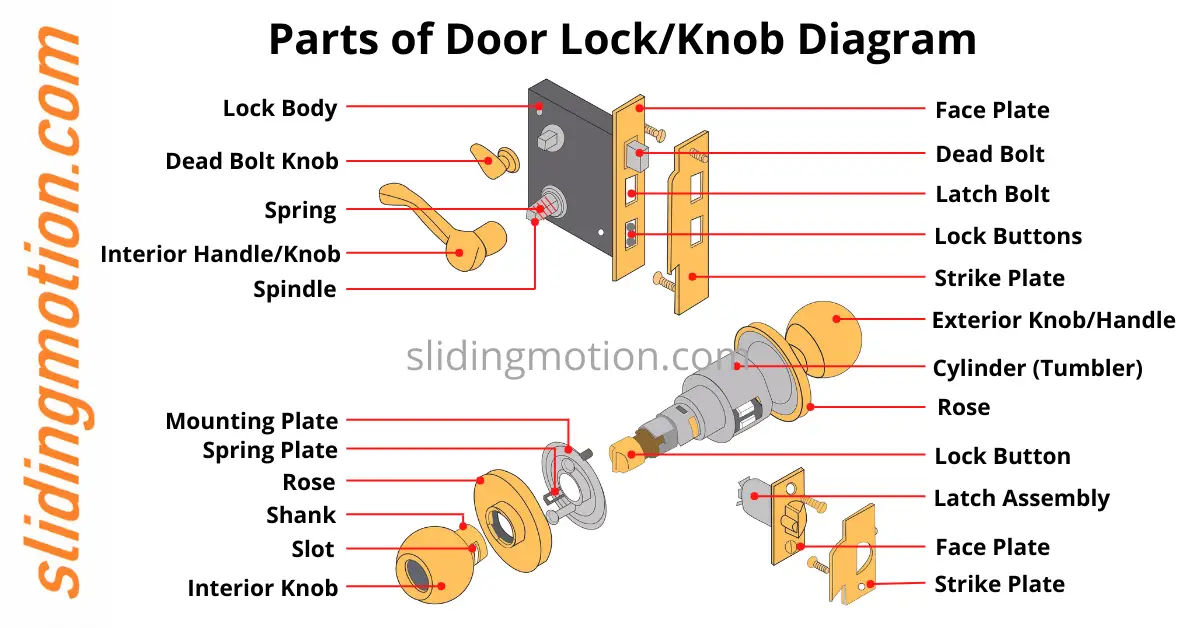
Behind this visible part, there’s the spindle. This is a metal rod that connects the knob or lever on one side of the door to the knob or lever on the other side. When you turn the knob or lever, the spindle turns with it, transmitting that rotational motion to the internal mechanism.
Now, let’s get to the heart of the operation: the latch. This is a spring-loaded bolt that projects from the edge of the door into a strike plate on the door frame. When the door is closed, the latch is extended, holding the door shut. When you turn the handle, the spindle retracts the latch, allowing the door to open. It’s a simple yet brilliant piece of engineering.
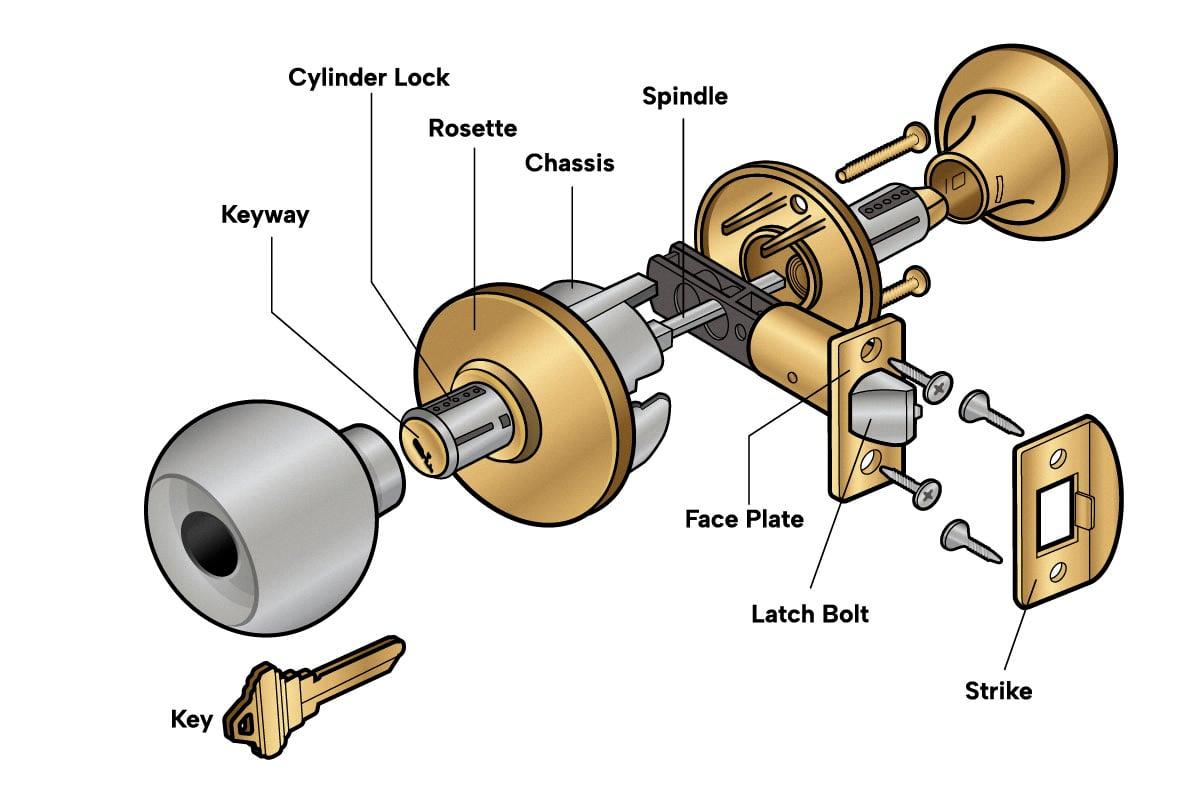
The faceplate is the metal plate on the edge of the door where the latch protrudes. It’s usually rectangular or rounded and allows for the latch to move in and out freely.
The Guardian of Security: Understanding the Lock
While the handle mechanism provides the means to open and close the door, the lock provides the security. Here are some of the vital parts:
The most common type of lock found with door handles is the key cylinder or pin tumbler lock. Inside the cylinder, there are several pairs of pins, called key pins and driver pins. These pins are arranged in chambers. When you insert the correct key, the unique cuts on the key lift each pair of pins to a specific height, aligning the gap between the key pin and the driver pin with the edge of the cylinder. This alignment allows the cylinder to rotate.

The plug is the part of the cylinder that you insert the key into. It’s the rotating component that allows the lock to be operated.
The housing or body is the stationary outer shell of the cylinder that holds everything in place.

When the cylinder is in the correct position (thanks to the aligned pins), it actuates a mechanism that retracts or extends the deadbolt. The deadbolt is a solid metal bolt that extends from the door into the strike plate on the frame. Unlike the latch, which is spring-loaded, the deadbolt is manually operated by a key, a thumbturn, or the door handle itself. It provides a much higher level of security because it cannot be easily forced back into the door.
Finally, the strike plate is a metal plate, usually L-shaped, that is screwed into the door frame. It has a hole or slot for the latch and deadbolt to enter. This plate is crucial for ensuring the door closes properly and securely.
So, the next time you reach for that doorknob or lock your door, take a moment to appreciate the intricate dance of these components working together. From the satisfying click of the latch to the reassuring turn of the deadbolt, these everyday items are a testament to smart design and essential security. They are the unsung heroes that allow us to live our lives with both convenience and peace of mind.