Magnesium + Acetic Acid Balanced Equation
Hey there, coffee buddy! So, you wanna chat about chemistry, huh? Don't worry, we're not diving into anything super, super complicated. Think of it like figuring out how to make your morning toast just right – a little bit of this, a little bit of that, and poof – magic happens. Today, we're talking about Magnesium and Acetic Acid. Ever heard of them? Yeah, Magnesium, that light, silvery metal that’s kind of important for, like, everything. And Acetic Acid? Well, if you've ever put vinegar on your salad, you've met its acquaintance. Pretty cool, right?
So, what happens when these two buddies decide to hang out? It's actually a pretty neat little reaction. It’s like when you introduce two people who’ve never met, and they just click. Or maybe one's a little more energetic, and the other’s a bit more… well, acid-y. You know the vibe.
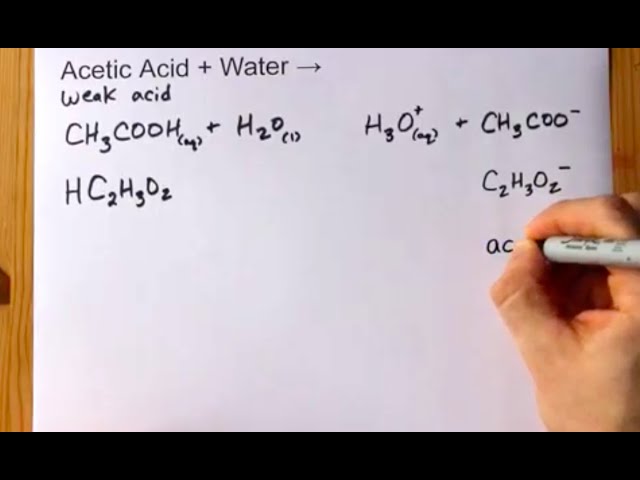
Let’s break it down, nice and easy. We've got our Magnesium, which we can represent with the symbol Mg. It's a solid, so we can write that as (s). Think of it as a little metallic cube, all ready to go. Then we've got Acetic Acid. This is where it gets a tiny bit more interesting. Acetic acid has a fancy chemical name, but most of us just call it the stuff that makes vinegar, well, vinegary. Its formula is a bit of a mouthful: CH₃COOH. And it's usually dissolved in water, so we’ll call it (aq), meaning aqueous. Like a fizzy drink, but for chemistry nerds.
Must Read
So, we've got our starting lineup: Mg(s) and CH₃COOH(aq). They're just chilling, minding their own business, until… BAM! They decide to get together and make some chemistry happen. What’s the big deal, you ask? Well, it's all about what happens to their atoms. You see, atoms are like tiny Lego bricks, and they love to rearrange themselves. It’s their thing. They can’t help it.
When Magnesium meets Acetic Acid, the Magnesium is feeling pretty generous. It’s got these extra little electrons that it’s happy to share. And the Acetic Acid? It’s a bit of an ionizer. It likes to split up into its ionic parts when it hits water. So, we have the acetate ion (CH₃COO⁻) and the hydrogen ion (H⁺). Think of the hydrogen ion as a little positive guy, looking for a friend.
And who better to be friends with than our electron-rich Magnesium? The Magnesium atom basically says, "Hey there, little H⁺! You look like you need some electrons. I've got plenty to spare!" So, the Magnesium gives up two of its electrons. This turns the Magnesium atom into a magnesium ion, which has a positive charge of +2, so we write it as Mg²⁺. It's still aqueous, so Mg²⁺(aq).
What happens to those electrons? They go straight to that little hydrogen ion, making it a happy, neutral hydrogen atom. But hydrogen atoms don't like to hang out alone. They're social butterflies! So, two of these neutral hydrogen atoms team up and become a molecule of hydrogen gas. That’s right, H₂! And this gas, well, it likes to bubble out of the solution. You might even see little fizzies, like when you drop an Alka-Seltzer in water. Pretty exciting stuff, right? You can write this as H₂(g), the 'g' standing for gas.
Now, what about the rest of the Acetic Acid? We had the acetate ion (CH₃COO⁻) floating around. It was kind of waiting for something to happen, wasn't it? Well, when the Magnesium turned into a positive ion (Mg²⁺), it needed something negative to hang out with. And what do you know? The acetate ion is just the right fit! So, the magnesium ion and the acetate ion get together and form magnesium acetate. The formula for magnesium acetate is Mg(CH₃COO)₂. Since it’s formed in water and often stays dissolved, we write it as Mg(CH₃COO)₂(aq). It’s like they were meant to be, a perfect ionic match.

So, let’s put it all together, shall we? On one side, we have our reactants – the stuff that starts the reaction. That’s our Magnesium (Mg) and our Acetic Acid (CH₃COOH). On the other side, we have our products – the stuff that’s made. That’s our hydrogen gas (H₂) and our magnesium acetate (Mg(CH₃COO)₂).
Now, here’s the really important bit. In chemistry, we always gotta make sure things are balanced. It's like making sure you have an equal number of cookies for everyone at the party. You can’t just have a bunch of ingredients lying around; they have to combine in a way that makes sense, atom-wise. We need to make sure that the number of each type of atom is the same on both sides of the equation. It’s a fundamental law of the universe, really. Conservation of mass, they call it. Sounds a bit serious, but it’s just good housekeeping for atoms.
Let’s look at our un-balanced equation first. It might look something like this: Mg + CH₃COOH → H₂ + Mg(CH₃COO)₂ Doesn't look quite right, does it? Let's count our atoms.
On the left side (reactants):
- Magnesium (Mg): 1
- Carbon (C): 2 (one in the CH₃ and one in the COOH part)
- Hydrogen (H): 4 (3 in CH₃, 1 in COOH)
- Oxygen (O): 2 (both in the COOH part)
On the right side (products):
- Magnesium (Mg): 1
- Carbon (C): 4 (two in each CH₃COO part)
- Hydrogen (H): 6 (6 in the two CH₃COO parts, plus 2 in H₂)
- Oxygen (O): 4 (two in each CH₃COO part)
See the problem? The numbers don't match up at all! We have 1 Mg on both sides, which is good. But the carbons, hydrogens, and oxygens are all over the place. It's a chemical mess!
So, how do we fix this? We need to add some coefficients. These are like little numbers we put in front of the chemical formulas. They don’t change what the molecules are, just how many of them we have. Think of it like saying, "Okay, we need two of these cookies, not just one."
Let’s start with the Hydrogen gas (H₂). We have 2 hydrogens there. On the reactant side, in Acetic Acid (CH₃COOH), we only have 1 hydrogen directly attached to the oxygen that gets replaced. But remember, Acetic Acid splits into CH₃COO⁻ and H⁺. So, we need to make sure we have enough hydrogen ions to form those hydrogen molecules. And we also need to consider the acetate ions.
If we want to make one molecule of H₂, we need two hydrogen ions. And each molecule of Acetic Acid gives us one hydrogen ion. So, we’ll need two molecules of Acetic Acid to get enough hydrogen ions.
Let’s try putting a '2' in front of the Acetic Acid:
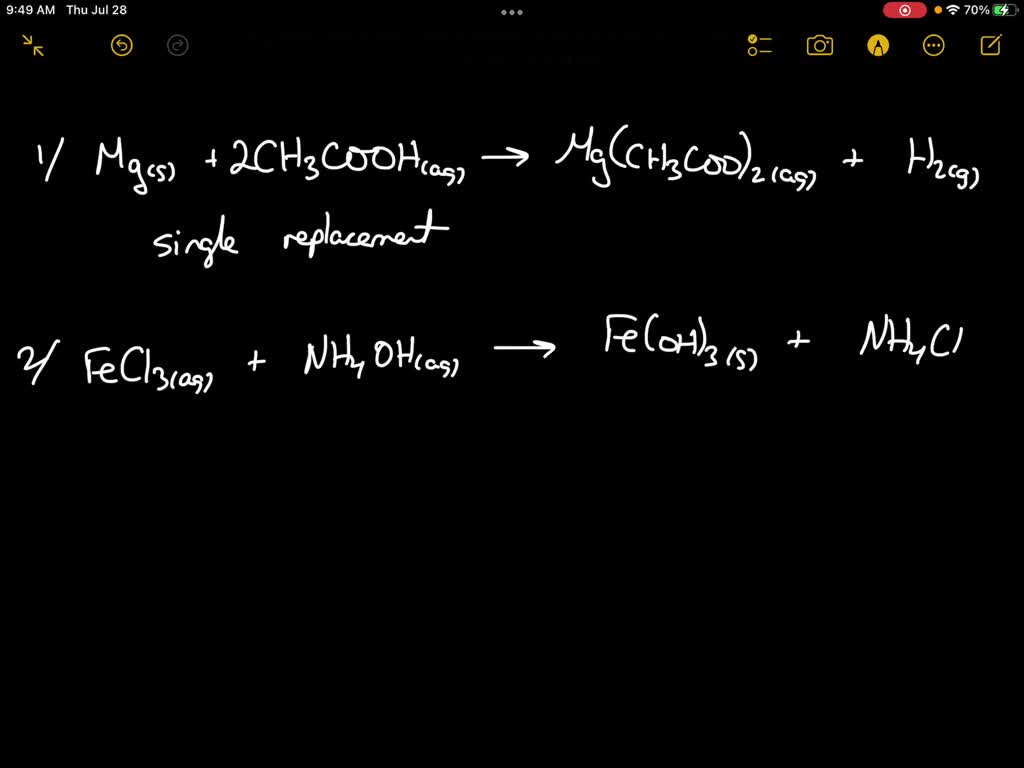
Mg + 2CH₃COOH → H₂ + Mg(CH₃COO)₂Now, let’s re-count:
Left side (reactants):
- Magnesium (Mg): 1
- Carbon (C): 2 x 2 = 4 (two in each of the two CH₃COOH molecules)
- Hydrogen (H): 2 x 4 = 8 (three in the CH₃ part, one in the COOH part, multiplied by 2)
- Oxygen (O): 2 x 2 = 4 (two in each of the two CH₃COOH molecules)
Right side (products):
- Magnesium (Mg): 1
- Carbon (C): 4 (two in each of the two CH₃COO parts)
- Hydrogen (H): 6 (in the two CH₃COO parts) + 2 (in H₂) = 8
- Oxygen (O): 4 (two in each of the two CH₃COO parts)
Aha! Look at that! Now we have 1 Mg, 4 C, 8 H, and 4 O on both sides. Everything matches up perfectly. It’s balanced! It’s like a chemistry puzzle solved. Isn’t that just… satisfying?
So, the complete, balanced chemical equation looks like this:
Mg(s) + 2CH₃COOH(aq) → H₂(g) + Mg(CH₃COO)₂(aq)What does this tell us, practically speaking? It means that for every one atom of Magnesium metal, you need two molecules of Acetic Acid to react completely and produce one molecule of Hydrogen gas and one molecule of Magnesium Acetate. It's a recipe for a chemical reaction, if you will. You can’t just eyeball it; you need the right proportions!
Why is this important, you might wonder? Well, understanding balanced equations is key to so many things in science. It helps chemists predict how much of a product they’ll get when they start with certain amounts of reactants. It’s crucial for designing experiments, figuring out how to make new materials, and even understanding how our bodies work (because, guess what? Lots of chemical reactions happen in us too!).
Think about it like baking. If a recipe calls for 2 cups of flour and 1 cup of sugar, and you only use 1 cup of flour, your cookies are probably not going to turn out quite right, will they? Chemistry is a bit like that, but with atoms and molecules instead of flour and sugar. The balanced equation is your precise recipe.
Also, the fact that hydrogen gas is produced is pretty cool. It's flammable, so you wouldn't want to be doing this reaction near an open flame. Safety first, always! Imagine a little pop! That's the hydrogen gas doing its thing. It’s a reminder that even simple reactions can have energetic outcomes.
And the magnesium acetate that’s formed? It’s a salt. It's actually used in some cool applications, like as a food additive or even in the production of fireworks (though maybe don’t try that at home without a qualified chemist!). It’s neat how these common ingredients can lead to something with specific uses.
So, there you have it. Magnesium and Acetic Acid, having a little chemical party. They react, they rearrange, they produce gas and a new compound, and it all balances out beautifully. It’s a small example, sure, but it’s a perfect illustration of the fundamental principles of chemical reactions. It's like learning your ABCs before you can write a novel. These balanced equations are the building blocks of chemical understanding.
Next time you're looking at vinegar, or maybe even some magnesium supplements (though please don't mix them yourself!), you'll know a little bit more about the hidden chemistry going on. It’s a tiny glimpse into the amazing world of molecules and how they interact. Pretty neat, huh? Glad we could chat about it!