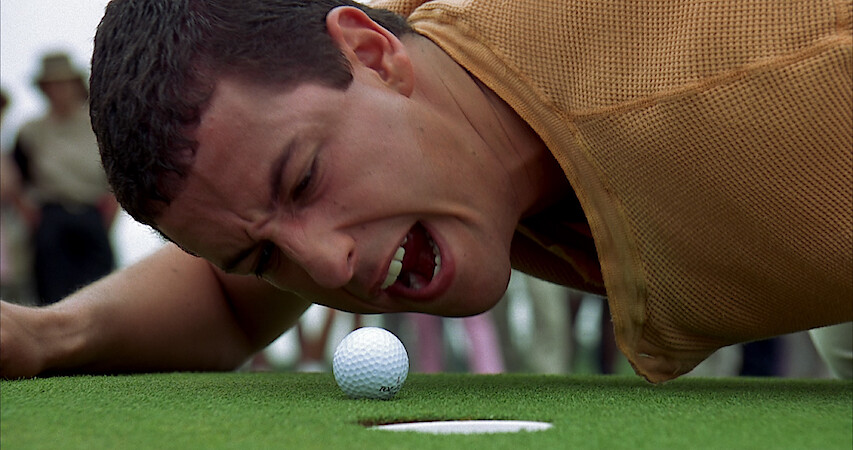
Is Happy Gilmore Real

Okay, so let's talk about something that’s been on a lot of minds, especially if you’ve ever swung a golf club and… well, maybe let out a little frustration. The big question on everyone’s lips, the one whispered in hushed tones on the putting green (or shouted across the driving range, depending on your vibe), is: Is Happy Gilmore real?
Now, I know what you’re thinking. This guy, with the ridiculous slap shot, the fiery temper, and the uncanny ability to make a golf ball sing (sometimes a happy tune, sometimes a symphony of curses), seems too… well, too much to be a real person, right? Like, who actually is that angry? And who can hit a ball that far using a hockey stick technique? It’s the stuff of legend, of cinematic magic, of pure, unadulterated comedy gold.
The Man, The Myth, The… Shooter?
Let’s get straight to the point, my friends. If you’re picturing a tanned, perfectly coiffed golf pro practicing their perfectly smooth swing, then nope. Happy Gilmore, as we know and love him from the iconic 1996 Adam Sandler movie, is a fictional character. As in, he doesn’t exist outside the glorious realm of Hollywood make-believe.
Must Read
He was cooked up by the brilliant, and let’s be honest, slightly unhinged minds of Adam Sandler and his writing partner, Tim Herlihy. They took the familiar, often stuffy world of professional golf and injected it with a massive dose of pure, unadulterated absurdity. And thank goodness they did, because the world needed Happy Gilmore. We needed a hero who could battle Shooter McGavin, who could out-drive a nuclear missile, and who could, you know, save his grandma's house from the tax man. Priorities, people!
So, while you won’t find a plaque dedicated to Happy Gilmore on any PGA tour course (sadly!), his spirit definitely lives on. And that, in itself, is pretty darn real, wouldn’t you say?
But Where Did This Glorious Idea Come From?
Even though Happy himself is a figment of imagination, the idea behind him sprung from something a little more grounded, albeit still pretty quirky. Adam Sandler, being the master of observational comedy that he is, noticed something about golf. It can be, shall we say, a bit… intense. People get really invested. They get frustrated. They take it very, very seriously.
And then there’s the inherent power in a good slap shot. Anyone who's ever played hockey (or even watched it!) knows the raw force and explosive energy involved. Imagine taking that kind of power and applying it to a little white ball on a manicured lawn. It’s an idea so wonderfully ludicrous, it just had to be explored. They thought, "What if someone who’s basically a hockey player, but really angry, decided to play golf?" And boom – Happy Gilmore was born!
It’s the perfect storm of contrasting worlds: the refined, gentlemanly sport of golf versus the rough-and-tumble, often-foul-mouthed world of a disgruntled former hockey player. The comedy writes itself, doesn't it? It’s like putting a bulldog in a tutu. Hilarious, slightly bewildering, and utterly captivating.
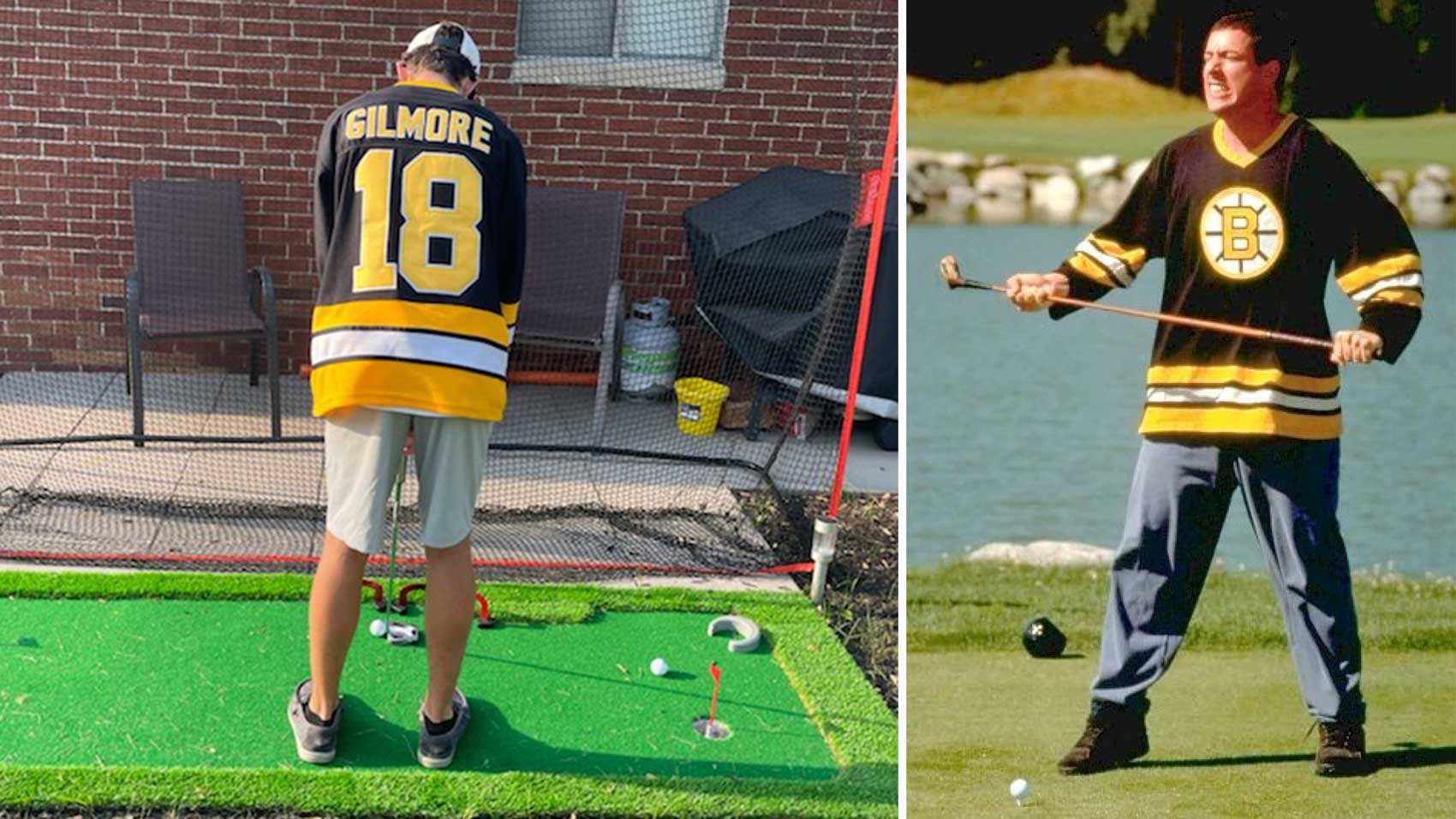
The Inspiration Behind the Insanity
While Sandler and Herlihy were the architects of Happy’s universe, they've spoken a bit about the general vibe they were going for. They wanted to create a character who was an outsider, someone who didn’t belong in the world of professional golf but was forced into it by circumstance. This relatability, this feeling of being a bit out of your depth, is something a lot of people connect with. We’ve all been there, right? Stumbling into a new situation, trying to figure things out, and maybe making a mess of it along the way.
Think about it: Happy’s motivation is pure. He needs to win money to save his grandma’s house. That’s a noble cause! It’s the kind of thing that makes you root for the underdog, even if that underdog has a tendency to yell at squirrels and punch inanimate objects. His heart is in the right place, even if his swing is… well, let’s just say it’s unconventional.
The movie tapped into a universal desire to see the established order shaken up a bit. Shooter McGavin, with his slicked-back hair and condescending smirk, represents that establishment perfectly. And Happy, with his blue-collar roots and his hockey stick swing, is the perfect foil. It’s a classic battle of good versus… well, good, but with a lot more yelling and a lot less etiquette.
So, Can You Actually Hit a Golf Ball Like Happy?
Ah, the million-dollar question for all you aspiring golf-slash-hockey hybrids out there. Can you replicate Happy’s signature move? The answer, in short, is: probably not, and please don’t try it on a real golf course.
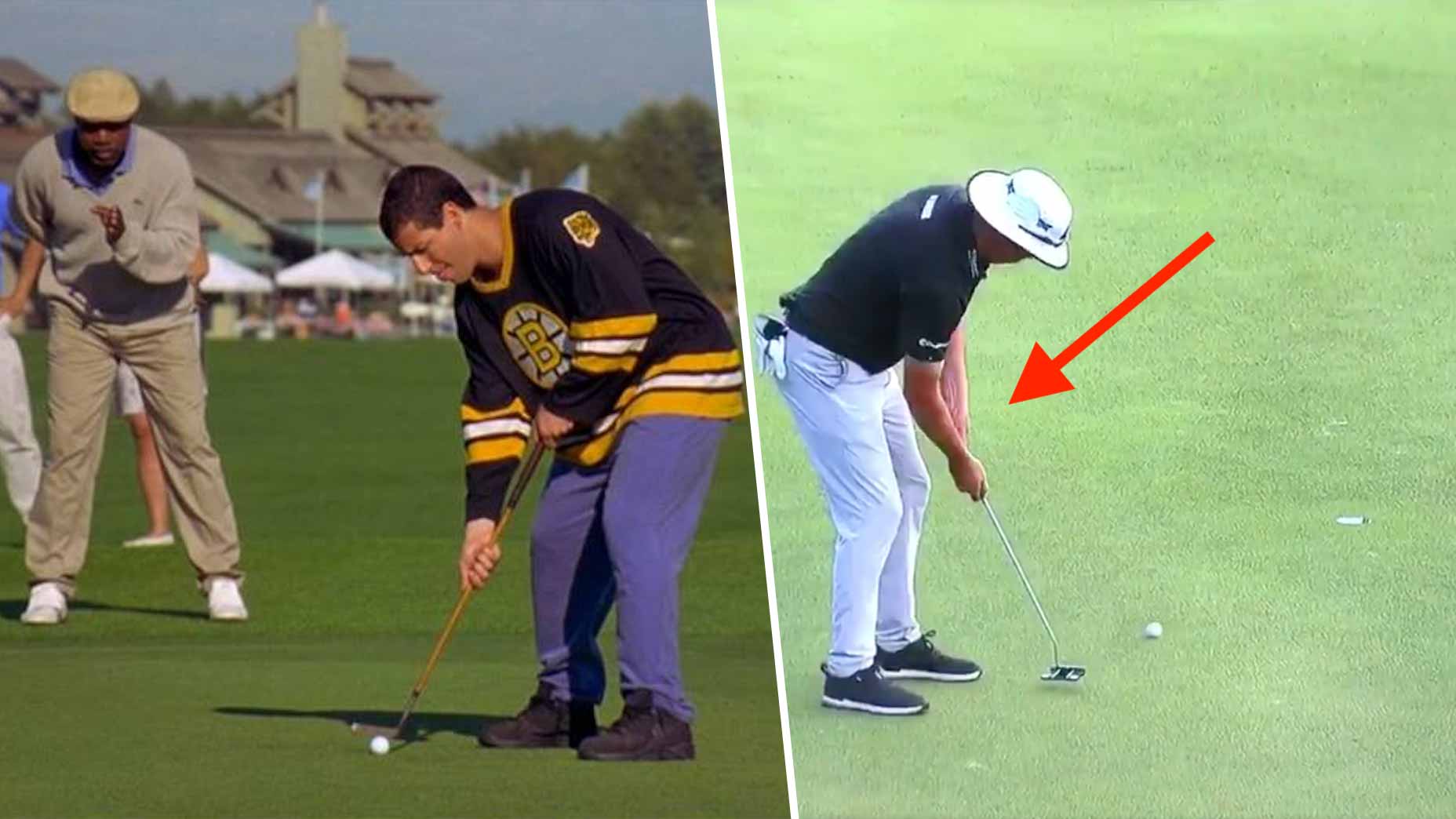
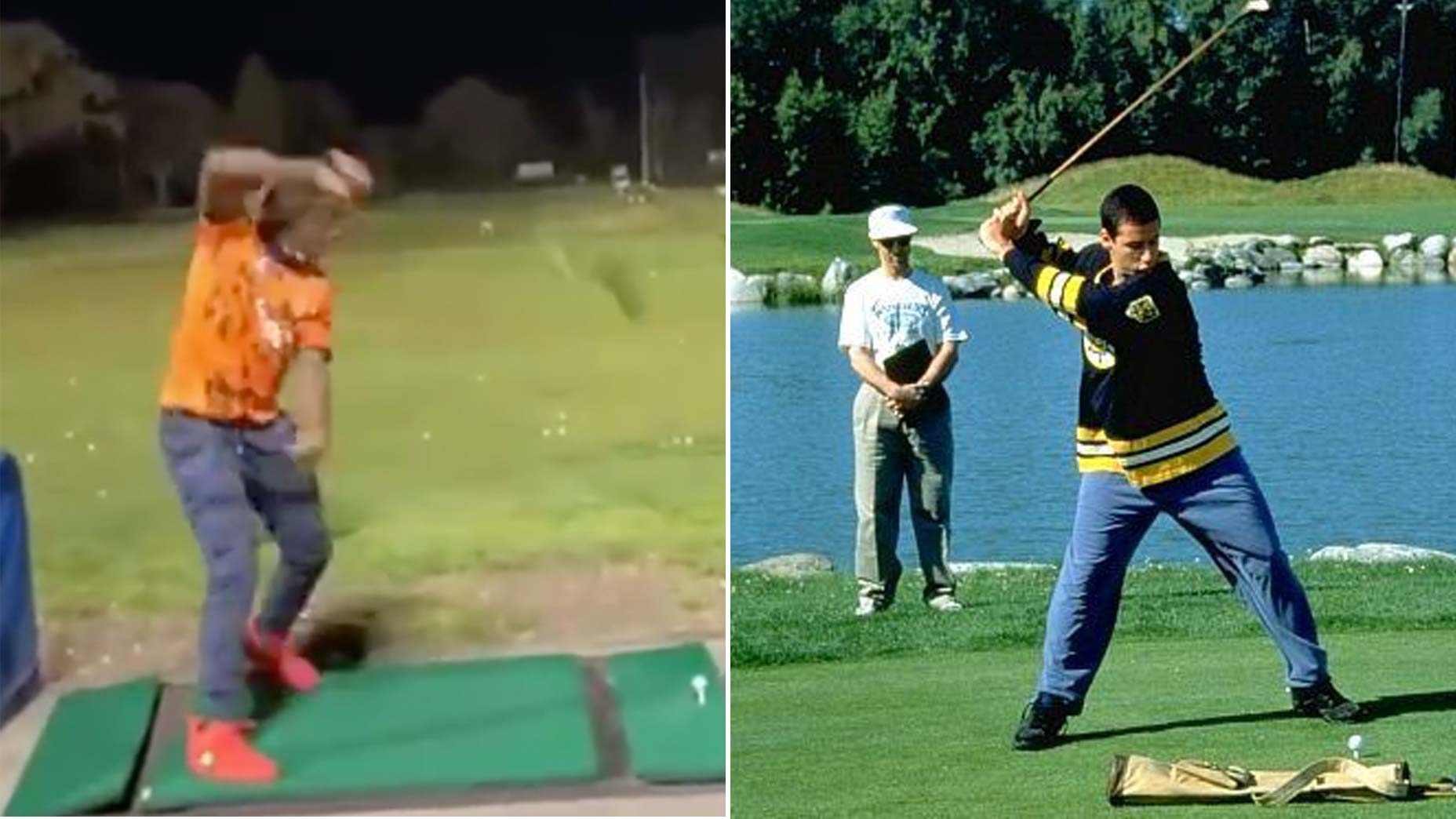
Happy’s "driving" technique is, to put it mildly, a cinematic marvel. He essentially uses his golf club like a hockey stick, taking a massive, slapshot-esque wind-up and unleashing a ball with astonishing force and, often, questionable accuracy. It’s a sight to behold, a testament to Adam Sandler’s commitment to physical comedy, and a testament to Hollywood magic.

In the real world, swinging a golf club with that much brute force and lack of finesse would likely result in a few things: a very sore shoulder, a broken club, and a ball that goes about 50 yards in a completely random direction. Golf swings are built on precision, technique, and a whole lot of practice. Happy’s method is… well, it’s a lot of oomph and a prayer.
However, the spirit of Happy’s swing? That’s something else. That’s the spirit of unleashing your power, of not being afraid to be different, of finding your own way to get the job done. It’s about passion and a bit of controlled chaos. And that, my friends, is something we can all aspire to, on the golf course or in life.
The "Real" Golfer's Take (aka, What the Pros Think)
If you were to ask any professional golfer about Happy Gilmore's technique, you’d probably get a lot of polite smiles and maybe a slight grimace. They’ve spent years honing their craft, perfecting their stance, understanding the nuances of spin and trajectory. Happy’s slap-shot-drive is… not in their playbook. Not by a long shot.
They’d tell you about the importance of a proper grip, a smooth tempo, and a controlled follow-through. They’d talk about the physics of the swing, the aerodynamics of the ball. They’d probably use words like “biomechanics” and “clubhead speed.” Happy, on the other hand, would probably just yell at them and tell them to "get outta here!"
But here’s the thing: the pros also likely appreciate the sheer entertainment value of Happy Gilmore. They understand that the movie, while a wild exaggeration, brought golf into the mainstream in a hilarious way. It showed that golf doesn't always have to be serious business. It can be fun, it can be ridiculous, and it can be something that brings people together, even if they’re yelling at each other from opposite ends of the fairway.
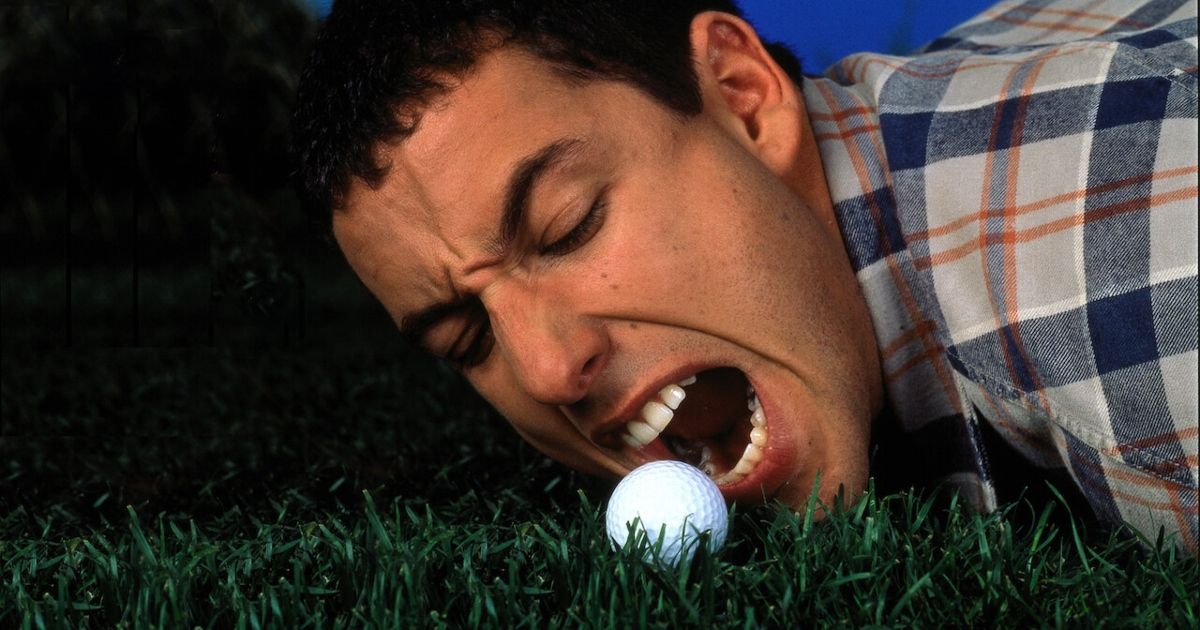
So, while Happy wouldn’t last a minute on the PGA tour without getting disqualified for, well, being Happy, his impact on the perception of golf is undeniable. He made it accessible, he made it funny, and he made it memorable.
The Legacy of a Legend (Even a Fake One!)
So, we've established that Happy Gilmore isn't a real person you can find on the golf circuit. But does that mean he doesn't have a real legacy? Absolutely not! The legacy of Happy Gilmore is as powerful and enduring as his slap shot.
He represents the everyman (or everywoman!) who’s thrown into a world they don’t understand, armed with unconventional skills and a whole lot of heart. He’s the underdog we all love to cheer for. He’s the reminder that sometimes, the most effective way to tackle a problem isn't the most polished or the most conventional. Sometimes, it's about sheer determination, a healthy dose of defiance, and a willingness to go against the grain.
Happy Gilmore broke down the doors of a sport that can sometimes feel exclusive and intimidating. He showed us that you don't have to be a member of a fancy country club or have a perfectly tailored golf shirt to enjoy the game (or at least, to try to enjoy the game). He injected a dose of pure, unadulterated fun into the often-serious world of golf, and for that, we are eternally grateful.
Think about all the times you've heard someone reference Happy Gilmore. The quotes, the mannerisms, the iconic moments. That's the sign of a true cultural impact, a testament to the enduring power of a well-crafted, brilliantly performed character. He lives on in our memes, in our inside jokes, and in the way we might just feel like giving that golf ball a good whack sometimes.
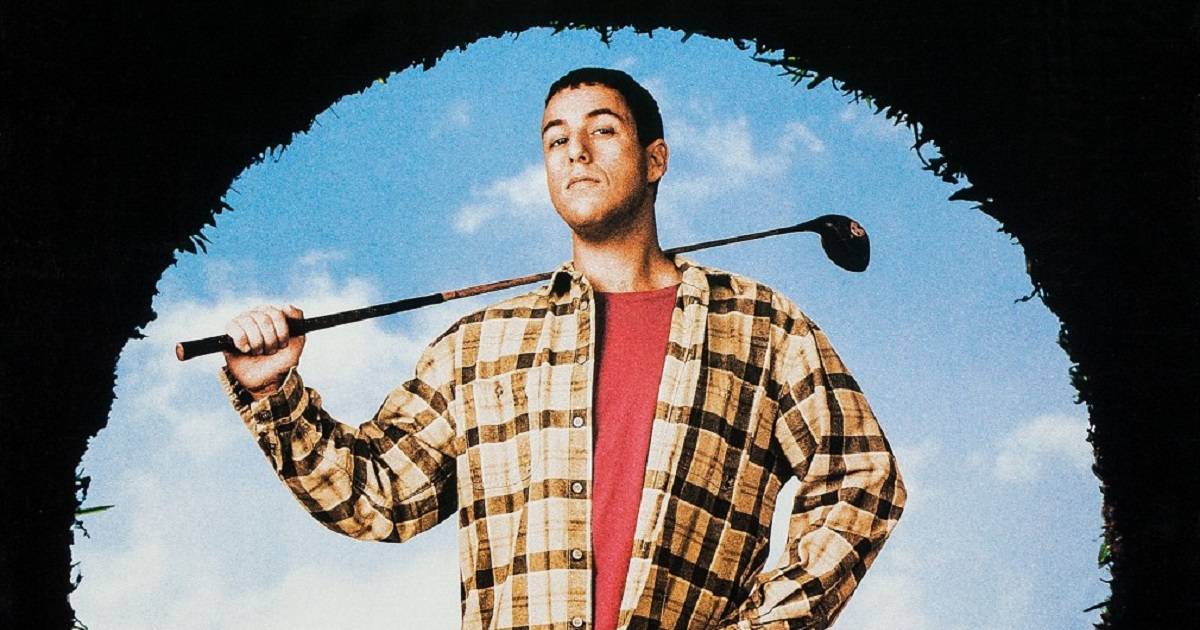
Why Happy Still Resonates
Why does a movie from 1996 still have such a hold on us? Because at its core, Happy Gilmore is about more than just golf. It’s about finding your voice, even when it’s a little rough around the edges. It’s about standing up for what you believe in, even when the odds are stacked against you. It’s about love, family, and the ridiculousness of life.
Happy’s journey from a frustrated hockey player to a golf champion (of sorts!) is a story of self-discovery. He learns to channel his anger, to find his strengths, and to believe in himself, all while navigating the absurdities of the professional golf world. And along the way, he teaches us a few things too.
He teaches us that it’s okay to be imperfect. It’s okay to have a temper, as long as you can eventually learn to control it (or at least, direct it at inanimate objects that deserve it). He teaches us that the most important thing is to fight for what matters to you, whether it’s your grandma’s house, your self-respect, or just the right to play golf your own way.
And in a world that often encourages us to be perfectly polished and always in control, Happy Gilmore is a breath of fresh, albeit slightly sarcastic, air. He reminds us that sometimes, the best way to succeed is to just be unapologetically, hilariously, and wonderfully yourself. So, even though he’s not real, the feeling he inspires – that feeling of hopeful defiance, of unbridled enthusiasm, and of finding joy in the unexpected – that, my friends, is as real as it gets.
So, go forth, embrace your inner Happy Gilmore (minus the actual assaults on security guards, please!). Swing for the fences, or in this case, the fairway. And remember, sometimes the most important thing is not winning the tournament, but having a darn good time trying. Now, if you'll excuse me, I think I need to go practice my… well, my own unique brand of golf swing. And maybe yell at a squirrel or two. For Happy!
:max_bytes(150000):strip_icc():focal(756x206:758x208)/Happy-Gilmore-062623-02-9a3f0752b88647ef81251975bc08fe15.jpg)