
How To Tell If Ray Ban Is Real

So, you’ve stumbled upon that perfect pair of Ray-Bans. Maybe you found them tucked away at a vintage shop, spotted them online for an unbelievably sweet deal, or perhaps a friend is gifting them to you. Whatever the scenario, a little voice in the back of your head might be whispering, “Are these the real deal?” Don't sweat it! In a world where authenticity is king (and a solid pair of shades is your loyal sidekick), we’re here to guide you through the subtle art of spotting a genuine Ray-Ban. Think of it as your personal style detective mission, minus the trench coat and fedora. We'll keep it light, breezy, and, dare we say, fun.
Ray-Bans are more than just sunglasses; they’re a cultural icon. From James Dean rockin' his Wayfarers in "Rebel Without a Cause" to Tom Cruise cruising in his Aviators in "Top Gun," these shades have graced the faces of legends and cemented their place in fashion history. Owning a real pair is like owning a piece of that cool, that history. And nobody wants to be rocking a fake when they could be channeling their inner movie star.
Let's dive into the nitty-gritty without making it feel like a pop quiz. We're talking about the little details, the tell-tale signs that separate the genuine article from a clever imposter. So, grab your current shades (real or suspected) and let's get started on this little adventure.
Must Read
The Devil's in the Details: Where to Look
This is where the magic happens, or rather, where the deception is revealed. Genuine Ray-Bans are crafted with an attention to detail that fakes often miss. It’s about the finesse, the feel, and the finishing touches. Think of it like appreciating a finely tuned engine versus a sputtering old scooter – you can just feel the difference.
1. The Case of the Missing Logo (or the Wrong One)
Your Ray-Bans should come with a case, and this case is often your first clue. A real Ray-Ban case will feel substantial, not flimsy. It should have a crisp, clean Ray-Ban logo. Check the font, the spacing, and the overall impression. Fakes might have a smudged logo, an off-kilter emblem, or a cheap-feeling material for the case itself. Some cases will have a metallic RB logo on the snap closure. Look for this little detail!
Inside the case, you should find a cleaning cloth, also bearing the Ray-Ban logo. Again, examine the quality of the printing and the fabric. It should feel soft and effective, not like a cheap dishrag. These are the small touches that scream "luxury," not "discount bin."
2. The "RB" Etch – A Tiny but Mighty Clue
This is a big one, folks. On most authentic Ray-Ban lenses, you’ll find a small, subtly etched "RB" logo. It’s not a painted-on logo; it’s etched directly into the glass or polycarbonate. It’s usually on the right lens (when you’re wearing them). It should be precise and difficult to rub off. Fakes might have a poorly executed, raised, or easily smudged "RB." Sometimes, they'll even have a painted-on logo that feels like it's just sitting on the surface. Shine a light at an angle, and you should see that little etching. It's like a secret handshake for the discerning eyewear enthusiast.
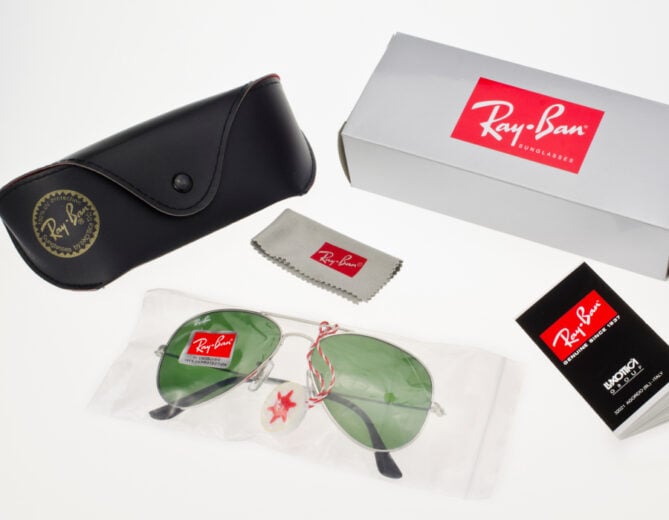
The Aviator models, in particular, are known for this etching. If you have a pair of Aviators and you can’t find that tiny RB, it’s a red flag. However, some older models or specific styles might have different authentication marks, so it’s always good to do a quick search for your specific model if you’re unsure. But generally, the etched RB is a strong indicator of authenticity.
3. The Temple Tip Touch: What's Written There?
Flip those shades over and check the inside of the temples (the arms that go over your ears). You’ll find a wealth of information here, and it’s a goldmine for spotting fakes. Authentic Ray-Bans will have clearly printed, precise text. This typically includes the model name (e.g., "RB3025" for Aviators), the size (lens width and bridge width, like "58 [] 14"), and "Made in Italy" or "Made in U.S.A." depending on the model and era.
The printing should be sharp and even. Fakes often have blurry, smudged, or uneven lettering. They might spell things wrong, use inconsistent fonts, or even omit crucial details like the country of origin. The "Made in Italy" stamp, in particular, is a mark of quality and craftsmanship that counterfeiters often overlook or misrepresent. Pay attention to the font and its crispness; it's a subtle indicator of the care taken in manufacturing.
4. The Hinge and Feel: Solid as a Rock (or Not)
The hinges on genuine Ray-Bans are usually smooth and sturdy. They should open and close with a satisfying, solid click. There should be no wobbling or looseness. Test them out. Wiggle them gently. If they feel cheap, flimsy, or make a grinding noise, that’s a bad sign. High-quality hinges are a hallmark of well-made eyewear, and Ray-Ban is no exception.
When you hold a real pair of Ray-Bans, they should feel substantial in your hand. They have a certain weight and balance to them. Fakes often feel lighter, made from cheaper plastics or metals. It’s a tactile experience. Think about the difference between a designer handbag and a fast-fashion knockoff – you can feel the quality. The materials used by Ray-Ban are chosen for their durability and comfort, and that translates into how they feel on your face and in your grip.

The Lenses: Seeing is Believing (and Protecting!)
Let's talk about the actual lenses. After all, that's the main event, right? They're not just for looking cool; they're for protecting your eyes. And Ray-Ban takes that seriously.
5. The Quality of the Glare Reduction
Genuine Ray-Ban lenses offer excellent clarity and glare reduction. If you wear them in bright sunlight, you should notice a significant difference. The world should look crisp and clear, with minimal distortion. Cheap imitation lenses might not offer proper UV protection, and they can sometimes create a blurry or warped vision. This isn't just an aesthetic issue; it's about eye health.
Some Ray-Ban models come with polarized lenses, which are fantastic for cutting down on reflective glare. If your pair is supposed to be polarized, try holding them up to a screen (like your computer monitor or TV). If you tilt them, the screen’s image should darken or change color significantly if they’re truly polarized. This is a fun little test you can do right at home!
6. The Branding on the Lens (Sometimes!)
Beyond the etched RB, some Ray-Ban lenses might have subtle branding. For example, many models will have the Ray-Ban logo printed on the outside of the right lens. This print should be crisp and clean, not smudged or raised. It's another detail that fakers often get wrong, either omitting it entirely or printing it poorly.
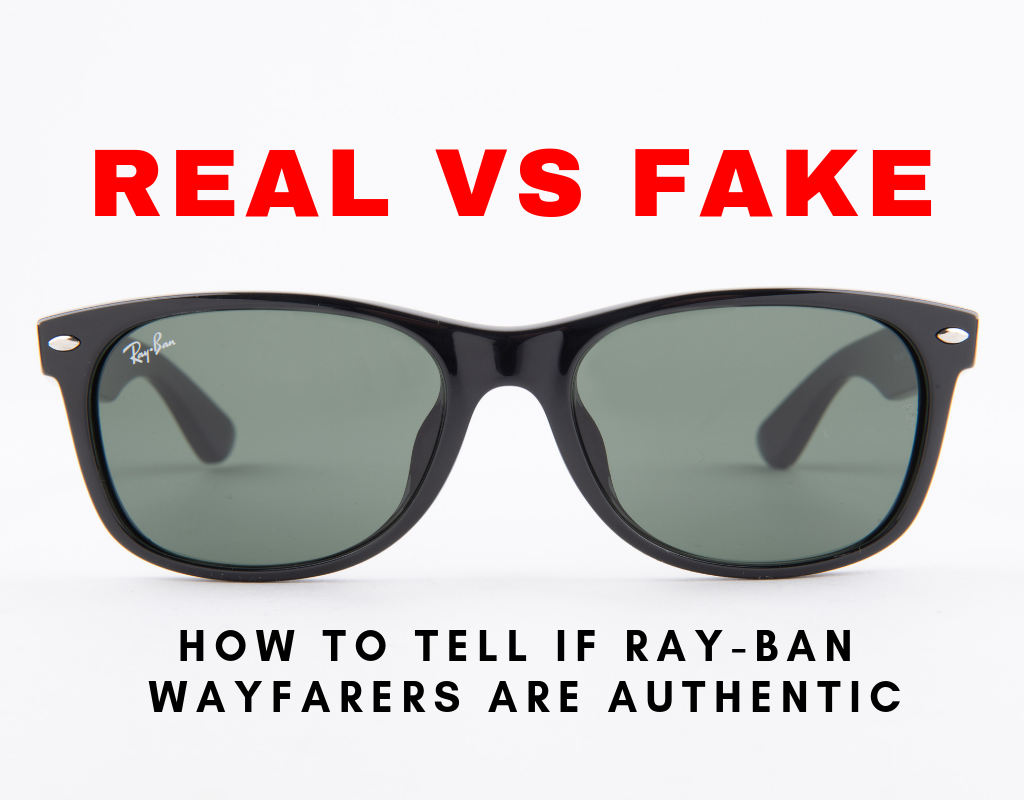
Keep in mind that this branding can vary by model and production year. For instance, very old vintage Ray-Bans might not have this logo on the lens. It’s always worth a quick online search for your specific model to see what authentic branding looks like. This research is your superpower in the fight against counterfeits!
The Price Tag: When Too Good to Be True…
We all love a good deal, but let’s be honest, if a price seems too good to be true for a brand as iconic and well-made as Ray-Ban, it probably is. Authentic Ray-Bans are a significant investment. While they can be found on sale or at outlet stores, they rarely come with a steal-of-a-deal price tag that seems unbelievable.
Be wary of prices that are drastically lower than the retail price from authorized dealers. Websites that don't look professional, lack contact information, or have extremely aggressive sales tactics are also red flags. Stick to reputable retailers, both online and in physical stores. Buying from authorized dealers is your safest bet to ensure you're getting the real deal.
The Box Itself: The Unboxing Experience
Ray-Ban packaging is usually quite premium. Beyond the case, you’ll often receive a cardboard box that has the Ray-Ban logo and branding. Examine this box for the same quality indicators as the case: crisp printing, good cardstock, and accurate logos. Fakes might come in flimsy, poorly printed boxes or, worse, no box at all.
Inside the box, you might also find a booklet or warranty information. Again, check for the quality of the paper, the printing, and the accuracy of the information. This level of detail in packaging reflects the overall quality of the product inside.

A Quick Cultural Note: The "Made in Italy" Stamp
For many years, Ray-Ban sunglasses were manufactured in the United States. However, in more recent times, a significant portion of their production has moved to Italy. The "Made in Italy" stamp on your Ray-Bans is not a sign of a fake; it's a mark of their current manufacturing process. Italy is renowned for its optical craftsmanship and quality manufacturing, so this stamp actually speaks to the quality of the product. If you have a pair that says "Made in USA," it might be a vintage pair, which are also highly sought after! Just ensure the stamp is clear and consistent with other authentic markings.
The Ultimate Test: Trust Your Gut (and a Quick Search!)
Ultimately, if you've gone through these checks and still feel uncertain, trust your gut. If something feels off about the quality, the weight, or the details, it might be worth being a little more cautious. And don't forget the power of the internet! A quick search for your specific Ray-Ban model on the official Ray-Ban website or reputable eyewear blogs can provide images and details of authentic versions. Comparing them side-by-side is often the easiest way to spot discrepancies.
Remember, these are just general guidelines. Ray-Ban has a vast product line with many different styles and historical variations. If you're ever in doubt, especially when making a significant purchase, buy from an authorized dealer. It’s the surest way to guarantee authenticity and peace of mind.
So, there you have it! A little guide to help you navigate the world of Ray-Bans with confidence. It’s not about being paranoid; it’s about appreciating quality and knowing what you’re investing in. Owning a real pair of Ray-Bans is like having a trusted friend by your side, ready to elevate your style and protect your eyes, no matter where life takes you. They’re more than just accessories; they’re companions on your everyday adventures, adding that touch of timeless cool to every moment.
Think about it: that feeling when you put on a pair of truly great sunglasses. The world seems a little sharper, a little more glamorous, and you feel just a little bit more… you. Whether you’re sipping coffee at a sidewalk café, hitting the beach with friends, or simply running errands, a genuine pair of Ray-Bans brings a subtle confidence. It’s the little luxuries, the everyday upgrades, that make life a bit brighter. So, go forth and spot those fakes with pride, and enjoy the genuine article that’s built to last and designed to impress. Stay cool, stay protected, and most importantly, stay authentic!

