How To Not Be A People Pleaser

Let's be real for a sec. We've all been there. You know, the moment you say "yes" to something you really don't want to do, just to avoid that tiny, prickly feeling of disappointing someone. Yep, we're talking about the classic, sometimes insidious, trap of people-pleasing. It’s like that one song you can’t get out of your head – it feels inescapable, right? But unlike a catchy earworm, this isn't exactly a vibe we want to hold onto forever.
In our hyper-connected, always-on world, the pressure to be agreeable and accommodating can feel amplified. Think about it: social media bombards us with curated images of perfect harmony and effortless niceness. It's easy to fall into the pattern of sacrificing our own needs and desires to maintain this illusion of being perpetually "good." But here's the tea: being a people-pleaser isn't about being nice; it's often about being afraid.
So, what exactly is people-pleasing? At its core, it's the tendency to prioritize the needs and opinions of others above your own, often to your detriment. This can manifest in a million different ways, from agreeing with an opinion you secretly disagree with, to taking on extra work you don't have the bandwidth for, to constantly apologizing even when you've done nothing wrong. It’s that little voice in your head whispering, "What will they think?" that fuels the whole shebang.
Must Read
The Downside of the "Yes" Person
While it might feel like you're building bridges and making everyone happy, the constant "yes" can actually lead to some pretty unhappy consequences for you. For starters, it’s a one-way ticket to burnout city. When you’re constantly pouring from an empty cup, trying to meet everyone else's demands, you’re bound to run on fumes eventually. And nobody wants to be stuck in that gas station with no way out, right?
Beyond exhaustion, people-pleasing can also erode your self-esteem. Every time you deny your own needs or silence your own voice, you’re sending a subtle message to yourself that your feelings and desires aren't as important as others'. Over time, this can chip away at your confidence, leaving you feeling a bit… meh. It’s like constantly having to wear ill-fitting shoes; it might look okay from afar, but it's a constant discomfort up close.
And then there's the resentment. Oh, the glorious, simmering resentment. When you consistently do things you don't want to do, for people who might not even appreciate it, a little bit of bitterness starts to build. It's the emotional equivalent of finding a tiny pebble in your shoe and realizing it’s been there for days. Annoying, right?
Culturally, we're often conditioned to value politeness and deference. Think of classic sitcoms where the well-meaning but slightly overwhelmed character always ends up doing the extra chores. It’s a trope that’s been around for ages! But in real life, this can translate into a deeply ingrained habit that’s hard to break.
Breaking Free: Your Permission Slip to Be You
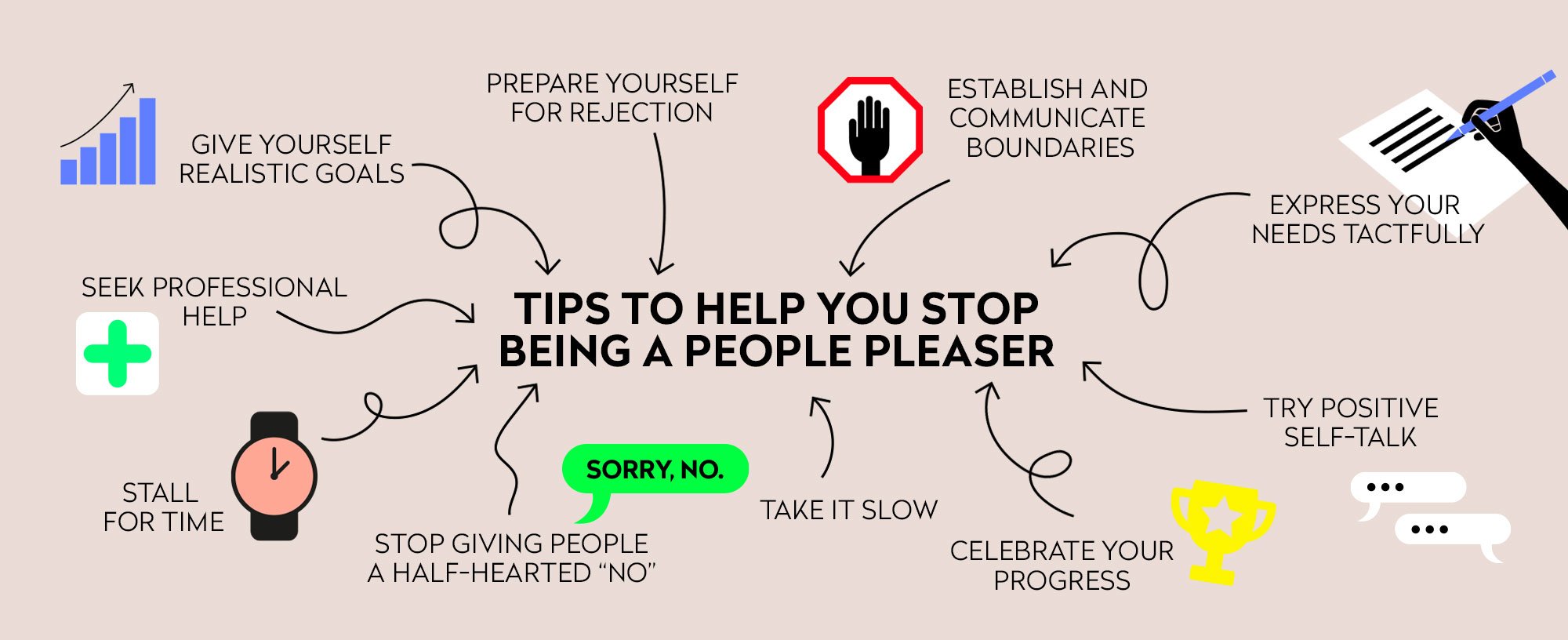
Alright, enough with the doom and gloom. The good news is, you have the power to reclaim your boundaries and your peace. It’s not about becoming a selfish jerk, let’s be clear. It’s about cultivating a healthy sense of self-respect and learning to honor your own needs. Think of it as upgrading your operating system from "always agreeable" to "comfortably assertive."
:max_bytes(150000):strip_icc()/how-to-stop-being-a-people-pleaser-5184412_color_v1-f563080ab4f34801b67a1b447b4eef24.png)
Tip #1: The Power of the Pause
Before you reflexively say "yes," take a beat. This is your secret weapon! When someone asks you to do something, especially if it's a big ask or something that feels a bit off, don't commit immediately. Take a breath, count to ten (or thirty, no judgment!), and say something like, "Let me check my calendar," or "I need to think about that and get back to you." This tiny pause gives you valuable time to assess if this is something you can and want to do, without the pressure of an instant answer.
This is similar to how a skilled negotiator doesn't give their best offer upfront. They gather information, consider their options, and then respond. You're the negotiator of your own life!
Tip #2: Hello, Boundaries!
This is where the rubber meets the road. Boundaries are your personal guidelines for what you will and won't accept in your interactions. They’re not walls designed to keep people out; they’re fences that help you maintain your own space and well-being. Start small. If a friend consistently cancels last minute, you might set a boundary like, "I’d love to make plans, but I need a bit more notice to make sure I can commit."
Remember, setting boundaries is an act of self-care, not selfishness. It’s like watering your own plants so they can thrive. You wouldn’t expect a plant to flourish without water, would you?
Tip #3: The Art of the Polite "No"
Ah, the dreaded "no." It can feel like a four-letter word, can't it? But it's really just a word. And like any word, it can be delivered with grace and respect. You don't need to give a lengthy explanation or an elaborate excuse. A simple, "I'm sorry, but I can't take that on right now," or "That doesn't work for me," is perfectly acceptable.
Consider this a nod to the Japanese concept of wabi-sabi, which finds beauty in imperfection and transience. A "no" is not a failure; it's simply a reflection of your current capacity and priorities. It’s honest, and honesty is a beautiful thing, even if it feels a little uncomfortable at first.
Tip #4: Identify Your Triggers
What situations or people tend to send you into people-pleasing mode? Is it your boss? A particular family member? Certain social events? Once you identify your triggers, you can start to prepare for them. For instance, if you know a certain conversation always makes you feel pressured to agree, you can mentally rehearse your responses beforehand.
This is a bit like practicing your lines before a big presentation. The more prepared you are, the more confident you'll feel. And confidence is key to sticking to your boundaries.
Tip #5: Reframe "Nice"
Let's challenge the notion that "nice" means "always agreeable." True niceness comes from a place of authenticity and respect – for yourself and for others. Being honest and assertive can actually be more respectful in the long run, as it prevents misunderstandings and resentment from building up.
Think of your favorite character in a show. Are they always agreeable? Probably not! They likely have moments of conviction, of standing their ground, and that's part of what makes them relatable and admirable. You can be both kind and have a backbone!

Tip #6: Practice Self-Compassion
Breaking old habits is tough. There will be times you slip up and find yourself back in people-pleasing mode. Don't beat yourself up about it! Treat yourself with the same kindness and understanding you would offer a friend going through a similar struggle. Acknowledge that it's a process, and celebrate the small victories.
This is your personal journey, and like any good road trip, there might be a few detours. The important thing is to keep moving forward, one mile marker at a time. Remember that feeling of finally finding that perfect playlist for a long drive? It’s that kind of satisfying progress.
Tip #7: Seek Support
If you find people-pleasing is deeply ingrained and significantly impacting your well-being, don't hesitate to seek professional help. A therapist or counselor can provide valuable tools and strategies to help you navigate these patterns and build healthier habits.
It’s like having a seasoned guide on a challenging hike. They can point out the best paths and help you avoid the tricky spots. There’s no shame in asking for directions when you need them!
A Little Dose of Fun Facts
Did you know that the term "people-pleaser" is often linked to evolutionary psychology? Some researchers believe that our ancestors who were more adept at social harmony and pleasing the group had a higher chance of survival. So, in a way, you’re fighting millennia of ingrained behavior! Pretty wild, huh?

Also, consider the "tip of the iceberg" analogy. The behavior we see (saying yes to everything) is just the tip. The submerged part – the fear of rejection, the need for approval, the low self-worth – is much larger and requires more attention.
The Daily Grind: Putting It Into Practice
So, how does this translate to your everyday life? It’s in the small moments. It’s saying "no" to that extra coffee run when you're already swamped. It's politely declining an invitation that doesn't excite you. It's speaking up in a meeting when you have a valuable idea, even if your voice shakes a little.
It’s about making conscious choices that align with your values and your energy levels, rather than defaulting to what you think others expect. It's about realizing that your comfort, your peace, and your well-being are just as important as anyone else's.
Think of it like curating your own personal style. You wouldn't just wear whatever’s trending if it made you feel awkward, would you? You choose pieces that make you feel confident and authentic. Applying this to your interactions is the same principle. You get to curate the "you" that you present to the world, and that "you" deserves to be respected.
Ultimately, letting go of people-pleasing isn't about becoming someone you're not. It's about becoming more fully, authentically, and unapologetically you. And that, my friends, is a vibe that never goes out of style. So go forth, be kind, be assertive, and most importantly, be yourself. Your future, less-stressed self will thank you.