
How To Get Rid Of Tea Stains

Hey, you! Yeah, you, with the slightly suspicious brown ring on your favorite mug. We’ve all been there, right? That moment of pure, unadulterated dread when you realize your beloved tea has staged a rather permanent protest against your clean dishware. Don't even get me started on the couch cushions. Oh, the horror!
So, what's a tea-loving, but perhaps slightly less tidy, human to do? Fear not, my friend. You've stumbled upon the right place. We’re going to tackle these pesky tea stains, no drama, no fancy chemicals that make your eyes water. Just good old-fashioned common sense and a few kitchen staples. Think of this as our little “tea stain intervention” session. Ready to ditch the brown menace?
The Usual Suspects: Your Mug and Teapot
Let’s start with the obvious, shall we? Your mug. Your trusty, daily companion. It’s probably seen more action than a superhero’s cape. And that’s where those rings like to hang out, isn’t it? Like unwelcome party crashers. They just…cling.
Must Read
So, what’s the first line of defense? Dish soap and hot water. Groundbreaking, I know. But sometimes, the simplest things are the most effective. Give it a good scrub. Use a sponge. A brush is even better if you have one lurking in your kitchen drawer. Get in there! Don't be shy. Imagine you're giving your mug a much-needed spa treatment. It deserves it, right?
If the suds and scrub don't quite cut it, don't despair. We've got backup. Enter the humble… baking soda. Ah, baking soda! The unsung hero of the kitchen. It’s like the Swiss Army knife of cleaning supplies. Mix a little baking soda with water to form a paste. Slather it onto the stained areas. Let it sit for a bit – maybe ten minutes? Twenty if the stains are particularly stubborn. Think of it as a tiny, fizzy, stain-fighting mask for your mug.
Then, give it another scrub. You should see a difference. It’s like magic, but, you know, science. This stuff is great for lifting those baked-on, long-standing rings that make you question your life choices. Plus, it smells… well, it smells like nothing, which is a bonus. No artificial floral scents here, thank goodness.
What if you’re feeling a bit more… international in your approach? Ever considered a good old-fashioned vinegar? Yes, the same stuff you put on your fries. White vinegar is your friend here. You can soak your mug in a mixture of equal parts white vinegar and water. Again, let it work its magic for a while. Then, a good scrub, and ta-da! Stain be gone. It’s a bit more acidic, so it can be really effective. Just try not to sniff it too deeply unless you enjoy the smell of a pickle factory.
For those really nasty stains, the ones that have been there since the dinosaurs roamed the earth (okay, maybe not that long, but it feels like it), we can bring out the big guns. And by “big guns,” I mean something you might find in your medicine cabinet. Hydrogen peroxide. Just a little bit! You can dip a cotton ball or a corner of a cloth in it and rub the stain. Be gentle, though. We don't want to bleach your mug. But for those stubborn, dark patches, it can be a lifesaver. Rinse thoroughly afterward, obviously. We’re not trying to make a science experiment out of our morning beverage.

And for the super, super, super stubborn ones? You know, the ones that look like they're part of the mug’s natural coloring? There’s always the option of a good old-fashioned bleach. But, and this is a big but, use this one with extreme caution. Dilute it, always dilute it, and do it in a well-ventilated area. And for the love of all that is holy, rinse your mug thoroughly afterward. We’re not looking for a chemical aftertaste in our Earl Grey. This is for emergencies only, people!
Teapot Terrors: When the Stains Spread
Now, what about the teapot? That elegant, often ceramic, vessel that holds the sacred brew. Teapots can get stained too, and sometimes, it feels like the stains are everywhere. Especially in those nooks and crannies. Oh, the joy of a stained teapot. It’s enough to make you want to switch to coffee. But we’re tea people! We persevere.
The same tactics apply, mostly. Baking soda paste is your friend. Vinegar soaks are your friend. Get a good teapot brush, if you can. They’re designed to get into those awkward spots. You know, the ones where the tea leaves seem to have built a little civilization.
Another trick for teapots, especially those made of glass or certain metals, is to use denture cleaning tablets. Seriously! They’re designed to tackle tough stains in mouths, so they can do wonders for your teapot. Just drop one or two in, fill with hot water, and let it fizz away. It’s oddly satisfying to watch. Then, rinse and scrub as usual. Who knew your grandmother’s secret weapon could also save your tea habit?
If your teapot is particularly old or has a delicate glaze, be extra gentle. We don’t want to chip or scratch it. Think of it as a delicate operation. A gentle touch is key. And always, always rinse thoroughly. We’re not looking for minty fresh tea, are we?

The Unexpected Culprits: When Stains Invade Your Fabrics
Okay, so mugs and teapots are one thing. But what happens when tea decides to go on an adventure? Down your shirt, onto your pants, or – gasp! – onto the sofa? Ugh. Fabric stains. They’re the worst. They feel so… permanent. Like a tiny, brown Rorschach test on your belongings.
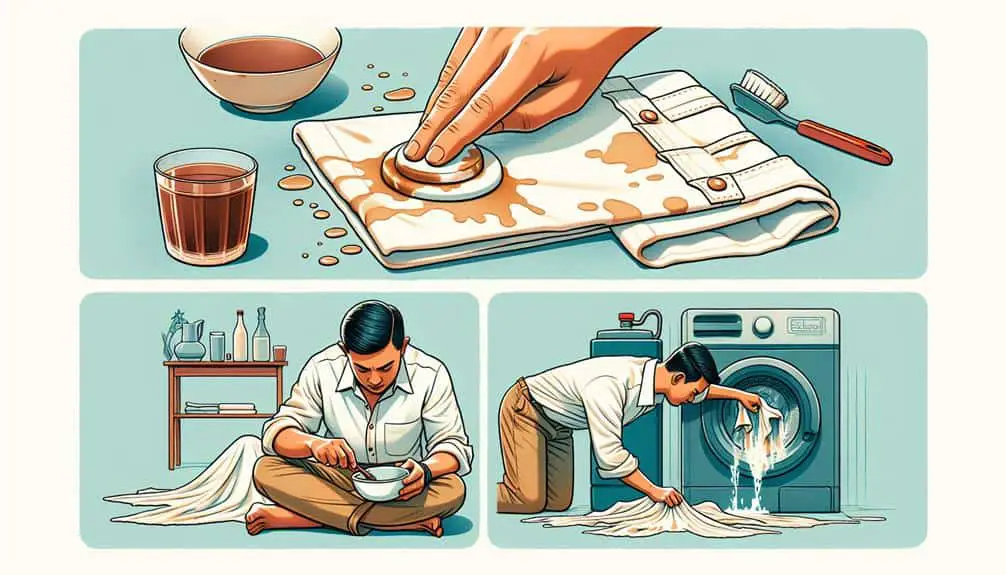
The key with fabric stains is to act fast. Like, super fast. The longer that tea sits, the deeper it seeps, and the more it becomes one with the fibers. So, if you spill, grab the nearest absorbent material – a paper towel, a clean cloth – and blot. Blot, don’t rub. Rubbing just pushes the stain deeper and spreads it out. Think of yourself as a gentle, stain-eradicating ninja.
Once you’ve blotted up as much as you can, it’s time to move on to the cleaning. For fresh stains, cold water is your best friend. Rinse the stained area from the back of the fabric. This helps to push the stain out, rather than further in. You can also try a little bit of mild liquid laundry detergent. Gently work it into the stain, then rinse again.
If the cold water and detergent aren't quite doing the trick, don't fret. We have more options. Remember our old pal, baking soda? It’s not just for mugs! You can make a paste with baking soda and water and apply it to the fabric stain. Let it sit for a while, then gently brush it off and rinse. It’s surprisingly effective on a variety of fabrics.
What about those slightly older, more stubborn fabric stains? Enter the stain removers. There are tons of them out there, and most of them are pretty good. Just make sure you read the instructions and test it on an inconspicuous area first. You don’t want to accidentally remove the color from your entire shirt. That would be a whole new problem, wouldn’t it?

For those really tough, set-in stains, you might need something a bit stronger. Oxygen-based bleaches (like OxiClean) can be very effective. They’re generally safer for colors than chlorine bleach, but always, always read the label and follow the instructions carefully. You can make a soak for the garment or apply a paste directly to the stain. Remember to rinse thoroughly!
And for those really delicate fabrics? Silk? Wool? Oh dear. You might want to consider dry cleaning. It's often the safest bet for expensive or delicate items. Sometimes, it's worth the extra cost to avoid a DIY disaster. Just let the professionals handle it.
The Ever-Present Threat: Countertops and Tables
Let’s not forget about the surfaces your tea-making adventures might touch. Countertops, tables, even the occasional windowsill where you like to sit and contemplate life with your cuppa. Tea stains can happen here too, and they can be surprisingly persistent.
For most sealed countertops, a good wipe-down with a damp cloth and some mild dish soap should do the trick. If the stain is a bit more ingrained, try that trusty baking soda paste again. Apply it, let it sit for a few minutes, then wipe clean. It’s gentle enough for most surfaces but strong enough to lift those brown rings.
For wooden surfaces, be a bit more careful. You don’t want to use anything too abrasive or too wet, as it can damage the finish. A damp cloth with a little bit of dish soap is usually sufficient. For tougher stains, you might try a paste of baking soda and water, but test it in an inconspicuous area first. And always wipe dry immediately.
If you have unsealed countertops, like some natural stone, you might need to be even more cautious. These surfaces are porous and can absorb stains more easily. In this case, it’s often best to consult the manufacturer’s cleaning recommendations. But generally, mild soap and water, and prompt cleanup of spills, are your best bet.
Prevention is Better Than Cure, Right?
Okay, so we’ve gone through the whole song and dance of stain removal. But wouldn’t it be so much easier if we just… didn’t get the stains in the first place? Revolutionary, I know!
A simple, yet often overlooked, step is to rinse your mugs immediately after use. Seriously. A quick rinse with hot water can prevent most stains from even forming. It takes, like, three seconds. Three! Imagine all the scrubbing you’ll save yourself.
If you’re making a big pot of tea, try to use a teapot with a good quality glaze. These are often more resistant to staining. And, if you’re using loose leaf tea, a good strainer is your friend. Fewer stray leaves means fewer potential stain-makers!
And for those of us who tend to be a bit… enthusiastic with our tea pouring? Maybe consider investing in a tray. It’s a small thing, but it can save your countertops (and your sanity) from a cascade of brown liquid. Think of it as an insurance policy against spillage.
So there you have it. A friendly, no-nonsense guide to banishing those pesky tea stains. You’ve got this. Now, go forth and enjoy your tea, guilt-free! And remember, if all else fails, there's always coffee. Just kidding! (Mostly.) Happy steeping!

