How Much Paint To Paint A Car

So, you’re thinking about giving your ride a fresh coat of paint? Awesome! It’s a big undertaking, but the thought of a gleaming, newly colored car is pretty darn exciting. But before you dive headfirst into a rainbow of possibilities, there's a crucial question that needs an answer: How much paint do you actually need? It’s not like buying a can of touch-up for your fingernails; this is a whole different ballgame! Let’s break it down in a way that won't make your head spin faster than a tire on a racetrack.
Think of it like this: you wouldn't bring a thimble to a swimming pool, right? The same logic applies to car painting. Too little paint, and you’ll end up with patchy coverage, looking like your car got into a fight with a Dalmatian and lost. Too much, and well, let’s just say your wallet might start weeping tears of expensive metallic flakes.
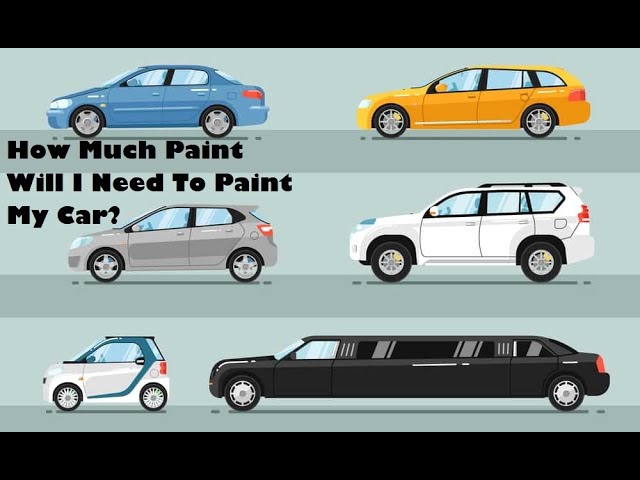
First off, the size of your car is the biggest player in this paint party. A tiny Smart Car is going to sip paint like a delicate martini, while a hulking Ford F-150 will guzzle it down like it’s the last drop on Earth. It's just common sense, really. A bigger canvas needs more canvas material, and a bigger car needs more paint.
Must Read
Generally speaking, for a standard sedan or coupe, you're looking at around 1 to 1.5 gallons (about 4 to 6 liters) of paint. That’s the actual color coat, mind you. We’ll get to all the other magical potions you’ll need later. For a larger vehicle like an SUV, truck, or even some of those fancy minivans that seem to have more doors than a hotel, you might need to bump that up to 1.5 to 2 gallons (about 6 to 8 liters). Think of it as sizing up your portions at a buffet – you want to make sure you get enough to go around!
Now, this is where things get a little more nuanced, so lean in. The type of paint you choose can also influence how much you need. Are you going for a simple solid color? Or are you dreaming of a shimmering metallic, a pearlescent wonder, or a deep, glossy candy coat? These fancy finishes often require more layers and special effects that can gobble up extra paint. A basic solid color is usually the most straightforward and uses the least amount.
Let's Talk Layers, Baby!
Painting a car isn't just slapping on one coat and calling it a day. Oh no, my friend. It’s a multi-step process, and each step needs its own delicious helping of paint or primer. This is where that initial 1-2 gallon estimate starts to spread out.
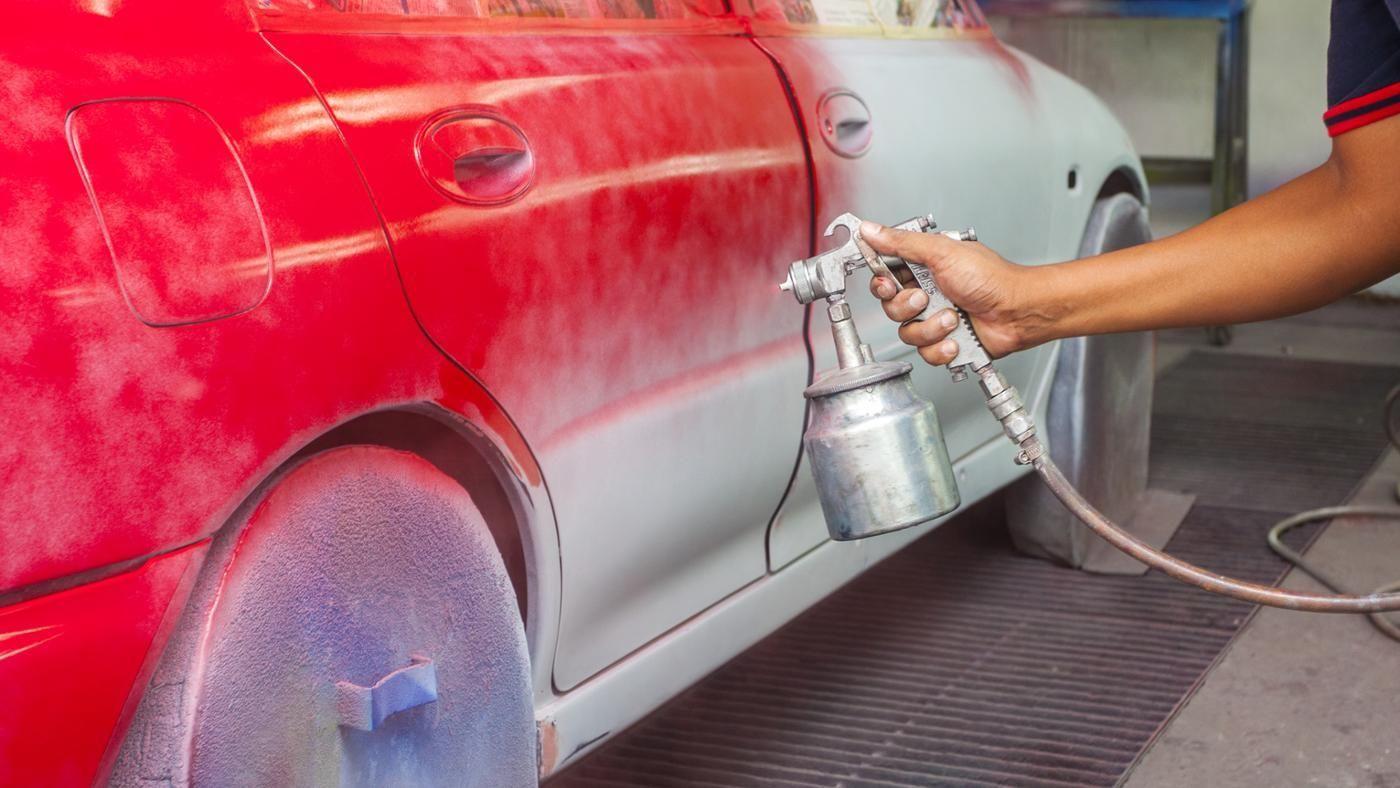
First up, you've got your primer. This is the unsung hero of the paint job. It's the foundation, the sticky base that helps your new color adhere like a barnacle to a ship. You’ll typically need about 1 gallon (4 liters) for primer, maybe a little less if your car is already in decent shape. If you’ve got a lot of old paint to strip or dents to fill, you might need a bit more primer to build up those surfaces.
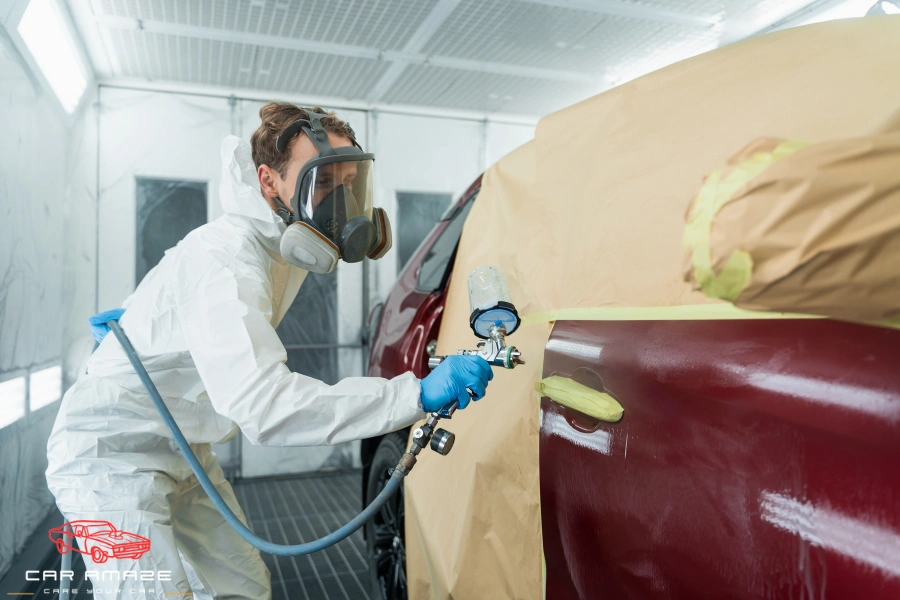
Then comes the basecoat. This is the actual color you see. For a good, even coverage, you’ll likely need at least two, often three, coats. So, if you’re aiming for that 1.5 gallons of basecoat, remember that’s the total amount you’ll be applying over several passes. It’s like applying sunscreen – you need to rub it in thoroughly and maybe do a second pass to make sure you haven’t missed any spots (and end up looking like a lobster).
After the basecoat has had its moment, you’ll move on to the clearcoat. This is the shiny stuff, the protective shield that gives your paint that deep, lustrous shine and guards it against the elements. Clearcoat usually requires at least two, and often three, coats for maximum protection and that showroom finish. So, you’ll likely need another 1 to 1.5 gallons (4 to 6 liters) of clearcoat. See how that initial paint estimate starts to multiply?
The Nitty-Gritty: What Else You'll Need
But wait, there’s more! Painting a car isn't just about the shiny liquid. You’ll also need a few other bits and bobs, and some of them come in their own containers. Think of them as the supporting cast in your car-painting epic.
You might need a sealer, especially if you're going from a dark color to a light one, or if your primer isn't quite covering evenly. This is another layer that helps ensure that your basecoat looks as intended. This can add another quart to a gallon (1 to 4 liters) to your paint needs, depending on the situation and the product.
And what about those special effects? If you’re going for a pearl or a flake, these are often mixed into the basecoat or applied as separate layers. They can be a bit more finicky and might require a slightly different application, which could nudge your paint usage up a tad. It’s always better to have a little extra for these decorative details.
Don't forget the reducers and activators! Most paints and clearcoats aren't ready to spray straight out of the can. You’ll need to mix them with reducers (to thin them out) and activators (to kickstart the chemical reaction that makes them harden). These come in their own specific ratios, and you'll need enough of them to match the volume of your paint products. These aren’t technically "paint" but they are essential components of the painting process, and you absolutely do not want to run out mid-spray. Imagine being halfway through a beautiful sunset orange and realizing you’ve got no more catalyst… disaster!
Factors That Can Throw You for a Loop
So, we’ve covered the basics, but the world of car painting is full of charming little surprises. Here are a few more things that can affect how much paint you’ll actually go through:
Your spraying technique is a big one. Are you a seasoned pro who lays down a perfect, even coat with minimal overspray? Or are you a bit of a beginner, perhaps a little heavy-handed with the trigger? More overspray means you’re essentially sending perfectly good paint into the atmosphere, where it can’t do its job on your car. Practice makes perfect, and learning to control your spray gun can save you a surprising amount of paint (and money!).
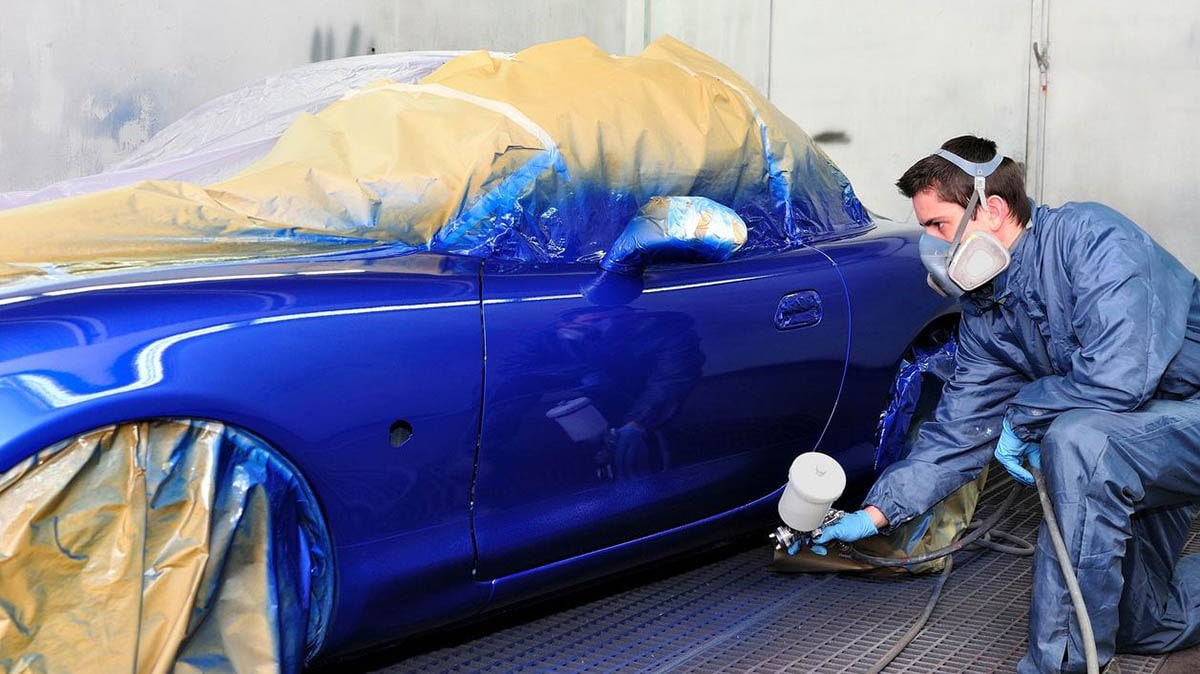
The condition of your current paint matters too. If you’re stripping down to bare metal, you might need more primer and potentially some high-build primer to fill in any minor imperfections. If you’re just doing a simple color change over a good base, you might be able to get away with a bit less. It’s like building a house – a solid foundation means less patching later.
The color you’re choosing can also be a sneaky factor. Lighter colors, especially yellows and whites, can sometimes require more coats to achieve full opacity compared to darker colors like black or deep red. It's like trying to cover up a dark stain with a light color – it takes more effort. Conversely, some very vibrant or metallic colors might need specific techniques or more coats for that true wow factor.
The type of paint system you use matters. Single-stage paints, where the color and gloss are in one layer, are generally more economical than a basecoat/clearcoat system. However, basecoat/clearcoat often provides a more durable and deeper finish. It’s a trade-off, and knowing which system you’re using will help you estimate your needs.
Your primer-to-paint ratio. Some primers are designed to be sanded down quite a bit after application to create a perfectly smooth surface. If you plan on doing a lot of sanding on your primer coats, you’ll need enough primer to account for that material removal. Think of it as sculpting – you start with a block and then carve away the excess.
The Golden Rule: Always Buy a Little Extra!
Seriously, this is the most important piece of advice I can give you. It’s the automotive equivalent of bringing a spare tire – you hope you don’t need it, but you’ll be eternally grateful if you do. Buy at least 10-15% more paint than you think you’ll need. Trust me on this one. Why? Because you might spill some (we’ve all been there, even the pros!), your spray gun might clog unexpectedly, you might need to touch up a small mistake you made later, or you might just realize that second coat of clearcoat wasn’t quite enough to get that flawless finish.
Running out of paint mid-job is a DIYer’s nightmare. You’ll have a beautifully painted section, and then… nothing. You’ll have to wait for more paint to arrive, and then try to perfectly match the color and sheen of the existing coat. It’s like trying to find a matching sock in a laundry pile – incredibly frustrating and rarely ends well. Having that little extra buffer will save you a world of stress and potential heartbreak.
When you're calculating, don’t just look at the can size. Remember that paint is often sold by the quart (approx. 1 liter) or gallon (approx. 4 liters). You'll be buying multiple quarts and gallons of primer, basecoat, clearcoat, and their associated reducers and activators. It can add up quickly, but it’s an investment in making your car look like a million bucks (or at least a very well-painted few thousand bucks!).
So, to sum it up, for a standard car, aim for around 1-1.5 gallons of actual color. But remember to factor in primer, clearcoat, and any special treatments. For larger vehicles, bump that up to 1.5-2 gallons of color. And for the love of all that is shiny, always, always, always buy extra. Think of it as your peace-of-mind fund!
Painting your car is a journey, a creative endeavor that can transform your beloved vehicle from drab to fab. It’s about patience, a steady hand, and a little bit of math. When you finally step back and admire your gleaming, newly painted masterpiece, the satisfaction will be immense. You’ll have added not just a new color, but a renewed sense of pride and accomplishment to your ride. So go forth, gather your supplies, and get ready to make your car shine brighter than a supernova! Happy painting, you magnificent automotive artist!