Ever found yourself staring at your fitness tracker, a little bewildered by that impressive 100,000 steps? It’s a significant milestone, often celebrated and sometimes even a bit daunting. But what does it actually translate to in the real world? How many miles have you truly conquered? It’s a question that sparks curiosity because it bridges the gap between abstract numbers and tangible progress. Understanding this conversion isn't just about satisfying a quick curiosity; it’s about making your fitness goals more concrete, more motivating, and frankly, a lot more fun to track!
The appeal of this question lies in its universality. Whether you’re a seasoned marathon runner, a casual walker, or just someone trying to get more active, steps are a common language of movement. Fitness trackers, from the ubiquitous Fitbit and Apple Watch to simpler pedometers, all speak in steps. So, when you hit a big number like 100,000, it's natural to wonder, "What's the payoff in miles?" This knowledge empowers you. It helps you plan your days, your weeks, and even your vacations with a clearer understanding of your physical capabilities. Imagine planning a sightseeing trip and knowing that hitting your step goal will equate to exploring a significant portion of a city on foot – that’s a powerful motivator!
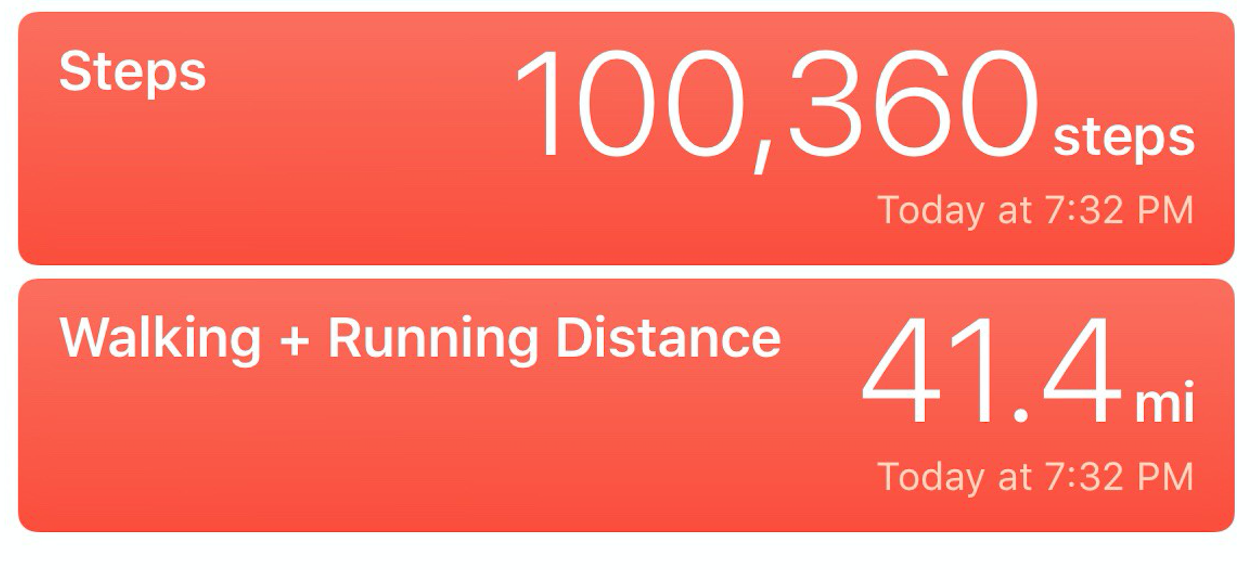
So, let's dive into the nitty-gritty of this step-to-mile conversion. The short, sweet, and most common answer is: 100,000 steps is roughly equal to 40 to 50 miles. Yes, you read that right! That’s a considerable distance, akin to walking from one major city to a nearby town, or completing a significant portion of a long-distance hiking trail. It’s the kind of distance that would take dedicated effort over several days for most people.
Why Such a Range? The Science (and Art) of Stride Length
You might be thinking, "Why isn't there just one exact number?" The answer is elegantly simple: stride length. Everyone walks differently! Your stride length is the distance your foot travels from the point it lifts off the ground to the point it touches down again. This length is influenced by a variety of factors:
Height: Generally, taller individuals have longer legs and thus longer strides. A 6-foot person will naturally cover more ground with each step than a 5-foot person.
Gender: On average, men tend to have slightly longer strides than women due to anatomical differences.
Walking Style: Some people take long, loping strides, while others have a shorter, quicker gait. Your natural walking pattern plays a huge role.
Speed: When you walk faster, your stride length often increases. A brisk power walk will differ from a leisurely stroll.
Terrain: Walking uphill, downhill, or on uneven surfaces can affect how far your legs extend.
Think of it this way: if you have a stride length of 2.5 feet, it will take you more steps to cover a mile than someone with a stride length of 3 feet. The conversion is a mathematical relationship, but the variables are very personal!
How Many Miles is 10000 Steps? (The Truth) - YouTube
So, how do you get a more personalized estimate? Many fitness trackers and apps have a feature where you can input your height and sometimes your gender to get a more accurate stride length calculation. Some even have a calibration mode where you walk a known distance (like 100 meters) and the device learns your specific stride. The most common average stride length used for calculations is around 2.2 to 2.5 feet. If we use an average stride of 2.5 feet:
100,000 steps x 2.5 feet/step = 250,000 feet
To convert feet to miles, divide by 5,280 (the number of feet in a mile): 250,000 feet / 5,280 feet/mile ≈ 47.3 miles
If your stride is a bit shorter, say 2.2 feet:
How to Walk 100,000 Steps in One Day | by David Paul Kirkpatrick
100,000 steps x 2.2 feet/step = 220,000 feet
220,000 feet / 5,280 feet/mile ≈ 41.7 miles
This clearly shows why you’ll see that range of 40-50 miles.
The Real Benefits: Beyond the Numbers
While knowing the mileage is fun, the real magic of tracking your steps, especially hitting big numbers like 100,000, lies in the broader health benefits. These aren't just about conquering distance; they're about:
Improved Cardiovascular Health: Regular walking strengthens your heart and lungs, lowering your risk of heart disease and stroke.
Weight Management: Consistent physical activity burns calories, aiding in weight loss or maintenance. 100,000 steps can contribute significantly to your daily calorie expenditure.
Stronger Bones and Muscles: Walking is a weight-bearing exercise that helps build bone density and strengthens leg and core muscles.
Enhanced Mood and Mental Well-being: Physical activity releases endorphins, those natural mood boosters that can reduce stress, anxiety, and symptoms of depression.
Increased Energy Levels: Counterintuitively, expending energy through exercise actually leads to more energy throughout the day.
Better Sleep: Regular physical activity can improve the quality and duration of your sleep.
Reaching 100,000 steps often signifies a period of significant activity, whether it’s a particularly busy week, a vacation filled with exploration, or a dedicated fitness challenge. It’s a testament to your commitment to moving your body and reaping these incredible health rewards. So, the next time you see that impressive step count, take a moment to appreciate not just the miles you’ve covered, but the cumulative positive impact it’s having on your overall health and well-being. It's a fantastic way to stay motivated and celebrate every step of your journey!