How Many Litres Is My Fish Tank

So, you've got a fin-tastic new friend (or a whole school of them!), and you're wondering, "Just how much water does this thing hold?" You know, the big ol' glass box your buddies are swimming around in? It's a super common question, and honestly, not everyone instantly knows the answer. It's not like you can just eyeball it and yell, "Yep, that's exactly 73.4 litres!" Wouldn't that be handy, though? But don't worry, figuring out your fish tank's litre-age is easier than you think. Think of it as a little treasure hunt for numbers!
Why is this even important, you ask? Well, besides the sheer curiosity of it all (which is totally valid, by the way!), knowing your tank's volume is actually a pretty big deal in the fish-keeping world. It helps you understand how much substrate you'll need, how many fish you can ethically keep (we don't want any overcrowded sardine cans, do we?), and even what kind of filtration and heating equipment is best suited for your aquatic abode. Plus, when you need to do those all-important water changes, knowing the volume means you know exactly how much fresh water to prepare. No more guessing games with those giant jugs!
Let's Get Down to Business: The Measuring Tape Method (Your New Best Friend!)
Okay, so the most straightforward way to get a ballpark figure, and often a pretty darn accurate one, is to whip out a trusty measuring tape. Yep, the kind you might use for sewing or DIY projects. Don't have one? No worries, any ruler will do, but a tape measure is usually longer and easier to handle for tank dimensions.
Must Read
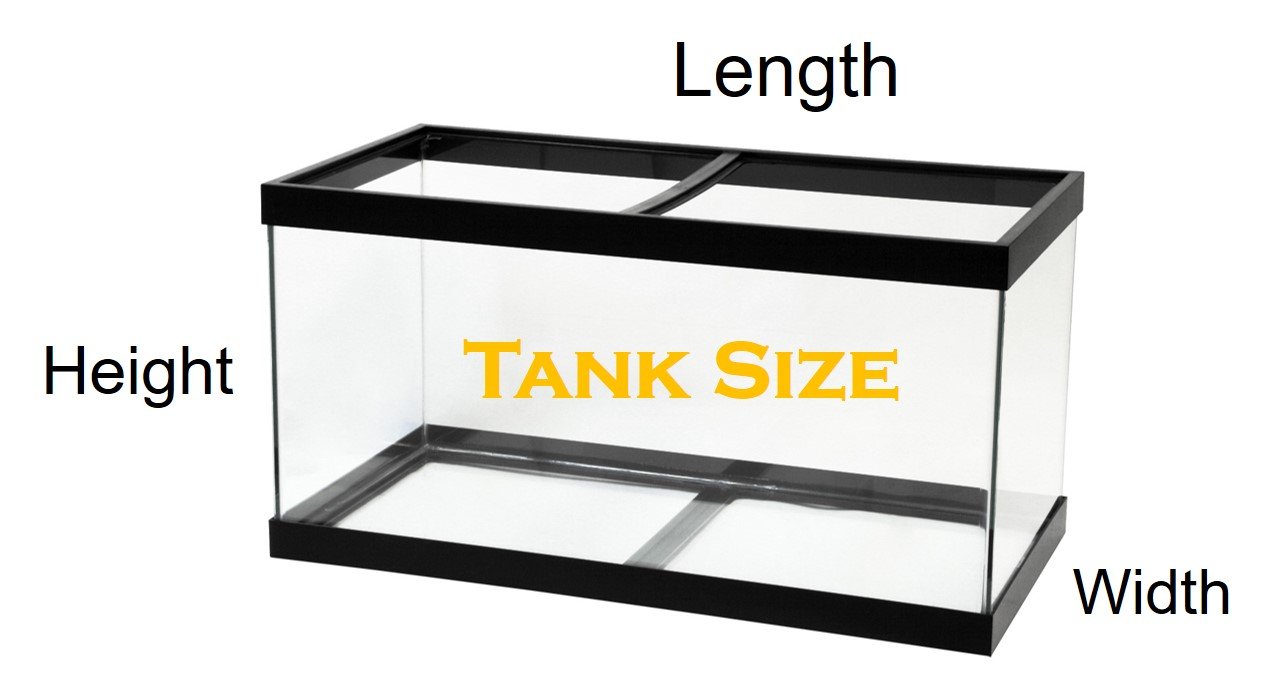
First things first, you'll need to measure the internal dimensions of your tank. This is crucial! We're not interested in the thickness of the glass, as that doesn't hold water. So, grab your tape measure and get ready to do some geometry. You'll need three measurements:
- Length: Measure the inside of your tank from one end to the other.
- Width (or Depth): Measure the inside from the front glass to the back glass.
- Height: Measure the inside from the bottom of the tank up to where the water typically sits. (We'll get to why we don't measure to the very top in a sec!).
Pro tip: Try to measure these as accurately as possible. Even a centimetre or two can make a difference, especially in smaller tanks. If your tank has a noticeable curve to the glass (some modern ones do!), try to get the most representative measurement across the widest part of the curve.
The Magical Formula: Length x Width x Height = Volume (in Cubic Centimetres!)
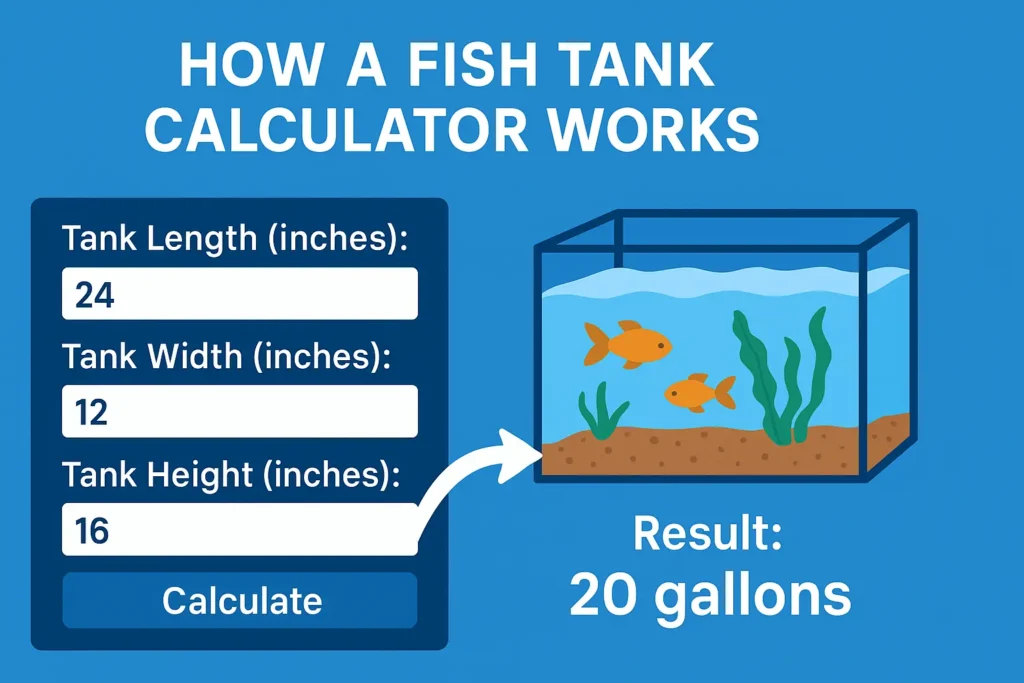
Now for the fun part – a little bit of math! Don't panic; it's super simple. Once you have your three measurements in centimetres (cm), you just multiply them together:
Volume (in cm³) = Length (cm) x Width (cm) x Height (cm)
For example, let's say your tank measures:
- Length: 60 cm
- Width: 30 cm
- Height: 30 cm (measuring to the usual water line)
So, 60 cm x 30 cm x 30 cm = 54,000 cubic centimetres (cm³).

Now, you might be thinking, "Okay, but I need litres, not cubic centimetres!" You're absolutely right! And here's the secret sauce: 1,000 cubic centimetres is equal to 1 litre. Mind. Blown.
So, to convert your cubic centimetre volume to litres, you just divide by 1,000:
Volume (in Litres) = Volume (in cm³) / 1,000
Using our example: 54,000 cm³ / 1,000 = 54 litres.
See? Easy peasy, lemon squeezy! Your tank holds approximately 54 litres. Now you know! You can go tell all your fishy friends their water capacity. They'll be so impressed.
What About the Water Line? The "Fill 'Er Up" Factor
Remember how we said to measure the height to where the water typically sits? That's important. Most tanks aren't filled right to the brim. You need a little bit of "air space" at the top. This is for a few reasons:

- Surface Agitation: This helps with oxygen exchange. Your fish need to breathe, after all!
- Preventing Spills: Imagine trying to feed your fish when the water is right at the edge. You'd be mopping up more water than they'd be eating!
- Equipment Space: You'll likely have filters, heaters, and maybe even decorative items that sit above the water line.
So, the height you measure should be from the bottom up to about 1-2 cm (or about half an inch) below the top rim of the tank. This gives you a more accurate usable water volume.
If you did measure to the very top, your calculated volume would be slightly higher than the actual amount of water your tank holds. For most practical purposes, measuring to the typical water line is best.
The "I Can't Find My Measuring Tape" Dilemma (It Happens!)
Don't fret if your measuring tape has vanished into the abyss of lost socks and stray pens. There are other ways! If your tank came with a box or packaging, sometimes the volume is printed right there. It's like a little surprise gift from the manufacturer!
Also, many commercially made tanks have their volume stated quite clearly. If you know the brand and model of your tank, a quick search online can often reveal its capacity. This is especially true for standard-sized tanks. You might be lucky and find a helpful chart or product description!
The Bucket Brigade: The Old-School, But Effective, Method
This one is a bit more time-consuming, but it's a fantastic way to get a super accurate measurement, especially if your tank is an odd shape or you're just feeling particularly scientific. You'll need:
- Your tank (empty, ideally – though you can do this with a partially filled one if you're careful!)
- A container of a known volume (like a 1-litre measuring jug or a bucket that you know holds a specific amount, e.g., 5 litres).
- A calculator (or your phone!).
Here’s how it works:
- Start filling your tank using your known volume container.
- Count how many times you fill and empty the container into the tank.
- Keep track of the total volume you've added.
So, if you used a 1-litre jug and you poured it in 54 times, congratulations! Your tank holds approximately 54 litres. If you used a 5-litre bucket and emptied it 11 times, adding a bit more from your 1-litre jug for the remainder, you'd do (11 x 5 litres) + (however many litres you added from the jug). It's a bit like filling a bathtub with a teacup – dedication!
This method is particularly useful for irregularly shaped tanks or aquariums that aren't perfectly rectangular. It accounts for any nooks and crannies where water might reside. Just be prepared for a bit of a workout and potentially a slightly damp floor!
Tank Shape Shenanigans: Cylinders, Cubes, and the Weird Ones
Most common fish tanks are rectangular prisms (fancy word for boxes!). The length x width x height formula works perfectly for these. But what if you have a different shape?
Cylindrical Tanks (The Round Ones)
For a perfect cylinder, you need the radius of the base (half the diameter) and the height. The formula is:
Volume (in cm³) = π x radius² x height
Where π (pi) is approximately 3.14.
So, if your cylindrical tank has a diameter of 30 cm (meaning a radius of 15 cm) and a height of 40 cm (to the water line), it would be:
3.14 x (15 cm x 15 cm) x 40 cm = 3.14 x 225 cm² x 40 cm = 28,260 cm³.
Divide by 1,000 to get litres: 28.26 litres.
This might feel a bit more intimidating, but you can often find online calculators that do the work for you. Just pop in your measurements, and voilà!
The Awkwardly Shaped Tanks
For tanks that aren't simple rectangles or cylinders, things can get a bit trickier. Often, manufacturers will provide the volume for these. If not, the bucket brigade method is your most reliable bet for an accurate measurement. Or, you could try approximating the shape with simpler geometric figures and adding their volumes together – but honestly, the bucket method is probably less headache-inducing!
Important Considerations: Beyond Just the Numbers
Now that you've got your litre-age, remember it's not just about the number. It's about creating a healthy and happy environment for your fish. Here are a few extra things to keep in mind:
- Substrate and Decor: The gravel, sand, rocks, and ornaments you put in your tank take up space! So, the actual water volume will be slightly less than your calculated total volume. Don't stress too much about this for basic calculations, but be aware it's a factor.
- Filtration and Heating: Your filter and heater will also take up a small amount of space.
- Stocking Levels: This is a big one! A 50-litre tank doesn't mean you can cram 50 one-inch fish in there. Different fish have different needs for space and social interaction. Always research the specific needs of your chosen fish before buying them. Websites like Seriously Fish and AqAdvisor are your best friends here!
- Water Changes: For a 50-litre tank, a 25% water change would mean replacing 12.5 litres. Planning your water changes is much easier when you know your tank's volume.
The Joy of Knowing Your Aquatic World
So there you have it! Figuring out how many litres your fish tank holds is a simple, yet incredibly useful, step in becoming an awesome fish parent. Whether you're using a trusty measuring tape, doing the bucket brigade, or looking up the specs online, the knowledge you gain empowers you to provide the best possible home for your aquatic pals.
And hey, even if your calculation is just a little bit off, don't beat yourself up! The most important thing is that you're engaged and eager to learn. Every little bit of understanding you gain makes a world of difference to the tiny, shimmering lives in your care. So, go forth, measure with confidence, and enjoy the wonderful world of fish keeping! Your happy, healthy fish will thank you for it, with every graceful flick of their tails!