How Many Keys Are On A Piano

Ever found yourself staring at a grand piano, perhaps in a concert hall, a cozy living room, or even a department store, and wondered about the sheer number of those inviting black and white rectangles? It's a question that pops into many minds, a simple curiosity about the intricate mechanics of this magnificent instrument. And honestly, it’s a fun little fact to have in your back pocket!
Understanding how many keys are on a piano isn't just about satisfying a fleeting thought. It unlocks a deeper appreciation for the instrument's capabilities and its rich history. The standard number of keys we see today isn't an accident; it’s the result of centuries of musical evolution, designed to accommodate an ever-expanding harmonic and melodic language. Knowing this number helps us grasp the full spectrum of sounds a piano can produce, from the deepest rumblings to the highest, sweetest notes.
The purpose of having this specific number of keys is to allow musicians to play a wide range of notes, forming all the chords, scales, and melodies that make up Western music. A standard modern piano boasts 88 keys. This includes 52 white keys and 36 black keys. These keys are arranged in a specific pattern that repeats, allowing for consistent intervals and easy navigation for the player. This 88-key configuration is so prevalent that it’s become the universal benchmark for a "full-sized" piano.
Must Read
Think about it in terms of education. For aspiring pianists, learning on an 88-key instrument means they are exposed to the complete tonal range that composers have written for. This is crucial for developing their musical ear and understanding complex pieces. Even if you're not planning on becoming a concert pianist, understanding this standard number can be surprisingly useful. If you're looking at buying a keyboard, knowing that 88 keys is the standard will help you make an informed decision. Many smaller, more portable keyboards might have fewer keys (like 61 or 76), which is great for beginners or those with limited space, but understanding the full 88 helps you appreciate what you might be missing in terms of musical range.
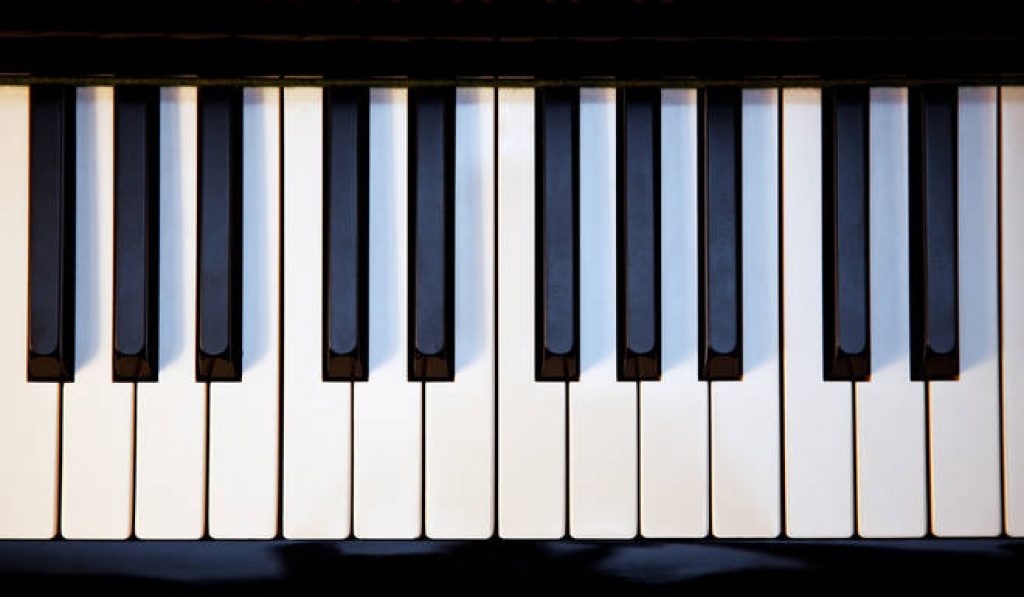
Exploring this is simpler than you might think! The next time you're near a piano, take a moment to count. You can start by counting the white keys (there are 52) and then the black keys (there are 36). If you do the math, 52 + 36 = 88. Easy! You can also observe the repeating pattern of black keys: groups of two and groups of three. This pattern is your visual guide to the musical octave. It's a small exploration, but it can lead to a surprisingly satisfying sense of understanding. So, the next time you see a piano, you'll know that the seemingly endless expanse of keys is, in fact, a beautifully structured system of 88 notes, ready to create countless beautiful sounds.