How Many Carpet Tiles Do I Need

So, you’re thinking about jazzing up your space with some snazzy new carpet tiles, huh? Maybe you’ve got a basement that’s begging for a cozy makeover, a home office that needs a bit of pep, or even just a high-traffic hallway that’s seen better days. Whatever the reason, carpet tiles are a fantastic choice – they’re practical, they look great, and they’re surprisingly forgiving if you spill your morning coffee (we’ve all been there!). But before you dive headfirst into a rainbow of possibilities, there’s one little hurdle you need to hop over: figuring out exactly how many carpet tiles you need. Don’t worry, it’s not rocket science, and we’re going to break it down in a way that’s as easy as choosing your favorite flavor of ice cream.
Why should you even bother with this whole “how many tiles” conundrum? Well, imagine this: you’ve picked out the perfect tiles, you’re all set to start laying them down, and then… oops. You’re just a few short. Now you have to go back to the store, hope they still have the same batch (dye lots can be a sneaky thing!), and potentially pay for shipping again. Or, even worse, you’ve ordered way, way too many. Now you’ve got a stack of extra tiles cluttering up your garage, staring at you accusingly. Neither of those scenarios is exactly a recipe for a relaxed DIY project, right? Getting the number right from the get-go means smooth sailing, a happy wallet, and a beautiful finished floor.
The Magic Formula: Measuring Your Way to Tile Success
Alright, let’s get down to business. The absolute most important thing you need to do is measure your room. Think of it like baking a cake – you need the right ingredients in the right amounts, otherwise, it just won’t turn out as delicious. You’ll need a tape measure, a pen, and a piece of paper. Grab a friend to help if you want to make it a bit more fun, or just embrace your inner solitary adventurer.
Must Read
What you’re aiming for is the total square footage of the area you want to cover. Most rooms are pretty straightforward, usually a rectangle or a square. Measure the length of the room and the width of the room. Then, and this is the easy part, you multiply those two numbers together. Length x Width = Square Footage. So, if your living room is 12 feet long and 10 feet wide, you’ve got 120 square feet of flooring to cover. Easy peasy!
What About Tricky Rooms?
Now, not all rooms are perfect squares or rectangles. What if you have an L-shaped living room, or a dining room with a bay window? Don’t panic! We just need to break it down into simpler shapes. Imagine you have an L-shaped room. You can mentally (or on your paper) divide that L into two separate rectangles. Measure the length and width of each rectangle, calculate the square footage for each, and then add them all up. It’s like figuring out how many cookies you have if you have a plate of chocolate chips and a plate of oatmeal raisin – you just count each plate separately and then add the totals!

For those bay windows, or other nooks and crannies, measure them as separate sections. If a bay window juts out an extra 3 feet and is 6 feet wide, that’s another 18 square feet to add to your total. The key here is to be thorough but also to keep it simple. Don’t overthink it; just break down the space into manageable pieces.
Calculating Your Tile Count: The Fun Part!
Once you’ve got your total square footage, you’re almost there. Now, you need to know how many square feet a single carpet tile covers. This information is usually right there on the packaging or the product description online. Most standard carpet tiles are 1 foot by 1 foot, meaning each tile covers 1 square foot. If that’s the case, then your total square footage is also your starting tile count. If your room is 120 square feet, and your tiles are 1 square foot each, you need 120 tiles. Simple!
However, some carpet tiles are larger, like 2 feet by 2 feet. In that case, each tile covers 4 square feet. So, for our 120 square foot room, you'd divide your total square footage by the square footage per tile: 120 sq ft / 4 sq ft/tile = 30 tiles. You get the idea!
The Secret Weapon: The Waste Factor (AKA, The "Oops" Factor)
Now, here’s where we get a little bit clever. It’s always a good idea to order a little bit extra. Think of it like buying extra pasta for dinner – it’s better to have a little leftover than to run out when you’re halfway through serving. This extra is called the waste factor, and it accounts for those little hiccups that can happen during installation.
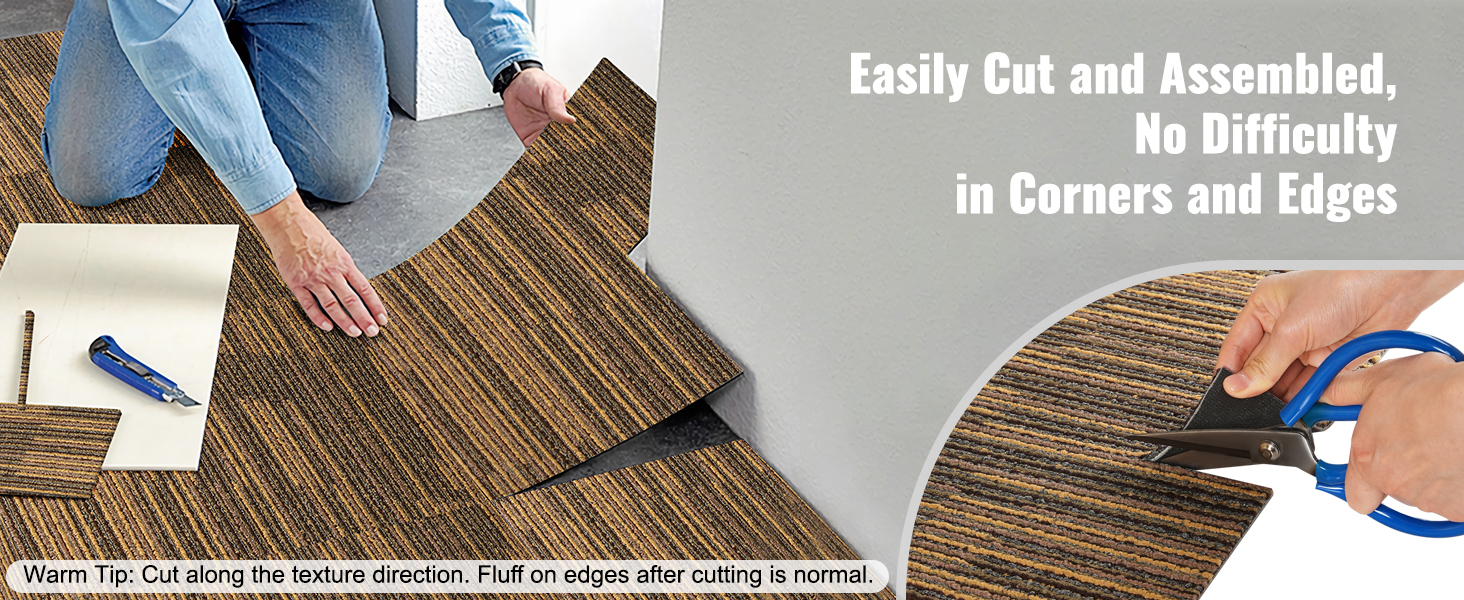
What kind of hiccups, you ask? Well, sometimes you need to cut tiles to fit around doorways, corners, or pipes. Those cuts mean you’re not using a whole tile. Also, accidents can happen! A tile might get dropped and a corner might break, or you might discover a stubborn stain on a tile that you just can’t get out. For most standard rooms, adding an extra 10% to your total tile count is a good rule of thumb. So, if you calculated you need 100 tiles, add 10% (which is 10 tiles) for a total of 110 tiles. This gives you a comfortable buffer.

If your room has a lot of angles, curves, or is a particularly complex shape, you might want to bump that up to 15% just to be extra safe. It’s always better to have a few extra tiles you can store away for future repairs than to be left with a gap that looks like a missing tooth in your otherwise beautiful floor.
A Little Story to Illustrate
My friend Sarah decided to tile her home office. She’s not exactly a DIY guru, more of a "hire someone else" kind of person, but she was feeling brave. She meticulously measured her rectangular office, calculated the square footage, and did her math. She even added that 10% for waste. She ordered her tiles, feeling quite proud of herself. As she was cutting the very last tile to fit a tricky corner near her desk, her cat, Bartholomew (a creature of pure chaos), decided to pounce on the offcut piece, sending it flying under the sofa and out of reach. Sarah, in that moment, let out a groan that echoed through the house. Luckily, because she’d added that extra 10%, she had one spare tile tucked away, a tiny hero in a furry feline drama. She was able to finish her office without a hitch, all thanks to that little bit of foresight.

Putting It All Together: Your Tile Tally
So, let's recap!
- Measure your room(s) and calculate the total square footage. Remember to break down any complex shapes into simpler rectangles and add their areas together.
- Find out the square footage of each carpet tile. Usually, it's 1 sq ft for a 1'x1' tile.
- Divide your total room square footage by the square footage per tile to get your base number of tiles.
- Add a waste factor – typically 10% for standard rooms, or 15% for rooms with a lot of cuts and angles.
It sounds like a lot of steps, but once you do it, you’ll see how logical it is. It’s a bit like packing for a trip. You think about where you’re going, what you’ll need, and then you pack a little bit extra of the essentials, just in case.
By taking a few minutes to do this simple calculation, you’re setting yourself up for a much smoother, less stressful, and ultimately more satisfying carpet tile installation. You’ll have the satisfaction of knowing you’ve got exactly what you need, no more, no less (well, maybe just a tiny bit more!). So go forth, measure with confidence, and get ready to enjoy your newly tiled space!