How Does A Car Ac System Work
You know that feeling? The one where you’ve been baking in your car for what feels like an eternity, the steering wheel is hot enough to fry an egg, and the only thing keeping you from melting into a puddle on the driver’s seat is the faint whisper of slightly less hot air coming from those little vents? Yeah, that’s the magic of your car’s AC system. It’s basically the unsung hero of every summer road trip, the savior of every sticky commute. I remember one particularly sweltering August day, my car AC decided to take a vacation – a permanent one, it turned out. Driving home felt like being inside a giant, mobile sauna. I swear I saw heat waves shimmering off the asphalt, and I was convinced I was going to emerge from the car with a new, deeply tanned complexion. That’s when it hit me: I really, really don't understand how this miracle machine actually works. And if I don't, chances are, neither do you. So, buckle up (metaphorically, of course, since we’re talking about comfort), and let’s take a peek under the hood of this chilly wizardry.
Now, don't go thinking this is going to be some dry, technical manual. We're going for more of a "chatting with your mechanic friend over a lukewarm coffee" vibe. We'll keep it light, a bit curious, and maybe throw in a few eye-rolls at the sheer genius of it all. Because, honestly, it is pretty genius.
The Coolest Trick in the Book: It’s All About Phase Changes
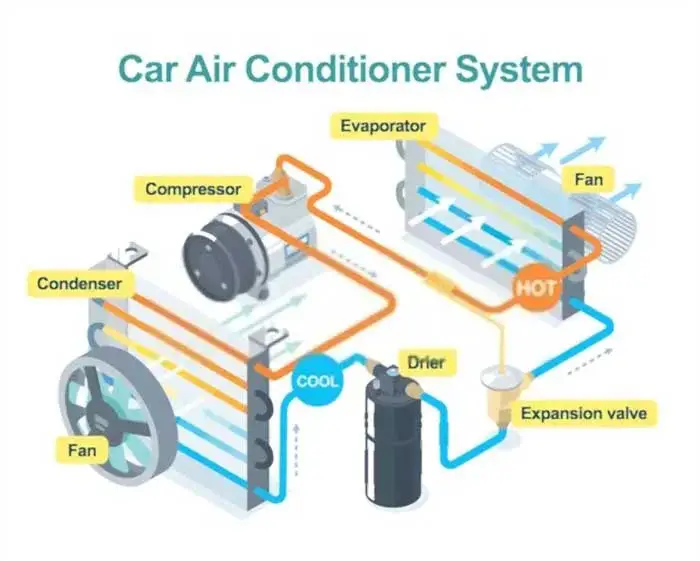
So, how does a car AC system make that blast of arctic air? The secret sauce, my friends, is a clever little dance involving a substance called refrigerant and its ability to change states – from a liquid to a gas and back again. Think of it like a tiny, self-contained weather system inside your car, constantly manipulating temperature and pressure.
Must Read
You've probably heard of Freon, right? That's an old-school refrigerant. Modern cars use different, more environmentally friendly ones, but the principle is the same. This stuff is designed to evaporate at a low temperature and condense at a relatively low temperature too, which is key to its cooling power. It's a bit like a superhero with two very specific superpowers: freezing things and then, well, unfreezing them in a way that makes everything else colder. Pretty neat, huh?
The Four Horsemen of Cool: Compressor, Condenser, Expansion Valve, and Evaporator
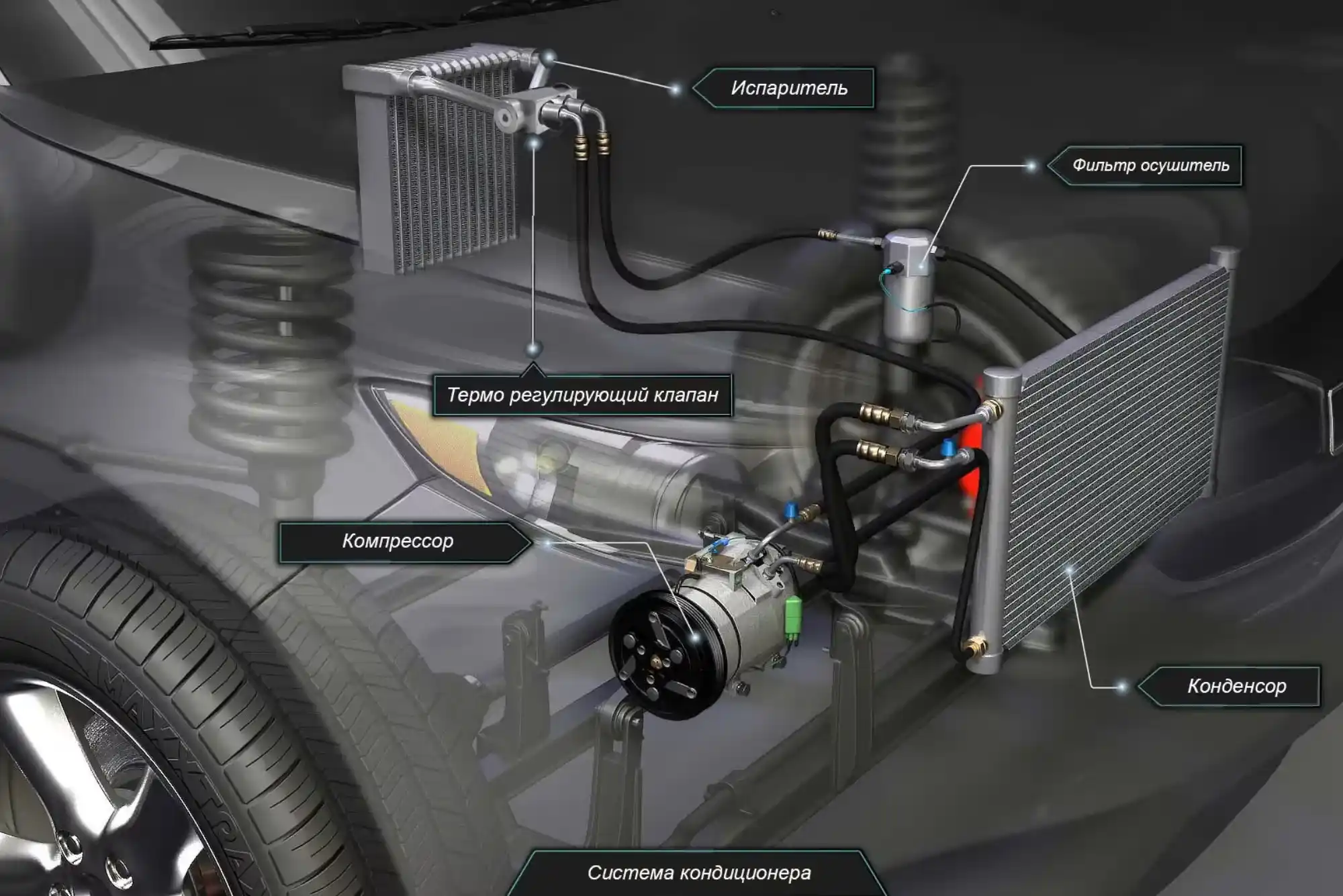
To understand the magic, we need to meet the main players. These are the four core components that make up your car's AC system. They’re like the Avengers of your car’s climate control, each with a vital role to play. Without one of them, the whole operation grinds to a halt, leaving you with that aforementioned sauna experience. Shudder.
1. The Compressor: The Heartbeat of the System
Imagine this as the muscle of your AC system. The compressor’s job is to take the refrigerant, which is currently a low-pressure gas, and squeeze it. Yep, just like you might squeeze a stress ball. This squeezing action, or compression, significantly increases the refrigerant's pressure and, consequently, its temperature. It’s like a tiny, powerful engine that’s solely focused on heating up this special gas. Think of it as the first step in the "making things cold" process – it’s counterintuitive, I know! It’s actually heating the refrigerant up, but in a controlled way, so it’s ready for its next trick.

This is usually the part you’ll hear making that distinctive "whirr" or "clunk" sound when you turn on your AC. It’s driven by the car’s engine via a belt. So, when your AC is running, your engine is working a little harder. Ever notice your engine revving slightly higher when you crank up the AC? That's the compressor saying, "Here I am, ready to work!"
2. The Condenser: The Radiator for Refrigerant
Now that our refrigerant has been compressed and is nice and hot (and high-pressure!), it’s sent to the condenser. This is typically located at the front of your car, usually right in front of the radiator. Why there? Because it needs airflow to do its job effectively. Think of the condenser as a miniature radiator specifically for your refrigerant. Its job is to get rid of that heat the compressor just added.
As the hot, high-pressure refrigerant flows through the condenser’s thin tubes and fins, air passes over them (either from the car moving or from a fan). This airflow helps to cool the refrigerant down. And as it cools, it starts to condense, changing from a hot, high-pressure gas back into a warm, high-pressure liquid. This is where the "condenser" gets its name, making perfect sense, right? It’s like the refrigerant is sighing a breath of relief as it sheds its heat, ready for its next adventure.
This is also why your car's fan sometimes kicks on even when your engine temperature is fine. It’s helping the condenser do its job to keep everything cool. Pretty clever how these systems are interconnected, isn't it? A little bit of teamwork goes a long way in the quest for a comfortable interior.
3. The Expansion Valve (or Orifice Tube): The Bottleneck of Brilliance
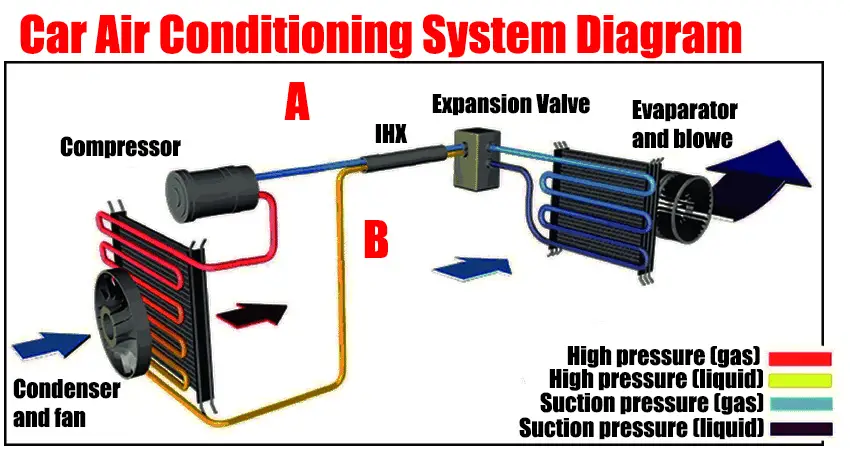
Okay, so we have our now-warm, high-pressure liquid refrigerant. It's done its heat-shedding duty. Now, it needs to do something really dramatic. It's sent to the expansion valve, which is essentially a narrow restriction or a small tube. Think of it like a narrow doorway after a wide-open hallway. When the liquid refrigerant is forced through this tiny opening, its pressure drops dramatically. This is a critical step.
When the pressure drops, so does the temperature. It’s like the refrigerant is suddenly released from a vice grip, and it gets really cold, really fast. It starts to evaporate, but it’s still mostly a liquid at this point, just very, very cold. This is where the actual cooling magic starts to happen, or at least, the preparation for it.
This little valve is a master of dramatic temperature drops. It's the unsung hero that sets the stage for the grand finale of cooling. Without this sudden pressure drop, the refrigerant wouldn't get cold enough to do its job. It’s the moment of truth, the big reveal!
4. The Evaporator: The Icebox in Your Dashboard
And finally, we arrive at the evaporator. This is the component that’s actually located inside your car, usually behind the dashboard. Think of it as the car’s personal icebox. The super-cold, low-pressure refrigerant, now a mixture of liquid and gas (because it started to evaporate due to the pressure drop), flows through the evaporator’s coils.
Now, here’s the crucial part: the air from your car’s cabin is pulled by a fan (the blower motor you control) and pushed across these cold evaporator coils. As the warm cabin air passes over the cold coils, the heat from the air is absorbed by the refrigerant. This is exactly what we want! The refrigerant absorbs the heat, and in doing so, it fully evaporates, changing from a cold liquid/gas mixture into a cool, low-pressure gas. Meanwhile, the air that just passed over the coils, now robbed of its heat, is nice and cool, and it’s blown into your car's cabin. Ta-da! Cold air.
This is also why you sometimes see water dripping from under your car when the AC is running. That's condensation from the humid cabin air hitting the cold evaporator coils. That moisture is then drained away. It's a sign your AC is working exactly as it should be, removing both heat and humidity.
The Cycle Repeats: A Continuous Loop of Coolness
Once the refrigerant has absorbed all the heat it can from your cabin air and has fully evaporated into a cool, low-pressure gas, it makes its way back to the compressor. And guess what? The whole cycle starts all over again. The compressor squeezes it, it heats up, it goes to the condenser to cool down and become a liquid, it goes through the expansion valve for a dramatic pressure and temperature drop, and then it hits the evaporator to absorb more heat from your cabin.

It’s a continuous loop, a perfectly orchestrated dance of pressure, temperature, and phase changes, all designed to keep you from becoming a sweaty mess. It's quite an ingenious system when you break it down, isn't it? All those parts working in harmony, tirelessly battling the summer heat.
What Could Go Wrong (And Why Your AC Might Be Blowing Hot Air)
Of course, like any complex system, your car's AC isn't immune to problems. If your AC starts blowing warm air, it’s usually because one of these components isn't doing its job. The most common culprits are:
- Low Refrigerant: This is the most frequent issue. Over time, seals can develop tiny leaks, and refrigerant can escape. If there's not enough refrigerant, the system simply can’t cool effectively. It’s like trying to make a giant ice cube with only a thimbleful of water.
- Faulty Compressor: If the compressor isn't running or isn't compressing properly, the whole cycle breaks down. No compression, no heat transfer, no cold air.
- Clogged Condenser or Evaporator: Debris like leaves, bugs, or dirt can block airflow to the condenser, preventing it from releasing heat. Similarly, a dirty evaporator won't absorb heat effectively. Imagine trying to breathe through a clogged nose – not very efficient!
- Malfunctioning Expansion Valve: If the expansion valve gets stuck or clogged, it can disrupt the critical pressure and temperature drop.
- Electrical Problems: Sometimes, it’s just a fuse, a relay, or a sensor that’s gone bad. These little electrical gremlins can cause the whole system to shut down.
So, the next time you’re enjoying that blissful blast of cold air, take a moment to appreciate the complex ballet happening under your hood. It’s a testament to some seriously clever engineering, designed with one simple, yet incredibly important, goal: your comfort. And in the heat of summer, that's a pretty amazing feat.
Hopefully, this gives you a slightly better understanding of what's going on when you hit that little snowflake button. It’s not just magic; it’s science, with a dash of mechanical marvel. And hey, if your AC is acting up, at least now you might be able to have a slightly more informed conversation with your mechanic. You might even impress them with your newfound knowledge! Or at least, you'll know why they're talking about compressors and refrigerants. 😉