How Do You Say Hello In African
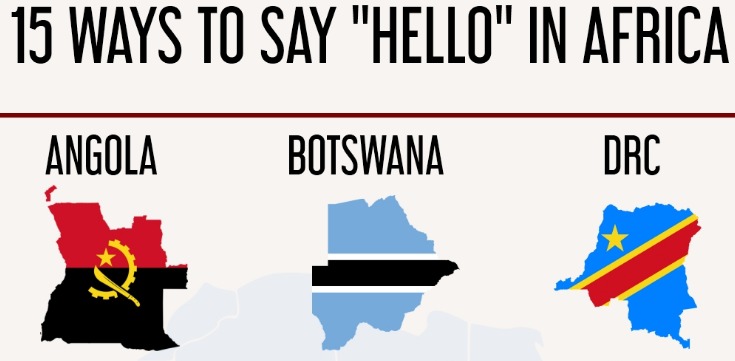
Ever found yourself wondering, “So, how do you actually say hello in Africa?” It's a question that pops into your head, right? Like when you're scrolling through travel photos or hearing amazing stories about the continent. Africa! It's HUGE, and bursting with so many different cultures and languages. So, just asking "How do you say hello?" is like asking "How do you say hello in Europe?" – a bit of a trick question, but a super fun one to dive into!
Think about it. If you were to visit, say, Italy, you'd learn "Ciao," right? Or maybe in France, it’s "Bonjour." Easy peasy. But Africa? It's a whole different ballgame. It’s not one single language, not even close. It’s a tapestry woven with thousands of languages, each with its own unique way of greeting someone.
Let's get this out of the way first: there's no one African way to say hello. Nope. And honestly, that’s where the magic lies! It’s like trying to pick your favorite flavor of ice cream – impossible because there are just too many delicious options. Each greeting is a little window into a culture, a little handshake of words.
Must Read
So, instead of hunting for a single answer, let’s go on a little linguistic adventure, shall we? We're going to explore some of the fascinating ways people say hello across this incredible continent. No textbooks, no boring lectures, just pure, unadulterated curiosity!
A World of "Hellos"
Imagine this: you step off a plane, maybe in Accra, Ghana. The air is warm, the energy is buzzing. What do you hear? You might hear "Akwaaba". It's a beautiful, welcoming sound, and it means more than just "hello." It's like an invitation to be comfortable, to be at home. It’s the verbal equivalent of a warm hug and a cup of tea.
Then, let’s jet over to Nairobi, Kenya. Here, you'll often hear "Jambo". It’s a popular one, often used in tourist areas, and it's a friendly, easy greeting. But if you want to go a little deeper, you might hear "Habari", which is more like "What’s the news?" or "How are you?" It’s a little more personal, isn't it? It shows you’re interested in the person, not just making small talk.

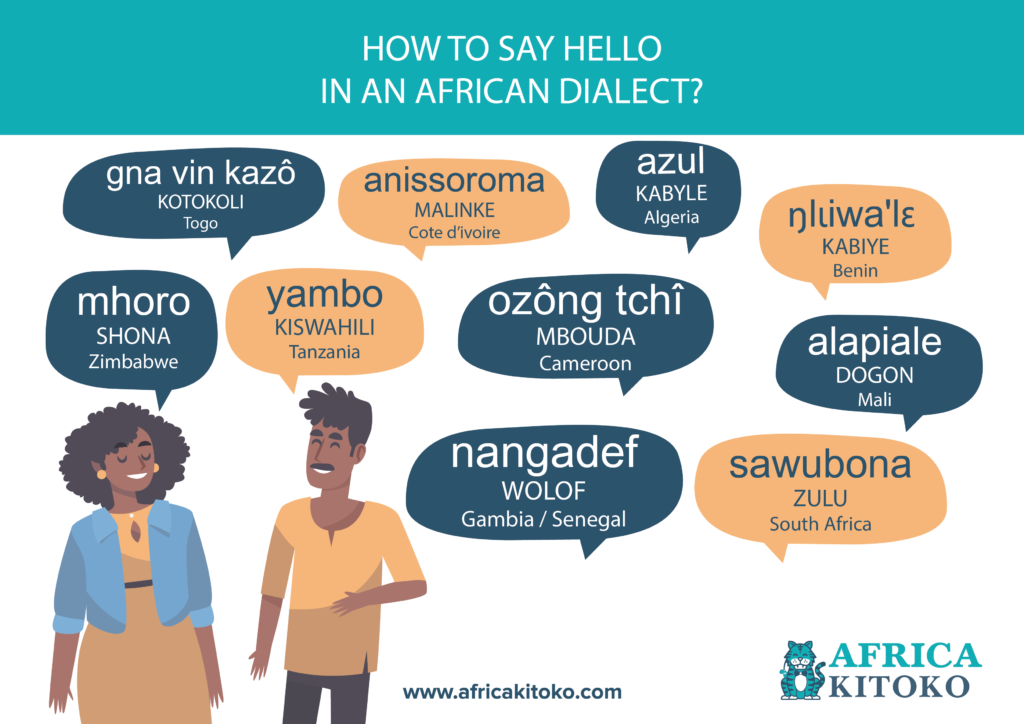
And what about South Africa? Oh, this is where it gets really interesting. Because South Africa has 11 official languages! You've got Zulu, Xhosa, Afrikaans, and so many more. In Zulu, a common greeting is "Sawubona". And here’s a cool fact: it literally means "I see you." How profound is that? It's not just acknowledging someone's presence; it's recognizing their existence, their humanity. It’s like saying, "I see your light, and it's important."
In Xhosa, another beautiful South African language, you might hear "Molo". It's a simple, cheerful greeting, and again, part of a rich tradition of communication. It's like the start of a song, a gentle melody to begin a conversation.
The Art of the Greeting
It's not just about the word itself, is it? The way you say hello matters. In many African cultures, a greeting is an event. It’s not a quick, mumbled "hi" as you rush past. It can involve a handshake, sometimes a specific kind of handshake. It can involve asking about family, about the journey, about well-being. It’s a ritual of connection.

Think about the difference between a quick "hey" and a warm, lingering handshake where you make eye contact and ask, "How has your day been?" The latter feels so much more substantial, more respectful. That’s what many African greetings are like – they are about building rapport, about showing you care.
It’s like the difference between a microwave meal and a home-cooked feast. Both feed you, but one nourishes you on a deeper level. The greetings in many African cultures are the home-cooked feasts of communication.
Beyond the Word: The Meaning Behind the Hello
We touched on "Sawubona" meaning "I see you." This is a recurring theme. In many places, greetings are about acknowledging the other person's worth and dignity. It’s about recognizing that we are all connected.
Consider the Swahili greeting "Hujambo?" which is a common way to ask "How are you?" The response is often "Sijambo", meaning "I am fine." It's a simple exchange, but it’s a building block of social interaction. It's the foundation upon which friendships are built, and communities are strengthened.
It's similar to how in English, we might say "How are you?" and the typical answer is "Fine, thanks." But the intention behind a Swahili "Hujambo?" can feel a little more genuine, a little more rooted in a desire for honest connection.
And let's not forget the sheer diversity! We’ve barely scratched the surface. In Nigeria, you have languages like Yoruba and Igbo. In Yoruba, a common greeting can be "Ẹ nlẹ o". In Igbo, you might hear "Ndewo". Each one carries its own rhythm, its own history, its own cultural nuance.
It's like collecting postcards from different cities. Each postcard tells a story, shows a unique landmark. These greetings are the landmarks of African communication.

Why This Matters
So, why is it so cool to know this? Because it chips away at those old, tired stereotypes. Africa isn't some monolithic entity. It's a vibrant, complex continent with a rich tapestry of cultures, and its languages are a testament to that diversity.
When you learn a greeting, even a simple one, you're doing more than just memorizing a word. You’re opening a door. You’re showing respect. You’re signaling that you’re open to learning, to understanding, to connecting on a deeper level. It’s a sign of goodwill, a bridge built with just a few syllables.
It’s like bringing a gift when you visit someone’s house. It’s a gesture that says, "I appreciate you, I value this interaction." And a well-placed greeting can instantly change the dynamic of an interaction, making it warmer, more genuine, and more memorable.
The next time you think about saying hello in Africa, remember that you're not just looking for a single word. You're embarking on a journey into a world of incredible linguistic richness, where each greeting is a story, a connection, and an invitation. And that, my friends, is pretty darn cool!