How Do You Read A Vernier Scale

Let's be honest. There are some things in life that just feel a little bit intimidating. Like figuring out your taxes. Or assembling IKEA furniture without tears. And, for many of us, there's that one peculiar tool that lurks in toolboxes and workshops, looking all official and slightly baffling: the Vernier scale.
Does looking at a Vernier scale make your brain do a little jig of confusion? You're not alone! It's like a secret code, isn't it? A series of lines and numbers that seem to be whispering secrets only to the truly initiated. But guess what? It doesn't have to be that way. We can decode this mystery together, and I promise it won't involve advanced calculus or a degree in advanced geometry.
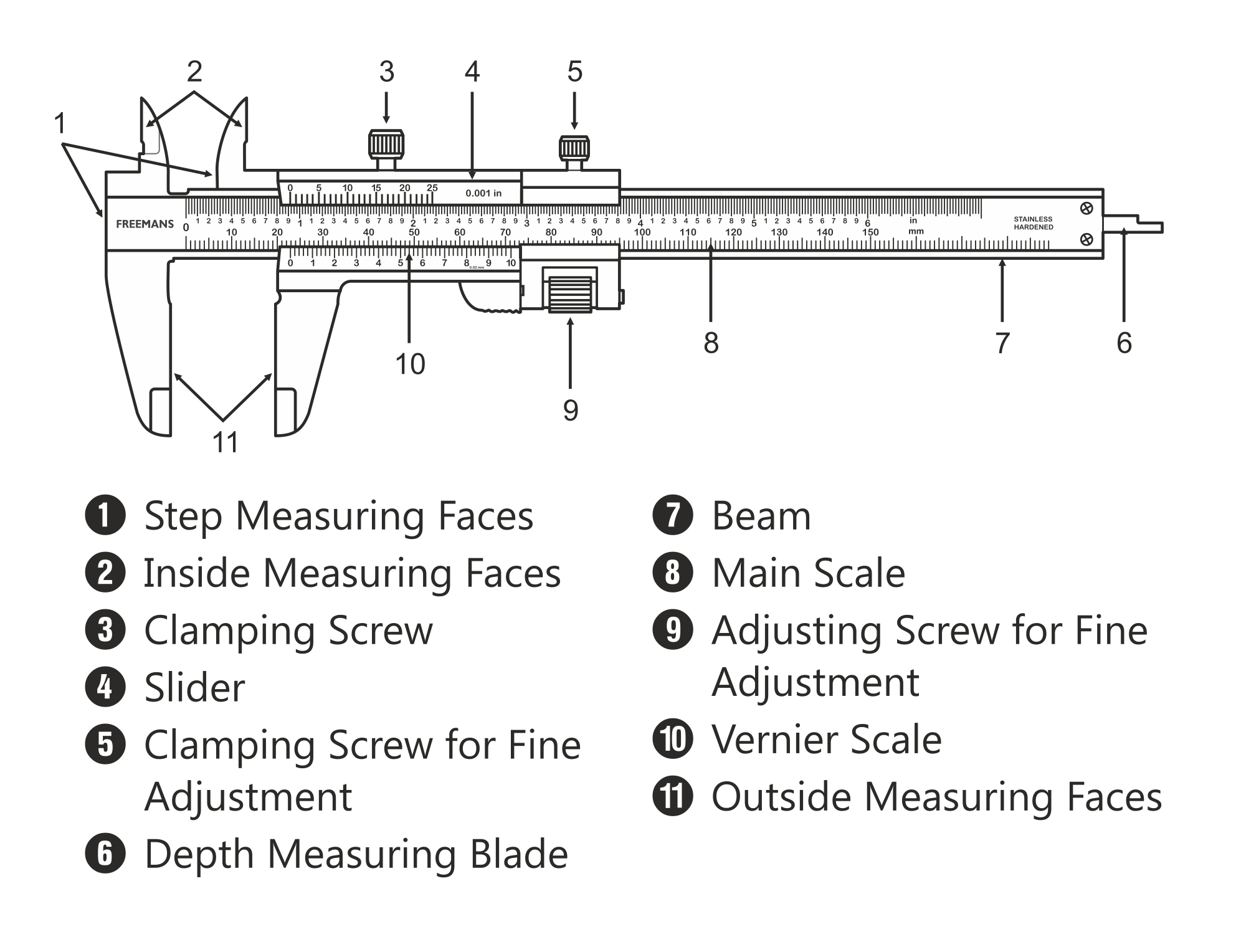
Imagine this: you've got a project. Maybe you're building a birdhouse, or perhaps you're just trying to measure something with a bit more oomph than your trusty ruler. You pull out the caliper, that gadget with the sliding jaw, and there it is. The Vernier scale. It's usually this little secondary measurement thingy attached to the main ruler part.
Must Read
Now, if you're anything like me, your first instinct might be to squint. Then, you might try to just find the closest line that looks right. Sound familiar? It’s like trying to guess a password based on how many letters it has. Not exactly precise, is it?
The Vernier scale. It looks innocent, but oh, the power it holds to make you feel less-than-brilliant.
But fear not, intrepid measurer! The secret to the Vernier scale is surprisingly simple, and once you see it, you'll wonder why it ever seemed so complicated. It’s all about finding a special kind of alignment. Think of it like a game of "I Spy," but instead of "I spy something red," it's "I spy a line that perfectly matches another line."

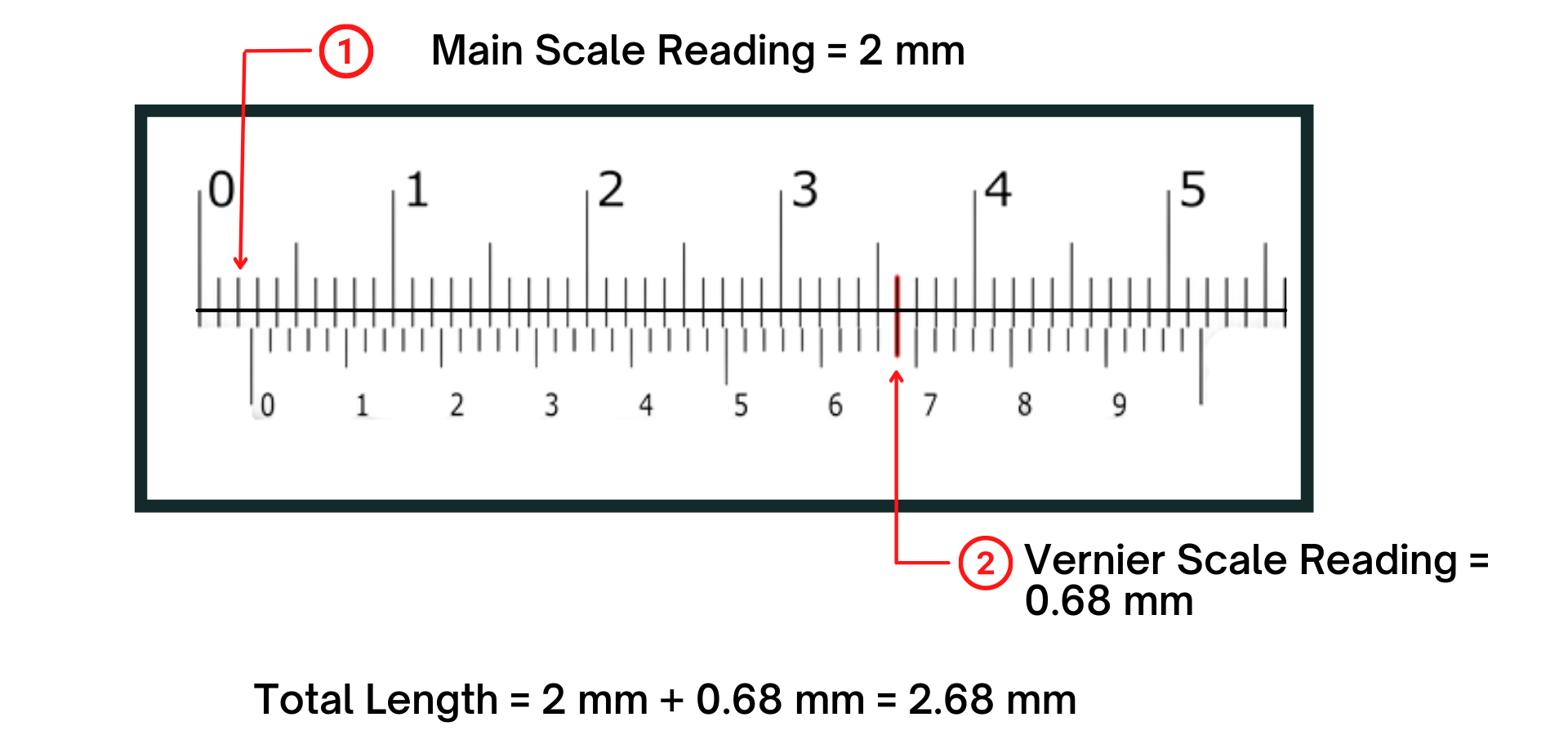
Here's the lowdown, no fancy jargon allowed. You've got your main scale, the one that looks like a regular ruler. That gives you your big, chunky measurement. Let's call that the main reading. It's the easy part. You just find the nearest whole number or half-mark. Piece of cake, right?
Then, you've got that little sliding guy, the Vernier scale. This is where the magic happens. This little fella helps you get super-duper precise. It’s the difference between saying "it’s about this big" and saying "it is exactly this many millimeters and so many tiny fractions of a millimeter."
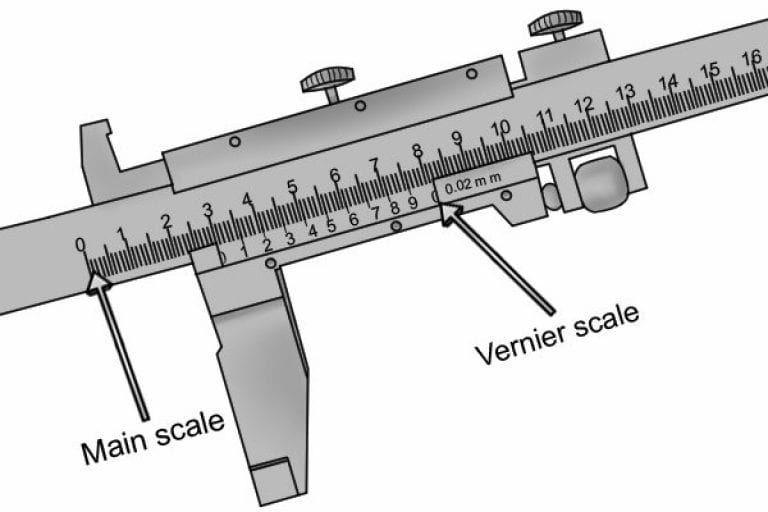
So, how do we unlock its secrets? You look at the lines on the Vernier scale. Your mission, should you choose to accept it, is to find the one line on the Vernier scale that perfectly lines up with a line on the main scale. Not almost lines up. Not sort of lines up. We're talking a dead-ringer match.
Imagine you're playing that game where you have to line up two identical patterns. You slide things around until they're twins. That’s what you’re doing with the Vernier scale. You slide the jaw of your caliper, and you watch those little lines. You're scanning, scanning, scanning.
And then, BAM! You see it. One of those little lines on the sliding part is a perfect twin to one of the lines on the fixed, main part. It’s like a little victory dance for your eyes. When you find that perfect match, that’s your golden ticket.
The number that’s attached to that perfectly lined-up mark on the Vernier scale? That’s your extra bit of precision. That's the decimal point we've all been searching for. It's the secret ingredient that makes your measurement go from "eh, close enough" to "Nailed it!"

So, to recap, in super-simple terms: 1. Read the big, obvious numbers on the main scale. That’s your rough estimate. 2. Slide the jaw and look at the tiny lines on the Vernier scale. 3. Find the one line on the Vernier scale that perfectly matches up with any line on the main scale. 4. The number next to that perfect match on the Vernier scale? That's your precise little extra bit!
It’s that easy. Okay, maybe "easy" is a strong word. Maybe it’s more like "doable" or "less soul-crushing than it first appears." But the point is, you don't need a magnifying glass and a PhD in measurement theory. You just need to know to look for that perfect line-up.
Next time you see a Vernier scale, don't run away screaming. Give it a friendly nod. You've got this. You're a Vernier whisperer now. A master of the aligned line. Go forth and measure with confidence, my friends. And maybe, just maybe, you’ll even start to appreciate this little marvel of engineering. Or at least, you’ll know how to use it without feeling completely bewildered.