How Do You Find An Exhaust Leak

Ah, the mysterious rumble! That subtle (or not-so-subtle!) change in your car’s symphony that whispers, “Something’s up!” It’s like your car is trying to tell you a secret, and sometimes, that secret is an exhaust leak. But fear not, intrepid road warrior! Finding this sneaky saboteur doesn’t require a degree in rocket science or a team of highly trained sniffers (though a keen nose can certainly help!). It’s more like a fun detective mission right in your own driveway, ready to crack the case and restore your chariot to its former, purring glory!
So, what exactly are we looking for? Imagine your car’s exhaust system as its personal air highway. It’s supposed to be a sealed and secure route for all those smoky byproducts of your engine’s hard work. But sometimes, a tiny crack or a loose connection can let some of that stuff escape before it’s meant to. And that’s where our adventure begins!
The most obvious clue, the rockstar of exhaust leak detection, is sound. If your car suddenly sounds like it’s developing a case of the hiccups, or if it’s gone from a gentle purr to a boisterous roar that rivals a dragon with a sore throat, that’s a pretty big hint. It’s like your car’s muffler has suddenly decided to audition for a heavy metal band, and frankly, it’s not hitting the right notes. This distinctive noise is often described as a “puffing” or “ticking” sound, especially noticeable when you first start the engine or when you’re accelerating. It’s your car screaming (in a raspy voice), “Hey! Over here! Something’s not sealed like it should be!”
Must Read
But sound isn’t the only detective in our arsenal. Let’s talk about smell. Ah, the olfactory overload! If you’re noticing a whiff of exhaust fumes lingering around your car when it’s running, especially when you’re parked, it’s a pretty good indicator. It’s like your car is trying to subtly (or not so subtly) perfume the neighborhood with its internal workings. This is especially true if you can detect the smell inside the cabin of your car. That’s your car’s way of saying, “Uh oh, some of my… essence… has escaped and found its way into your personal space. My apologies!” Remember, prolonged exposure to exhaust fumes isn’t exactly a spa treatment, so getting this fixed is a good idea for your own well-being. Your lungs will thank you!
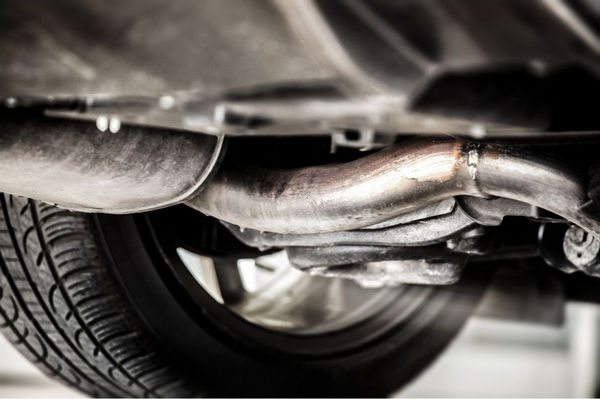
Now, for the visual detectives among us, sometimes you can actually see the evidence. Get yourself a flashlight – think of it as your trusty magnifying glass. With the engine running (be cautious, it’s hot!), carefully (and we mean very carefully, we don’t want any impromptu steam baths!) take a peek underneath your car. Look for any signs of soot. Exhaust leaks often leave behind a tell-tale black, sooty residue around the point of the leak. It’s like the exhaust system is leaving little dusty footprints to mark its escape route. Imagine a tiny, smoky bandit leaving a trail of charcoal dust. You might see this soot on the pipes, near the clamps, or around any flanges where different sections of the exhaust connect. It’s a smoking gun, quite literally!

Sometimes, a persistent leak can even cause a bit of vibration you might not have noticed before. It’s like your car is trying to do a little jig because of the escaping pressure. Not a happy jig, more of a frustrated shimmy.
Another cool trick involves a bit of water and some serious observation. If you have a garden hose handy, you can use it to gently spray water around the exhaust system while the engine is running. Where the water rapidly evaporates or creates a visible plume of steam (besides just where the hot exhaust pipes are naturally!), that’s often a sign of a leak. It’s like the water is reacting to the escaping hot gases, giving you a visual cue. Just be careful not to spray water into any sensitive engine components!

And for the truly dedicated sleuths, some people even use a bit of smoke. You can buy special smoke machines for this, or in a pinch, some folks have used things like a lit incense stick (again, with extreme caution and good ventilation!). Carefully wave the smoke around the exhaust components while the engine is running. Where the smoke is drawn away or disperses unnaturally, that’s your leak! It’s like the smoke is playing hide-and-seek with the escaping exhaust and giving away its hiding spot.
Remember, the exhaust system is made up of various parts – the manifold, the pipes, the catalytic converter, and the muffler. Leaks can happen anywhere along this journey. A common culprit is a cracked exhaust manifold, which can sound like a constant, loud ticking. Or it could be a loose clamp, a rusted-out pipe, or a bad gasket at one of the connection points. No matter where the leak is hiding, the symptoms will generally be similar: noise, smell, and maybe some visual clues.
So, there you have it! With a little bit of listening, smelling, and looking (and maybe a bit of water or smoke if you’re feeling adventurous), you can become the ultimate exhaust leak detective. It’s a satisfying feeling to pinpoint the problem and know exactly what needs fixing. And once you’ve found it, you can either tackle it yourself if you’re feeling handy, or you can confidently take it to your friendly neighborhood mechanic, armed with the knowledge of exactly what’s been troubling your beloved vehicle. Happy sleuthing!