How Do I Calculate Cost Of Debt
Ever wondered how businesses magically figure out the “price tag” for borrowing money? It's not some top-secret government formula involving moonbeams and unicorn tears, although sometimes it feels that way! It's actually a surprisingly straightforward concept, and once you get it, you'll feel like a financial wizard, capable of conjuring up the true cost of that pesky loan. So, buckle up, buttercups, because we're diving headfirst into the wonderful world of calculating the Cost of Debt!
Imagine you want to throw the most epic backyard barbecue the neighborhood has ever seen. You've got the inflatable unicorn, the karaoke machine, and enough hot dogs to feed a small army. But alas, your piggy bank is looking a little… sparse. So, you decide to borrow some cash from your super-cool, slightly eccentric Aunt Mildred.
Aunt Mildred, being the wise woman she is, doesn't just hand over the dough for free. She says, "Sure, you can have the money, but you'll owe me 5% interest each year on the amount you borrowed." This 5% is the foundational piece of our puzzle, the very first ingredient in our financial recipe. It’s the basic interest rate she’s charging you.
Must Read
Now, Aunt Mildred isn't just any old loan shark (kidding, mostly!). She's a bit of a tax whiz. In your magical land of barbecues, business expenses (like that giant inflatable unicorn) are often tax-deductible. This means that the interest you pay her can actually reduce the amount of money you owe the taxman. How cool is that?
Let's say the tax rate in your barbecue wonderland is a hefty 30%. For every dollar of interest you pay Aunt Mildred, you get to keep 30 cents back from Uncle Sam (or whoever handles taxes in your neck of the woods). This tax benefit is like finding a secret coupon that makes your borrowing a whole lot cheaper. It’s a beautiful thing, really.
So, to figure out the real cost of Aunt Mildred's loan, we need to adjust that initial 5% interest rate by this tax saving. Think of it like getting a discount at your favorite donut shop. The stated price is one thing, but with a coupon, the actual price you pay is much less.
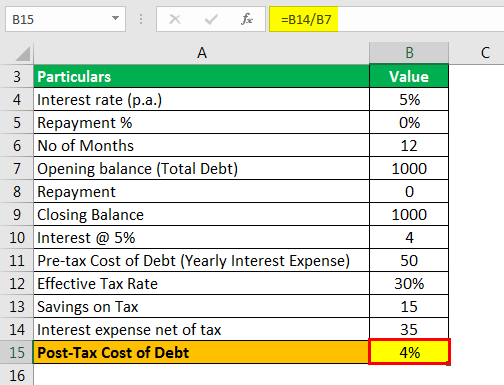
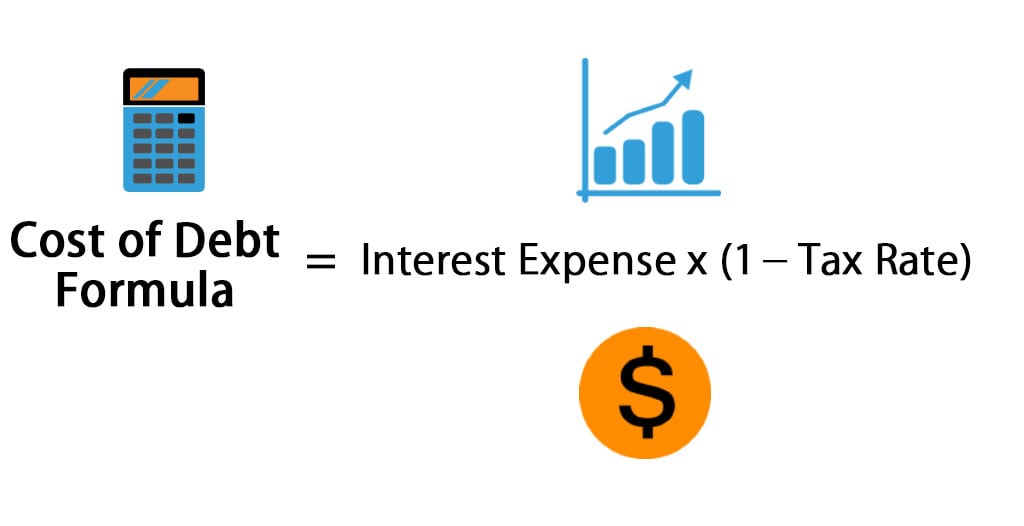
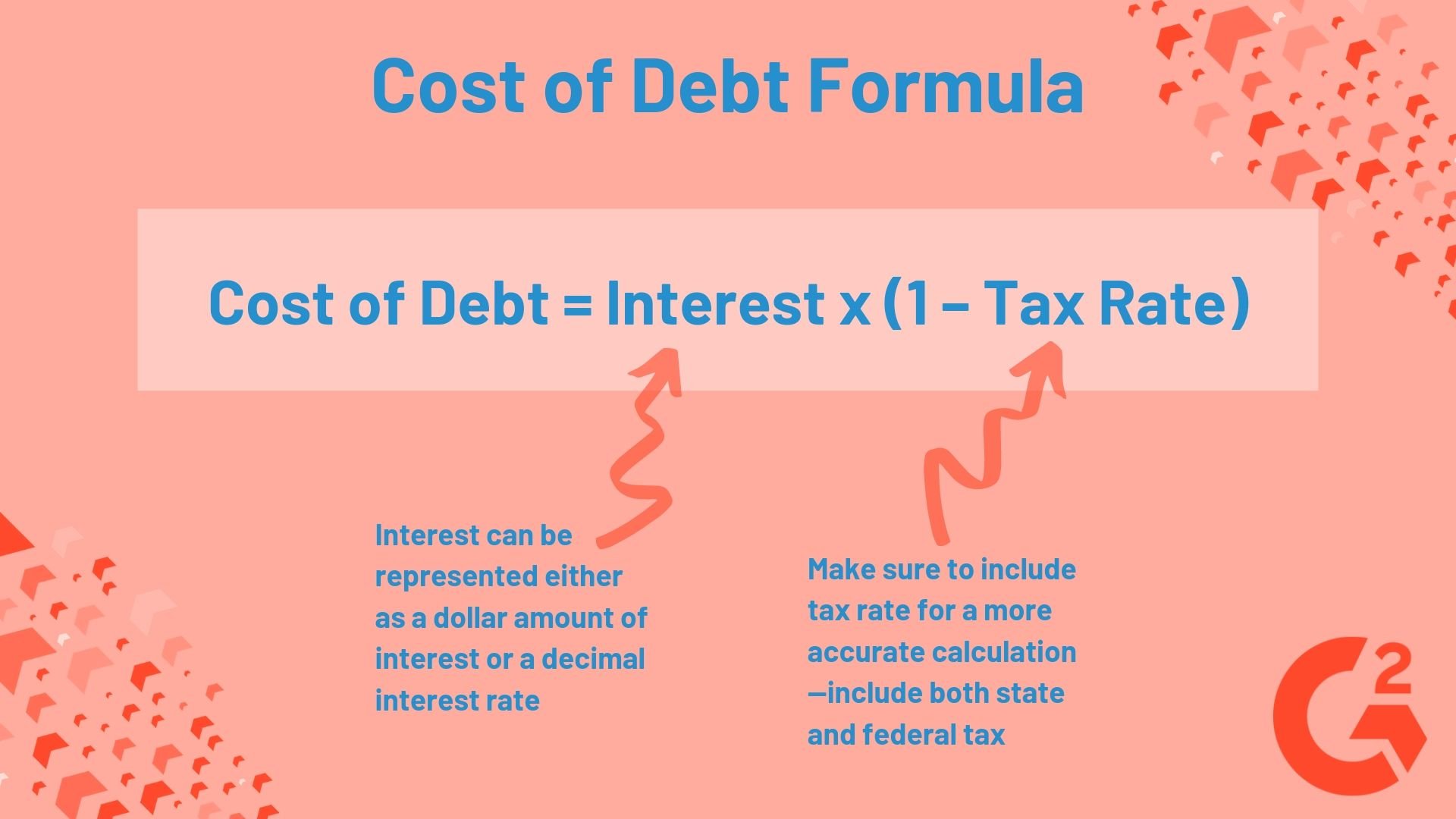
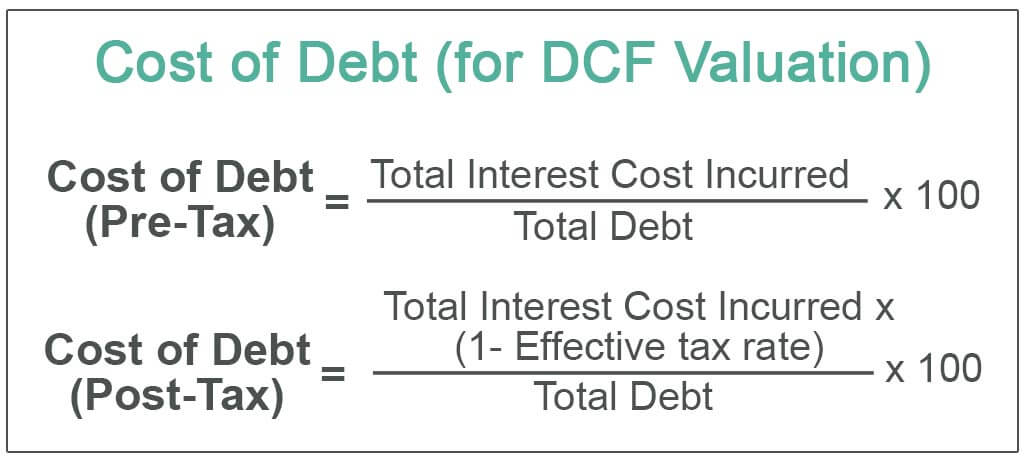
The formula is quite simple, almost insultingly so once you see it. You take the interest rate Aunt Mildred charges (5%) and multiply it by (1 minus the tax rate). In our case, that's 5% * (1 - 30%) which equals 5% * 70%. This gives us a shiny, new, after-tax interest rate of 3.5%.
Voila! The after-tax cost of debt for your fabulous barbecue is 3.5%. This is the number that truly matters, the amount of interest you're really out of pocket after considering the tax savings. It's the cost of doing business, or in this case, the cost of throwing the most legendary barbecue known to humankind.
Now, let's imagine you're not just planning a backyard bash, but you're running a thriving lemonade stand that’s exploding with success. You’ve got the juiciest lemons, the sweetest sugar, and a customer base that’s practically begging for your delicious concoction. But to expand, you need a bigger, fancier juicer, and maybe even a charming little stand painted in cheerful yellow.
To get these much-needed upgrades, you decide to take out a loan from the local bank. They offer you a loan at an annual interest rate of 8%. This 8% is your stated interest rate, the siren song of borrowing money. It sounds straightforward, but remember our tax magic?

Just like with Aunt Mildred’s loan, the interest you pay on your lemonade stand expansion is likely tax-deductible. Let’s assume your lemonade stand operates in a jurisdiction with a 25% tax rate. This means for every dollar of interest you pay on that bank loan, you get to shave 25 cents off your tax bill.
So, the actual cost of that bank loan isn't just the 8% they're charging you. We need to factor in that sweet, sweet tax shield. This is where the calculation really starts to sing. It’s the difference between the sticker price and what you actually pay after all the discounts.
The calculation remains our trusty friend: Interest Rate * (1 - Tax Rate). Plugging in our numbers, we get 8% * (1 - 25%). That simplifies to 8% * 75%, giving us a magnificent after-tax cost of debt of 6%. Your lemonade empire’s borrowing just got a whole lot more affordable!
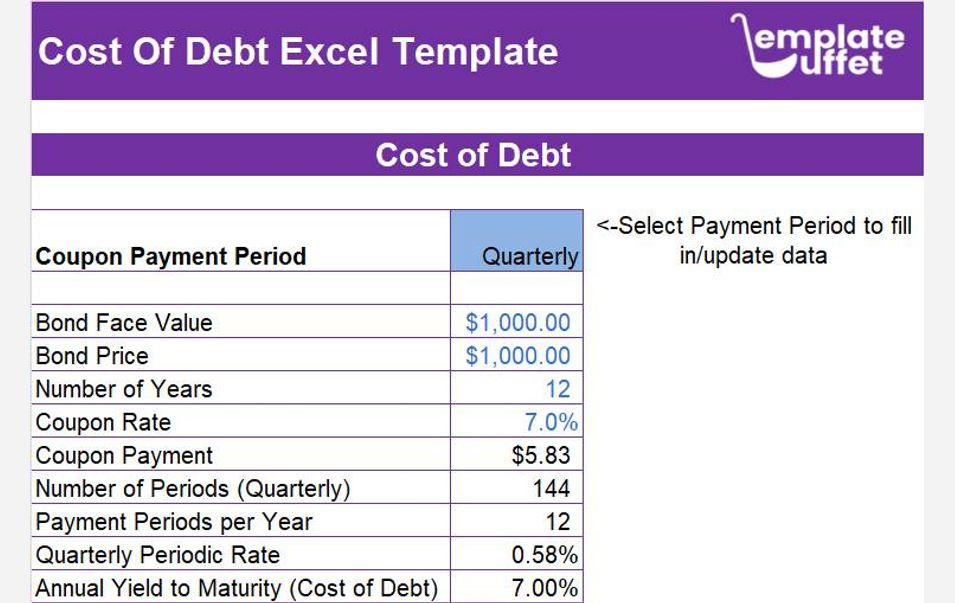
It's important to note that businesses often have different types of debt. You might have a simple bank loan, or you might issue bonds. Bonds are like IOUs that companies sell to investors. The interest rate on these bonds, often called the coupon rate, is the starting point for our calculation, just like Aunt Mildred’s 5% or the bank’s 8%.
The principle remains the same: you always need to consider the tax deductibility of that interest. This is why companies are so eager to borrow money; it’s not just about getting the funds, it's about the tax savings that come with it. It’s a double whammy of financial goodness!
Think of it like this: borrowing money is like buying a fancy new tool for your business. The price of the tool is the stated interest rate. But the tax deduction is like getting a rebate from the manufacturer. The final cost of the tool (the debt) is the price after you factor in that rebate.
So, when you hear about a company's cost of debt, it's almost always referring to this after-tax cost. It’s the true expense of borrowing, the real drain on the company's resources after they’ve done all their clever tax accounting. It's the number that really helps in making important business decisions.
Why is this number so crucial? Well, imagine you're comparing different ways to fund your next big project. You could use your own savings (which has its own "cost" – what you could have earned by investing that money elsewhere), or you could borrow. Knowing the cost of debt allows you to make an informed comparison. It’s like choosing between two different routes to your dream destination; one might be a bit bumpy but cheaper, and the other smooth but pricier.
Companies use this cost of debt, along with the cost of other funding sources like equity (money from selling shares), to calculate something called the Weighted Average Cost of Capital, or WACC. This WACC is like the overall price tag for all the money a company uses. It's a super important number for deciding if new projects are worth the investment.
So, the next time you hear about a company’s borrowing costs, you'll know that it’s not just about the initial interest rate. There's a little bit of financial magic, a dash of tax savvy, and a whole lot of common sense involved in figuring out the true cost of debt. And who knew that calculating something so important could be so… dare I say… fun? You’re basically a financial detective now, sniffing out the real costs!
Remember, the core idea is that the government often lets businesses deduct interest expenses from their taxable income. This deduction effectively lowers the company's tax bill, making the debt less expensive than the stated interest rate alone. It’s like getting a discount on your borrowing!
So, whether it's a friendly loan from Aunt Mildred for a fantastic feast or a substantial bank loan for your booming business, the calculation for the cost of debt is your trusty sidekick. It helps you see the real financial picture and make smarter choices. You’ve unlocked a powerful financial secret, and the world of business finance is now a little less mysterious and a whole lot more approachable. Go forth and calculate with confidence! You've got this!