How Big Can A Leopard Gecko Get
So, I was scrolling through some gecko forums the other day, you know, the usual late-night internet rabbit hole. I stumbled upon this thread titled, "My gecko is a UNIT!" and I immediately clicked. I mean, who doesn't love a good gecko size brag, right? Turns out, this person had a leopard gecko that was… well, let's just say it could have comfortably worn a tiny party hat and still had room for a slice of cake. It was a common morph, too, nothing fancy, just a regular ol' blizzard. And it got me thinking, how big can these little dudes actually get?
It's funny, isn't it? We all get these cute, palm-sized lizards, dreaming of their adorable little chirps and their signature spotted patterns. But then, suddenly, you've got this… sausage. A really, really cute, well-fed sausage, but a sausage nonetheless. And you start wondering, is this normal? Am I feeding it too much? Did I accidentally buy a miniature crocodile? (Spoiler alert: you didn't. Probably.)
The truth is, leopard geckos, while generally remaining on the smaller side compared to some of their reptilian cousins, can actually achieve some surprisingly impressive lengths and girths. It's not like they're going to be out-chasing iguanas or anything, but the idea of a "small" gecko is sometimes a bit… relative.
Must Read
Let's dive into this fascinating topic of leopard gecko size, shall we? Because understanding what's considered average, what's on the larger end, and what might be raising a tiny red flag (or a tiny green one, if we're talking about healthy growth!) is super important for any gecko parent out there. You want your little buddy to be healthy and thriving, not just… well, a unit.
The "Average" Leopard Gecko: What's What?
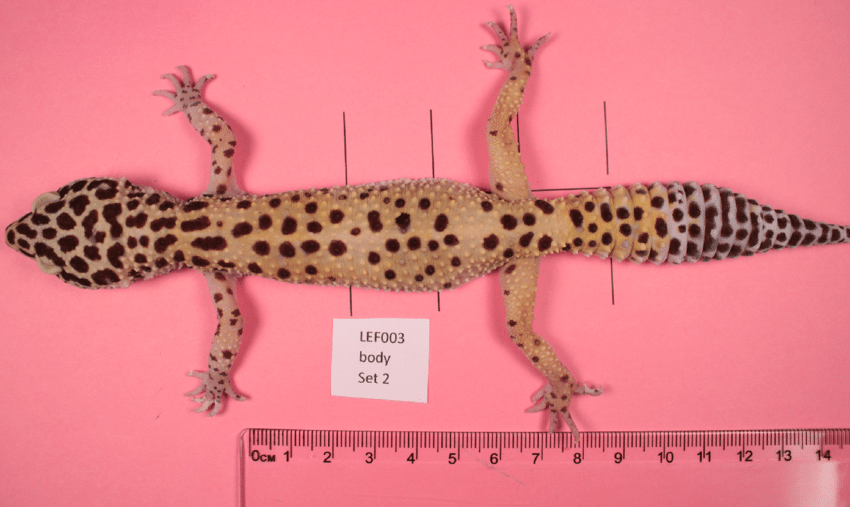
When we talk about a leopard gecko, the first thing that pops into most people's heads is a creature roughly the size of their hand, maybe a little longer. And for the most part, that's pretty accurate. The average adult leopard gecko typically measures somewhere between 7 to 10 inches (18 to 25 cm) from the tip of their snout to the end of their tail.
Now, this is just a guideline, of course. Think of it like human height. Some people are naturally taller, some are shorter, and that's perfectly fine. It’s the same with our scaly friends. Factors like genetics, diet, and overall health play a huge role in determining their final size.
And let's not forget about the tail! Leopard geckos are famous for their plump, segmented tails, which they use to store fat. A healthy tail can account for a significant portion of their overall length. So, when you measure your gecko, make sure you're measuring the whole shebang, tail and all! (Just be gentle, they can drop their tails if they feel threatened, and that's a whole other conversation for another day, isn't it?)
So, if your gecko is hitting that 7-10 inch sweet spot, congratulations! You're likely doing a great job with their care. They’re probably getting all the yummy insects and basking in the perfect temperature gradient. Chef's kiss.
What About the "Big" Guys?
Now, let's get to the exciting part. The geckos that make people go, "Whoa, is that a real leopard gecko?" These are the ones that push the boundaries of the average. Some leopard geckos can actually get quite a bit larger, easily reaching lengths of 10 to 12 inches (25 to 30 cm). And occasionally, you might even hear tales of individuals tipping the scales (or rather, the measuring tape) at a whopping 13 inches (33 cm) or even a little more!

Imagine that! A gecko that takes up a good chunk of your forearm. It’s like having a miniature dragon, but way more chill and with better camouflage. These larger specimens are often the result of a combination of good genetics and meticulous care. They've been provided with an optimal diet, a stress-free environment, and have generally good breeding lines.
And before you start panicking if your gecko is on the smaller side, remember, bigger isn't always better. A healthy, smaller gecko is far preferable to an overweight, unhealthy larger one. We're talking about reaching their potential, not forcing them to grow beyond what's natural for them.
It's also worth noting that certain morphs might be predisposed to being slightly larger or smaller. While there's no definitive scientific proof that specific designer morphs are inherently bigger, anecdotal evidence and breeder observations sometimes suggest variations. For example, some of the more robust-looking morphs might appear larger due to their build, even if their linear measurement isn't drastically different.
Factors Influencing Leopard Gecko Size
So, what makes one leopard gecko a compact 7 inches and another a glorious 12-incher? It’s not just random chance, though genetics certainly plays a starring role. Let’s break down the key players:
Genetics: The Blueprint
Just like with any living creature, your gecko's genetic makeup is the primary determinant of their potential size. Some lineages are simply bred for larger individuals. Breeders who have been selectively breeding for generations might have lines that consistently produce larger geckos. Think of it like breeding dogs – you have Chihuahuas and you have Great Danes. It’s all within the same species, but genetics dictates a vast difference in size.
If you're getting a gecko from a reputable breeder, they might be able to give you some insight into the potential size of the parents or the lineage. This can be a helpful clue, but remember, it's not a guarantee. Sometimes, even with the best bloodlines, you get a runt, and sometimes the opposite happens!
Diet: Fueling the Growth
This is where you, the devoted gecko parent, have a huge amount of influence. Leopard geckos are insectivores, and the quality and quantity of their food are critical. A diet rich in gut-loaded, appropriately sized insects is essential for healthy growth. What does "gut-loaded" mean, you ask? It means feeding the insects a nutritious diet (think commercial gut-loading foods, fresh veggies, and fruits) for 24-48 hours before feeding them to your gecko. This ensures that all those good nutrients are passed on to your little lizard.
Variety is also key! While mealworms and crickets are common staples, offering a diverse range of insects like dubia roaches, phoenix worms (black soldier fly larvae), and occasional waxworms (as a treat, because they're fatty!) can provide a broader spectrum of vitamins and minerals. This comprehensive nutrition helps your gecko grow to its full potential.
And then there's the calcium and vitamin supplementation. These little guys need it! Dusting their food with a calcium powder (with D3 if they don't have adequate UVB, but most leo keepers use a D3 supplement) a few times a week and a multivitamin powder once a week is usually recommended. Without these, even with the best insects, they can suffer from metabolic bone disease and stunted growth. So, don't skimp on the supplements – your gecko's bones (and overall health) will thank you!
Environment: The Cozy Home
A comfortable and correctly set-up enclosure contributes significantly to a gecko's well-being and, consequently, its growth. This includes:
- Temperature Gradient: Leopard geckos are ectothermic, meaning they rely on their environment to regulate their body temperature. They need a warm side (around 88-92°F or 31-33°C) for digestion and a cooler side (around 75-80°F or 24-27°C) for resting. If their enclosure is too cold, their metabolism slows down, and they won't digest food properly, leading to poor growth.
- Hides: Plenty of secure hiding spots are crucial. Geckos are naturally shy and need to feel safe and protected. Stressed geckos don't grow as well. Think humid hides, dry hides, and just generally cozy places to retreat.
- Humidity: While not as humidity-dependent as some other geckos, leopard geckos still benefit from a humid hide, especially during shedding. This helps prevent stuck sheds, which can restrict growth and cause other issues.
- Enclosure Size: While they don't need a mansion, a properly sized enclosure allows for a good temperature gradient and adequate space for them to move around and explore. For an adult, a 20-gallon long tank is a good starting point, though bigger is always better if you have the space!
Essentially, a happy gecko is a healthy gecko, and a healthy gecko is a gecko that's more likely to reach its full size potential. So, make sure their digs are top-notch!
Age: The Ultimate Factor
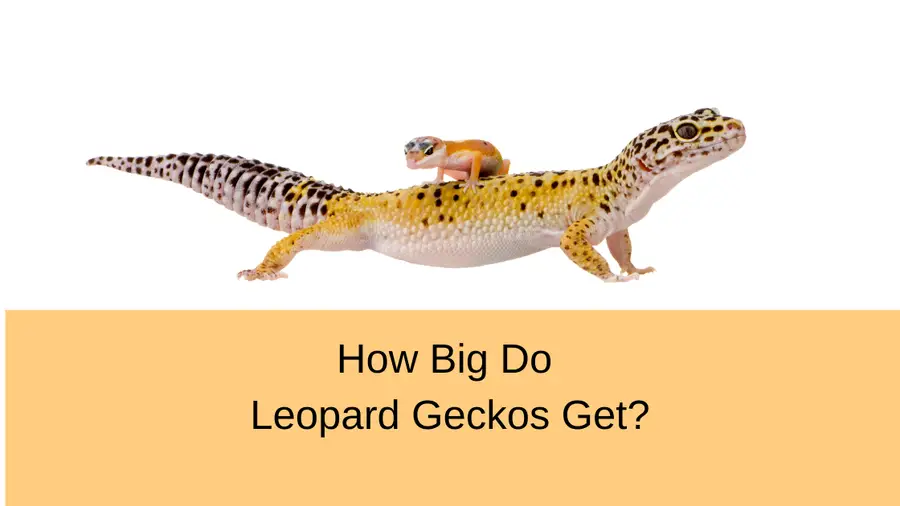
This one might seem obvious, but it’s worth stating. A baby leopard gecko is going to be tiny. They hatch out at around 2-3 inches and take quite some time to reach adulthood. Full sexual maturity, and thus near-adult size, is typically reached around 6-12 months of age. However, they can continue to grow and fill out for up to 18 months or even longer.
So, if you’ve just welcomed a tiny gecko into your home, don’t expect them to be a behemoth overnight. Patience is a virtue, especially in the gecko-raising world. You’re essentially watching a slow-motion growth spurt!
When to Worry (or Just Get Excited!): Recognizing a "Big" Gecko
So, how do you know if your gecko is just a healthy, larger individual, or if something is up? For the most part, a larger leopard gecko is a good thing, provided they are healthy.
Signs of a healthy, larger gecko:
- Good Body Condition: They have a plump but not obese body. Their tail is nice and full, indicating good fat reserves.
- Active and Alert: They are curious, explore their enclosure, and have a healthy appetite.
- Clear Eyes and Healthy Skin: No signs of parasites, injuries, or skin infections.
- Normal Droppings: Regular, well-formed droppings.
If your gecko is consistently eating well, maintaining good body condition, and is otherwise healthy, and they are just… long, then congratulations! You've likely got a naturally larger individual. Embrace the unit!
When to be concerned (and potentially talk to a vet):
- Sudden Weight Gain/Obesity: If they are becoming disproportionately fat, especially if their activity level decreases, it could be a sign of overfeeding or a metabolic issue.
- Loss of Appetite and Weight Loss: This is always a red flag and could indicate illness, parasites, or stress.
- Lethargy: A sudden drop in energy levels can be a sign of underlying health problems.
- Deformities: Any unusual bumps, lumps, or skeletal deformities should be investigated.
In these cases, a consultation with a reptile veterinarian is always the best course of action. They can help diagnose any issues and provide appropriate treatment.
The "Sausage" Gecko Phenomenon: Is it Overfeeding?
Let's be honest, the idea of a “sausage gecko” is often born out of concern about overfeeding. It’s easy to get caught up in wanting our pets to be happy, and sometimes that translates to offering them just one more delicious cricket. But just like with humans, too much of a good thing can lead to health problems.
While a slightly larger gecko is fine, an obese gecko is not. Overfeeding can lead to:

- Metabolic Syndrome: Similar to what we see in humans, this can include issues like fatty liver disease.
- Mobility Issues: Overweight geckos can find it harder to move around and hunt.
- Reproductive Problems: For breeding females, obesity can cause complications.
- Reduced Lifespan: Sadly, an unhealthy weight can shorten their lives.
So, how much is enough? For adult leopard geckos, 2-3 appropriately sized insects every other day is often a good starting point. However, this can vary based on the gecko's age, activity level, and the type of insects offered. It's always better to err on the side of slightly underfeeding than overfeeding. You can always offer more if they seem a bit thin, but it's harder to help a gecko lose weight once they've gained it.
Observe your gecko's body condition. If you can easily see individual ribs or their spine, they might be a bit underweight. If their belly is distended and they look like a plump little beanbag, they might be overweight. The tail should be plump, but not so large that it looks like it’s about to burst!
Ultimately, feeding is an art as much as a science. It requires observation, understanding your individual gecko's needs, and a commitment to their long-term health. Don't let the lure of a "unit" gecko turn into an unhealthy one!
The Fascination with Bigger Lizards
There’s something undeniably captivating about a larger reptile, isn't there? It’s the idea of having a pet that feels substantial, that has a bit more presence. For leopard geckos, this fascination with size can lead to people seeking out the largest individuals or even attempting to "force" growth. But as we've discussed, responsible care is paramount.
It's important to remember that while some leopard geckos are naturally larger, the pursuit of size should never compromise their health. A healthy, happy 8-inch gecko is infinitely more rewarding than a struggling, obese 12-inch one.
The gecko community is a wonderful place, full of people passionate about these incredible creatures. Sharing stories and photos of impressive geckos is part of the fun. Just remember to keep it in perspective. Celebrate your gecko's size, whatever it may be, as long as they are healthy and thriving. After all, they’re not just pets; they’re our little scaly companions, and their well-being is our responsibility.
So, the next time you see a picture of a truly massive leopard gecko, marvel at it! But then, take a moment to appreciate your own little friend, whether they’re a compact dynamo or a burgeoning unit. They’re all wonderful in their own unique way. And hey, if yours does end up being one of those record-breakers, just be sure to let us all know on the forums. We’ll all be there, marveling at the sheer… geck-ness of it all!