Everything You Need To Know To Ace Geometry
I remember my first geometry class like it was yesterday. I was maybe ten, all bright-eyed and ready to tackle shapes. My teacher, Mrs. Gable, a woman who smelled faintly of chalk dust and rose water, drew a perfect circle on the board. Then, she drew another. And another. For a solid ten minutes, it was just circles. I thought, “Okay, this is going to be easy. Shapes. I’ve seen shapes my whole life!” Little did I know, the seemingly simple act of drawing circles was a gateway into a universe of angles, theorems, and proofs that would sometimes make me want to pull my hair out. But also, and this is the kicker, make me see the world differently. That’s the magic of geometry, really. It’s not just about memorizing formulas; it’s about unlocking a new way of looking at everything around you.
So, if you’re staring down the barrel of a geometry class, feeling a bit like I did with those endless circles – a mix of anticipation and mild confusion – you’re in the right place. We’re going to break it all down, no stress, just a friendly chat about how to absolutely ace this subject. Think of this as your cheat sheet, your wise (and slightly sarcastic) friend who’s been there and done that.
The Golden Rule: Visualize Everything
Seriously, this is the big one. Geometry is a visual subject. If you’re just reading words and numbers on a page, you’re missing half the picture. You need to be drawing. Constantly. Get yourself a good pencil, an eraser that actually erases (revolutionary, I know), and a ruler. Don’t be afraid to sketch out every single problem. Even if the problem description is super simple, drawing it helps you see the relationships between different parts.
Must Read
Think about it. When you’re trying to figure out the area of a weird-shaped garden, you don’t just stare at it, right? You mentally (or actually) break it down into rectangles and triangles. Geometry is the formalization of that mental process. So, grab your sketchbook, even if you think you can’t draw a stick figure. Your stick figures are about to get very important.
Points, Lines, and Planes: The OG Building Blocks
Before we get to fancy theorems, we gotta start with the absolute basics. These might sound ridiculously simple, but understanding them is crucial. It's like knowing your ABCs before you write a novel. Or, in this case, before you prove some mind-bending theorem.
Points: These are like the dots on a map. They have no size, no dimension. They just… exist. They mark a specific location. Think of them as the tiniest possible things.
Lines: These are straight paths that go on forever in both directions. They have length but no width or thickness. Imagine a laser beam that never stops. Yep, that's a line. We usually label lines with two points on them, like line AB. And yes, they do go on forever. Don't get hung up on drawing them with arrows on both ends if it feels clunky; the concept is the important part.
Planes: These are flat surfaces that extend infinitely in all directions. Think of a perfectly flat sheet of paper, but it’s also infinitely large. A tabletop, a wall, the surface of a calm lake – these are all examples of planes in the real world. They have length and width, but no thickness.
These three – points, lines, and planes – are the foundational elements. Everything else in geometry is built upon them. So, give them a little nod of respect.
Angles: More Than Just a Sharp Corner
Angles are everywhere. The angle of your coffee mug handle, the angle at which you hold your phone, the angle of the sun hitting your window. In geometry, we get a bit more precise.

An angle is formed by two rays (lines that start at a point and go in one direction) that share a common endpoint, called the vertex. We measure angles in degrees.
Types of Angles (and why you should care):
- Acute Angle: Less than 90 degrees. Think of a sliver.
- Right Angle: Exactly 90 degrees. The corner of a square or a perfect ‘L’ shape. These are super important, often marked with a little square symbol.
- Obtuse Angle: Greater than 90 degrees but less than 180 degrees. Wider than a right angle.
- Straight Angle: Exactly 180 degrees. A straight line. Easy peasy.
- Reflex Angle: Greater than 180 degrees but less than 360 degrees. The ‘other side’ of an angle.
Understanding these types helps you identify shapes and their properties. For example, if a triangle has one right angle, you know instantly it’s a right triangle. Boom. Instant information.
Parallel vs. Perpendicular: The BFFs and The Nemeses
These two concepts are crucial when we start talking about lines.
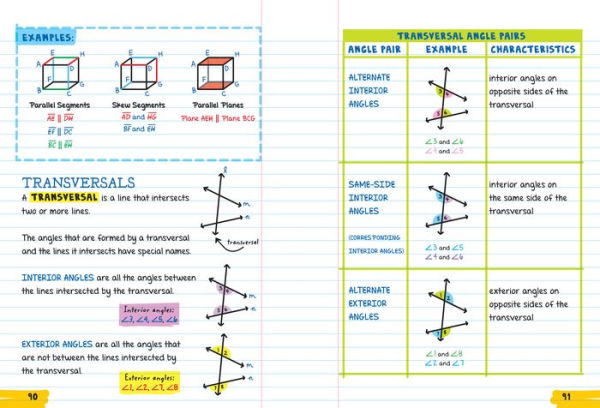
- Parallel Lines: These lines run alongside each other and never intersect, no matter how far you extend them. Think train tracks. They maintain a constant distance apart.
- Perpendicular Lines: These lines intersect at a 90-degree angle. They are the ultimate ‘right angle’ creators.
You’ll see these terms come up constantly. Recognize them, and you’re already ahead of the game.
Triangles: The Unsung Heroes of Geometry
Oh, triangles. You’ll see more triangles than you ever thought possible. And for good reason. They are the most stable polygon, meaning they don’t easily change shape. This makes them super useful in construction and engineering (ever seen a bridge? Loads of triangles!).

Classifying Triangles:
- By Sides:
- Equilateral: All three sides are equal. All three angles are also equal (60 degrees each).
- Isosceles: Two sides are equal. The two angles opposite those equal sides are also equal.
- Scalene: All three sides are different lengths. All three angles are different measures.
- By Angles:
- Acute Triangle: All three angles are acute (less than 90 degrees).
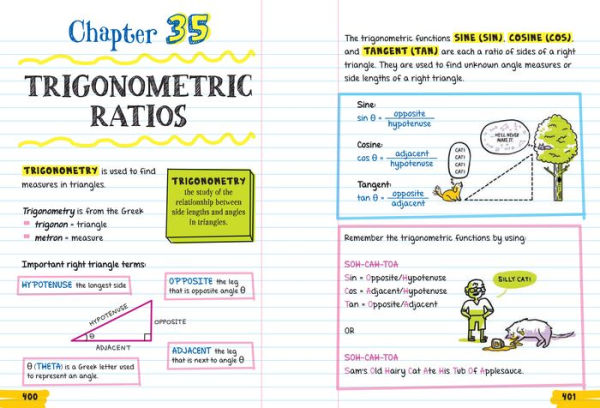
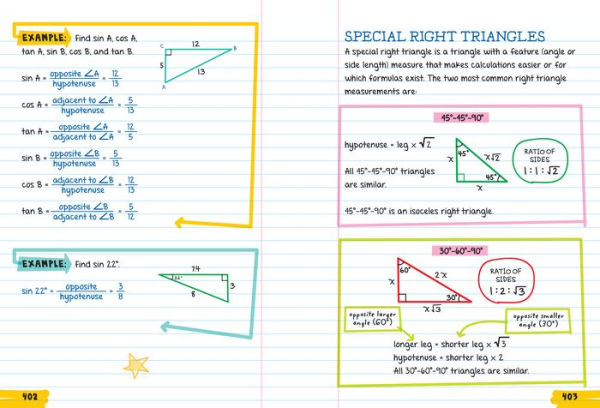
- Right Triangle: One angle is a right angle (90 degrees).
- Obtuse Triangle: One angle is obtuse (greater than 90 degrees).
The most important theorem about triangles (that you’ll use forever) is the Triangle Sum Theorem: The sum of the interior angles of any triangle is always 180 degrees. So, if you know two angles, you can always find the third. Magic!
And then there’s the Pythagorean Theorem for right triangles: a² + b² = c². Where ‘a’ and ‘b’ are the lengths of the two shorter sides (legs) and ‘c’ is the length of the longest side (hypotenuse). This is your best friend when dealing with right triangles. Seriously, commit this one to memory. It’s going to save you so much time.
Quadrilaterals: The Four-Sided Crew
Once you’ve mastered triangles, the four-sided figures, or quadrilaterals, come next. They’re like the slightly more complex cousins of squares.
The Big Players:
- Square: Four equal sides and four right angles. (Yes, it’s also a rectangle and a rhombus. Fancy, right?)
- Rectangle: Four right angles. Opposite sides are equal and parallel.
- Rhombus: Four equal sides. Opposite angles are equal. Diagonals bisect each other at right angles.
- Parallelogram: Opposite sides are equal and parallel. Opposite angles are equal.
- Trapezoid: Has at least one pair of parallel sides. (Some definitions require exactly one pair, others at least one. Check your textbook’s definition, but the ‘at least one’ is more common these days).
- Kite: Two pairs of equal-length adjacent sides. Diagonals are perpendicular.
Each of these has specific properties regarding side lengths, angle measures, and diagonals. Keep a chart, draw them, label them. The more you interact with them, the more natural their properties will become.
Area and Perimeter: Measuring the Space
These are the practical applications. How much space does a shape cover? How long is its border?
Perimeter: The total distance around the outside of a shape. You just add up all the side lengths. For a rectangle with length L and width W, it’s 2L + 2W. Simple addition!
Area: The amount of space inside a two-dimensional shape. This is where formulas get a bit more specific:
- Rectangle/Square: Area = Length × Width (or side × side for a square)
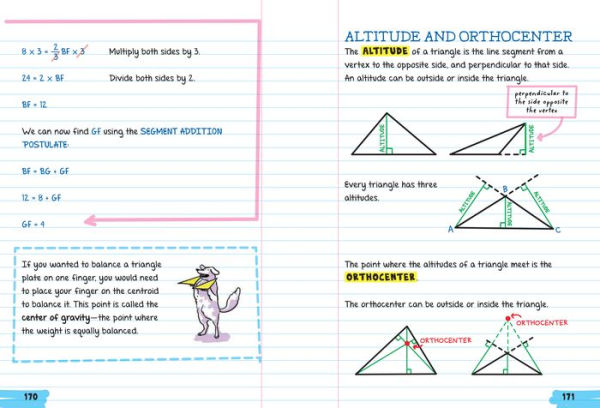
- Triangle: Area = ½ × base × height. The ‘height’ is the perpendicular distance from the base to the opposite vertex. This is where drawing is key!
- Circle: Area = πr². Where ‘π’ (pi) is approximately 3.14, and ‘r’ is the radius (distance from the center to the edge).
Don’t just memorize these. Try to understand why they work. For a triangle, think about how it’s half of a parallelogram with the same base and height. For a circle, it’s a bit more complex mathematically, but the formula is your friend for now.
Circles: The Ultimate Shape
We started with circles, and they deserve their own moment. They’re perfectly symmetrical and have some unique properties.
Key Parts:
- Radius: Distance from the center to any point on the circle.
- Diameter: Distance across the circle through the center (it’s two radii).
- Circumference: The distance around the circle (think perimeter for a circle). Formula: C = 2πr or C = πd.
- Chord: A line segment connecting two points on the circle.
- Secant: A line that intersects the circle at two points.
- Tangent: A line that touches the circle at exactly one point.
Angles inside circles (inscribed angles, central angles) and the relationships between chords and tangents are common problem areas. Again, drawing is your secret weapon here. Sketch the circle, label the parts, and then see how the problem fits.
Transformations: Flipping, Turning, and Shrinking
This is where geometry gets a little playful. Transformations are ways to move or change a shape without altering its fundamental properties.

- Translation: Sliding a shape. Think of pushing a piece across a game board.
- Rotation: Turning a shape around a fixed point. Like a Ferris wheel.
- Reflection: Flipping a shape across a line. Think of a mirror image.
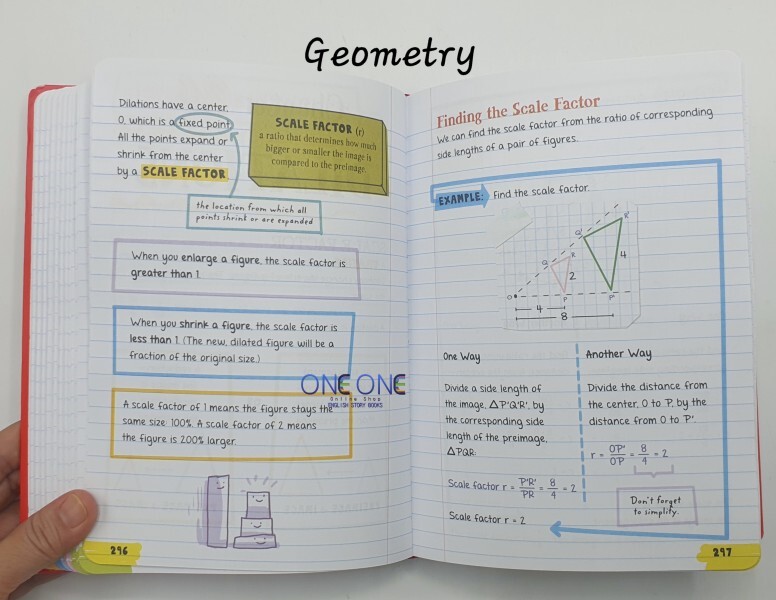
- Dilation: Resizing a shape, either making it bigger or smaller, while keeping its proportions the same. This is like zooming in or out on a photo.
These concepts are important for understanding symmetry and for more advanced geometry topics. They’re also quite fun to experiment with on graph paper.
Proofs: The Art of Logical Reasoning
Ah, proofs. The Everest of geometry for many. This is where you have to go from just knowing something is true to proving it logically, step by step. It can feel daunting, like trying to build a very tall, very precise tower of LEGOs.
What is a Proof? A sequence of logical statements that establish the truth of a mathematical proposition. You start with given information and known postulates/theorems, and you deduce conclusions until you reach what you’re trying to prove.
Tips for Proofs:
- Understand the Goal: What are you trying to prove? Write it down clearly.
- List the Givens: What information are you provided with?
- Draw a Diagram: Seriously, always draw it. Label everything. Mark what you know is equal or parallel.
- Work Backwards (Sometimes): Look at your conclusion. What needs to be true for that to be true? Keep doing this until you reach your givens.
- Know Your Theorems: The more theorems and postulates you have in your arsenal, the more tools you have for your proofs.
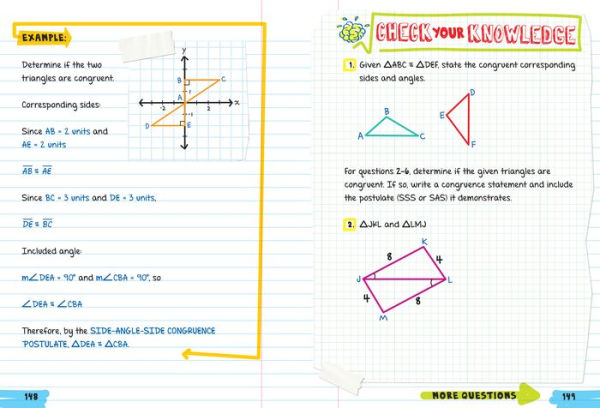
- Use Clear Language: Each step needs a justification. "Given," "Definition of a Square," "Vertical Angles Theorem," "CPCTC (Corresponding Parts of Congruent Triangles are Congruent)."
- Practice, Practice, Practice: Your first proofs will likely be clumsy. That’s okay. Every proof you do makes the next one a little easier.
Don’t get discouraged. Proofs are about developing your logical thinking, a skill that’s valuable far beyond the classroom. Think of it as becoming a mathematical detective.
The Takeaway: Geometry is Everywhere
So, there you have it. A whirlwind tour of geometry. It’s not just about memorizing formulas; it’s about developing spatial reasoning, logical thinking, and a new appreciation for the world around you. The angles of a building, the symmetry of a flower, the shortest distance between two points (a straight line, remember?) – geometry is woven into the fabric of our reality.
Embrace the drawings, master the basic shapes, understand the theorems, and don’t shy away from the proofs. With a little practice and the right mindset, you won’t just ace geometry; you’ll start seeing the geometric beauty in everything. Now go forth and conquer those shapes!