Does Wine Have A Use By Date
So, you’re staring at that bottle of wine. It’s been sitting in the back of your cupboard. Maybe it’s been there for a while. We’ve all been there, right? You suddenly have a craving for a glass of red, or perhaps a crisp white. Then the question pops into your head, a little whisper of doubt: Does wine have a use-by date?
Now, the official line, the one you'll hear from the wine snobs and the overly cautious, is a resounding “yes.” They’ll talk about tannins fading. They’ll mention cork taint. They’ll bring up oxidation faster than you can say “vino.” And sure, technically, they’re not entirely wrong. Wine, like most things, doesn’t last forever.
But let’s be real for a second. We’re not talking about milk here, are we? You wouldn’t drink milk that’s a week past its expiry. That’s a one-way ticket to a very unpleasant afternoon. Wine, however, is a different beast entirely. It’s practically designed to be aged. It’s got character. It’s got… well, it’s got wine in it.
Must Read
Think about it. We have wines that are meant to be drunk young. Think of your everyday table wine, the one you grab for pizza night. That’s probably best enjoyed within a year or two of bottling. It’s fresh, it’s fruity, and it doesn’t need a decade to mature.
Then you have your special occasion wines. The ones you squirrel away. The ones you promise yourself you’ll open when you get that promotion, or when your favourite team wins the championship. These wines are built for the long haul. They’re often higher in alcohol, or have more complex structures, allowing them to develop over years, even decades. We’re talking about the likes of a fine Bordeaux, a grand Burgundy, or a robust Cabernet Sauvignon from a good vintage. These aren't going to suddenly turn into vinegar the moment their “best before” date ticks over.
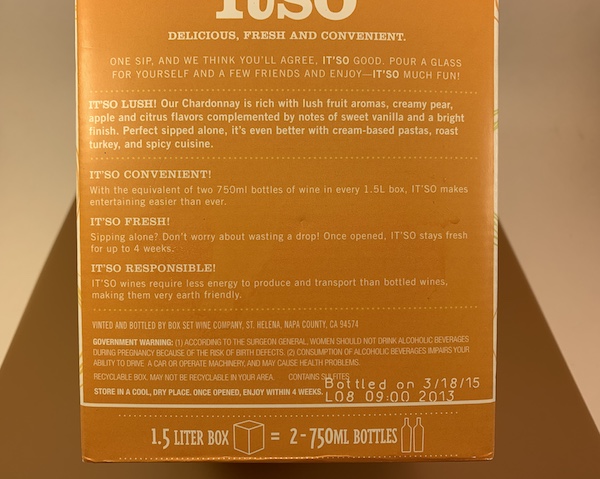
So, what’s the deal with this “use-by” date for wine? Honestly, I think it’s a bit of a red herring. Or should I say, a black herring for red wines. It’s more of a suggestion. A gentle nudge. A polite whisper in your ear, not a siren wailing about imminent doom.
The real test, my friends, is your nose and your taste buds. That’s the ultimate quality control. You uncork that bottle. You take a sniff. Does it smell like old gym socks? Like wet cardboard? Like disappointment? If so, maybe it’s time to let that particular bottle go to a noble end – down the drain. No judgment here.
But if it smells… well, if it smells like wine? Even if it’s a little less vibrant than it once was, if it’s got a hint of sherry-like nuttiness, or a mellow fruitiness that’s developed over time? Then, my friends, it’s probably still good to drink. It might even be better. It might have mellowed out, smoothed its rough edges, and developed a lovely complexity. It’s like a wise old grandparent, full of stories and character, rather than a frantic teenager.

I’ve had wines that were technically “past their prime” that have surprised me. They’ve been delicious. They’ve been interesting. They’ve proven that sometimes, life – and wine – is about more than just following the rules. It’s about embracing the journey. It’s about enjoying what you have, even if it’s a little… mature.
My unpopular opinion? Most wines don’t have a strict “use-by” date in the way perishable food does. They have a “best enjoyed” window. And that window can be surprisingly wide, especially for well-made wines. Think of it as a suggestion, not a command. A friendly reminder to open it up and see what it has to offer. It might be past its peak youthful exuberance, but it could be entering a phase of graceful maturity.

So, next time you’re eyeing that slightly dusty bottle, don’t panic. Give it a sniff. Give it a taste. You might just discover that it’s still a perfectly delightful companion for your evening. And if it’s not? Well, at least you gave it a fair shot. Cheers to that! Live a little. Drink a little. And don't let an arbitrary date dictate your enjoyment.
The true test of a wine’s age is not the date on the bottle, but the pleasure it brings to the palate. Trust your senses, not just the calendar.