
Do Cats Know When You Are Sad

Alright, settle in, grab your imaginary latte, and let's talk about our furry overlords. You know, the ones who judge your life choices with a slow blink and occasionally deign to bless you with a purr that could power a small city? We're talking about cats, of course. And the age-old question that keeps us up at night, alongside wondering if Mittens really needs that 3 am zoomie session, is this: Do cats know when you're sad?
Now, I'm no cat whisperer, but I've spent enough years being the unwilling recipient of feline disdain and affection to have some theories. And let's be honest, if you've ever been sobbing into your pillow after a particularly rough day, only to have a cat mysteriously appear, looking utterly unconcerned yet strangely… present, you've probably wondered too. Is it a coincidence? Are they just there for the warmth (which, let's face it, is a perfectly valid cat reason for anything)? Or is there something more going on behind those inscrutable emerald eyes?
My personal theory? Yes, they totally know. And they probably know before you do. Think about it. Cats are masters of observation. They’ve spent millennia perfecting the art of lying in wait, watching for the slightest twitch, the subtlest shift in your scent, the almost imperceptible change in your posture. They’re like furry, miniature detectives, constantly gathering intel on their human. They know when you’re about to drop a piece of food, they know when the treat bag is rustling from three rooms away, and I’m convinced they know when you’ve just scrolled through social media for too long and are contemplating the existential dread of it all.
Must Read
So, when you’re feeling low, what’s happening? Your pheromones might be changing. Your vocalizations might become… less chipper. You might even emit a faint, melancholic aura that’s invisible to us but, apparently, is a giant flashing neon sign to our feline companions. It’s like they have a built-in "Human Distress Signal" detector. Imagine it: a tiny little radar dish on their head, pinging with "Uh oh, the Big Hairless is emitting sad vibes! Initiate Operation Comfort Cat."
And what does Operation Comfort Cat involve? Well, it’s not usually a dramatic, Oscar-worthy performance. Cats aren't exactly known for their grand gestures of empathy. They’re more of the "subtle nudge" and "strategic head boop" kind of species. You won't get a hug and a "There, there, everything will be alright." Oh no. You'll get a slow blink, which, if you didn't know, is basically a cat's equivalent of "I love you" or "I'm not planning to eat you." So, if you're weeping, and your cat gives you a slow blink, it's a very significant feline endorsement of your existence.

Sometimes, they’ll come and sit on your lap. Now, this is a big deal. Cats are notoriously independent creatures. They choose their sitting partners wisely. If your cat, who normally treats your lap like a public toilet (in terms of its transient nature), suddenly decides to camp out, you know something’s up. They might purr a little louder, a rumbling engine of feline reassurance. It's their way of saying, "Okay, you're a mess, but you're my mess. And I'm here. For now. Don't make any sudden movements."
And then there are the headbutts. Oh, the glorious headbutts! That gentle, sometimes forceful, nudge against your chin or forehead. It’s a scent-marking ritual, sure, but it's also an offering. It's them saying, "I am here. I acknowledge your emotional state. Also, let me rub my special cat-face-oil all over you, just so everyone knows you belong to me." It’s a declaration of ownership, yes, but in a weirdly affectionate way. It’s like they're saying, "You’re sad, but you’re my sad human, and I'm not letting anyone else have you."
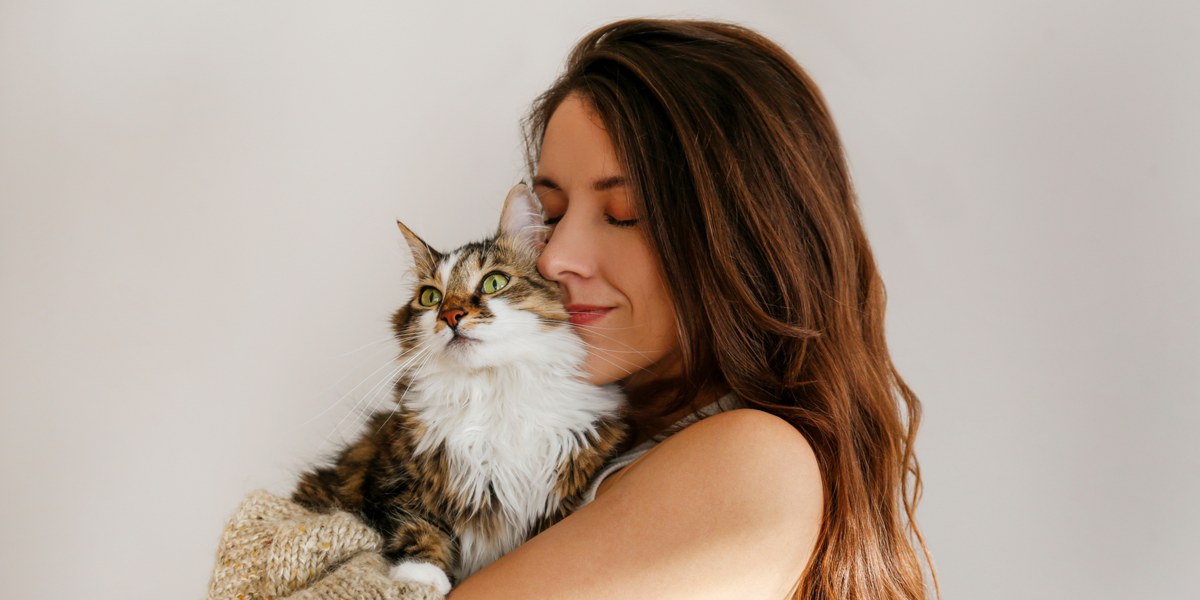
There’s also the possibility that they’re just… curious. Cats are inherently curious creatures. They see a change in their environment (you, the human, being a significant part of that environment), and they want to investigate. Your tears might be a fascinating new texture to them. Your sniffles might be an intriguing new soundscape. They’re not necessarily being sympathetic in the human sense, but they are definitely acknowledging that something is different, and they want to be part of the action. It's the feline equivalent of "What's going on over there? Is it food? Is it a laser pointer dot? Is it my turn to be worshipped?"
The Science Bit (Don't Worry, It's Still Fun!)
Now, before you go thinking your cat is a furry little therapist, let’s sprinkle in a little science. Studies have actually shown that cats do respond to human emotions. They can differentiate between happy and sad vocalizations in humans. This isn't just random guesswork. They're actually picking up on the tonal qualities of your voice. So, when you’re wailing like a banshee after watching a sad movie, your cat isn't just hearing noise; they're hearing "sad noise."

One study found that cats were more likely to approach and interact with their owners when they were exhibiting sad behaviors compared to when they were acting normally or happily. They might even offer more comfort behaviors, like purring or rubbing, when they detect sadness. It’s not necessarily about understanding the abstract concept of sadness, but about recognizing a change in your behavior and offering a response that has historically been rewarded (i.e., you pet them, they get treats). It’s a learned behavior, sure, but that doesn’t make it any less sweet.
Think of it like this: If every time you cried, your human accidentally dropped a piece of cheese, you'd probably cry more often, right? Cats are a bit like that. They've learned that exhibiting certain behaviors when you're down often leads to positive reinforcement. It’s a win-win: you get some feline companionship, and they get… well, whatever they want.

So, What's the Verdict?
Do cats know when you're sad? My answer remains a resounding, albeit slightly dramatic, YES. They might not understand the nuances of your heartbreak over that terrible Tinder date, or the crushing disappointment of your favorite TV show being canceled, but they definitely recognize you are not your usual, chirpy self. They pick up on our cues, our scents, our sounds, and they respond. And that response, whether it’s a gentle headbutt, a rumbling purr, or just the silent presence of a creature who tolerates your existence, can be incredibly comforting.
So, the next time you're feeling blue and your cat decides to grace you with their regal presence, don't dismiss it as just them wanting food or a warm spot. They're showing up. They're acknowledging your emotional landscape. They might even be trying to tell you, in their own uniquely feline way, that you’re not alone. And sometimes, that’s all the reassurance you need. Now, if you’ll excuse me, I think I hear the tell-tale rustle of a treat bag… and my cat is suddenly very interested in my emotional state.

