Can You Eat After A Root Canal

So, you’ve just emerged from the dentist’s chair, feeling a bit… well, like you’ve wrestled a tiny, drill-wielding dragon into submission. And now, a little voice in your head, probably sounding suspiciously like your dentist, whispers: “What can I eat after this root canal?” It’s a question as common as accidentally hitting ‘reply all’ on an important email, and thankfully, the answer is usually much simpler and less embarrassing!
Think of your root canal like a tiny, internal plumbing repair for your tooth. That little nerve center, the pulp, was causing a fuss, and the dentist bravely went in to clean it out, seal it up, and make everything happy again. This is great news! It means your tooth is saved from a much more dramatic fate, like a full-on extraction (which, let's be honest, sounds way scarier than any root canal). But just like any repair job, whether it’s fixing a leaky faucet or patching up a scraped knee, there’s a little bit of a recovery period.
The main reason for being a bit cautious with your food choices is to give your tooth a chance to heal. It’s been through a bit of an ordeal, and you don’t want to go rocking the boat with a jawbreaker or a particularly stubborn piece of caramel. It’s a bit like when you’ve had a minor surgery – your body needs time to mend.
Must Read
The Immediate Aftermath: The Soft and Gentle Approach
Right after your root canal, your mouth might feel a little numb and tender. This is completely normal! Imagine you’ve just had a long, intense workout for your jaw muscles – you’d probably opt for something easy to chew, right? Same idea here.
For the first 24 to 48 hours, it’s all about soft foods. Think of it as a culinary spa day for your mouth. Smoothies are your new best friend. They’re like a hug in a glass – packed with nutrients and incredibly gentle on your recovering tooth. Blend up some yogurt with berries, a banana, and maybe a little honey. It’s delicious and practically effortless.
What else falls into the ‘soft and sensible’ category? Well, consider things like:

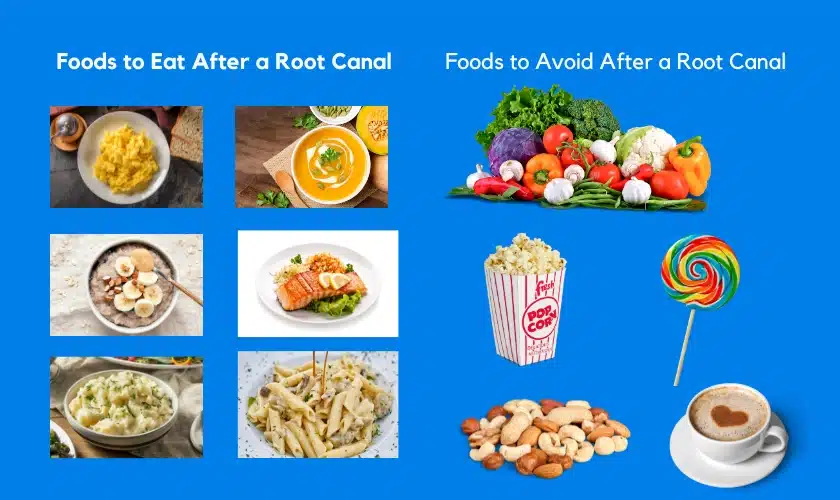
- Mashed potatoes: Fluffy, comforting, and requires minimal chewing effort.
- Soups: Warm (but not too hot!), nourishing, and easy to swallow. Avoid chunky soups for the first day or so; stick to pureed ones.
- Yogurt and pudding: Creamy, cool, and require absolutely no effort. A little treat for your taste buds.
- Scrambled eggs: Light, fluffy, and a good source of protein.
- Oatmeal: A warm, filling, and super soft breakfast option.
- Avocado: Naturally creamy and packed with healthy fats. You can mash it or blend it into a dip.
The key here is to avoid anything that requires significant chewing, anything too hard, or anything too sticky. Imagine trying to eat a whole apple right after your root canal – that’s probably not the best idea. It’s like trying to push a large piece of furniture by yourself; you need to let things settle first.
Gradually Reintroducing the Chewy and Crunchy
After a couple of days, once the initial tenderness has subsided and the numbness has completely worn off, you can start to slowly reintroduce more textures. This is where you can begin to expand your palate a little, but still with a watchful eye.
Think of it as gradually adding more complex chords to a simple melody. You’re not going from a lullaby to a rock concert overnight. Start with foods that are slightly firmer but still easy to manage.
Consider things like:
- Well-cooked pasta: Make sure it’s nice and soft, not al dente.
- Tofu: Soft and versatile, can be prepared in many gentle ways.
- Steamed vegetables: Cooked until they are tender enough to be easily pierced with a fork.
- Flaky fish: Like salmon or cod, which are naturally soft and easy to break apart.
- Ground meat: In dishes like meatballs or shepherd's pie, where the meat is tender.
The goal is to avoid putting excessive pressure on the treated tooth. You’re not trying to test its limits; you’re nurturing it back to full strength. It’s like teaching a toddler to walk – you hold their hand and offer support, you don’t immediately expect them to run a marathon.
What to Absolutely Avoid (The ‘No-Fly’ List)
Now, let’s talk about the things you’ll want to steer clear of for a little while. These are the usual suspects that can cause problems for any tooth, but they are particularly unwelcome guests after a root canal. Think of these as the ‘drama queens’ of the food world.
- Sticky candies: Think taffy, caramels, or even chewy granola bars. These can cling to your tooth and create unnecessary stress.
- Hard candies: Lollipops, peppermints, or even hard nuts. You don’t want to risk chipping or cracking anything.
- Crunchy foods: Popcorn (those little kernels can be sneaky!), chips, or raw carrots. The jarring sensation can be uncomfortable.
- Chewy meats: Tough cuts of steak or jerky can be a challenge.
- Very hot or very cold foods/drinks: Your tooth might be a little more sensitive initially, so give it a break.
- Anything that requires you to bite down hard: This includes things like biting into an apple or a baguette.
It’s not about depriving yourself forever; it’s about giving your tooth the best chance to heal properly. Think of it as a temporary pause on some of your favorite, more demanding culinary adventures.

Why Should You Care? The Big Picture
You might be thinking, “It’s just a tooth, why all the fuss?” Well, that root canal was a pretty significant intervention to save your natural tooth. And keeping your natural teeth is super important for a whole host of reasons!
First off, eating is a joy! Imagine trying to enjoy your favorite meal if you were constantly worried about discomfort or pain. Keeping your teeth healthy allows you to savor every bite, from a crunchy salad to a delicious steak. It’s about maintaining that simple, everyday pleasure.
Secondly, your teeth play a role in your overall health. They help with digestion, pronunciation, and even your confidence! A healthy smile can make you feel more put-together and ready to tackle the world.
And let’s not forget the financial aspect. A root canal, while not cheap, is often less expensive and less involved than replacing a missing tooth with an implant or bridge down the line. So, by taking care of it now, you’re actually saving yourself a potential headache (and a lot of money) in the future.
Listen to Your Body (and Your Dentist!)
Ultimately, the best advice is to listen to your body and follow your dentist’s specific instructions. Everyone heals a little differently, and your dentist knows the specifics of your procedure.
If something feels uncomfortable, stop. Don’t push it. There’s no prize for being the bravest eater immediately after a root canal. The prize is a healthy, happy tooth that will serve you well for years to come.
So, enjoy those smoothies, savor those soups, and embrace the soft, gentle phase of recovery. Your tooth will thank you, and soon enough, you’ll be back to enjoying all your favorite foods with a healthy, confident smile!