A Sphere And A Cylinder Have The Same Radius
Hey there, fellow curious minds! Ever just stop and think about the shapes that fill our world? We've got circles, squares, triangles, and all sorts of fancy geometric creations. But today, I want to chat about something a little more… spherical. And cylindrical. What happens when you take a sphere and a cylinder and give them the exact same radius? Sounds simple, right? But trust me, there's a little bit of magic and a whole lot of "whoa, cool!" waiting to be uncovered.
So, let's picture this. Imagine you have a perfectly round ball – that's our sphere. And then, imagine you have a can of soup, or maybe a nice tall glass. That's our cylinder. Now, the key here is that the distance from the center to the edge is the same for both. That's what we call the radius. Think of it like the secret handshake of these two shapes. Same radius, but wildly different personalities.
The Big Question: What's the Deal?
It’s not just about looks, though. When two shapes share the same fundamental property like radius, it often leads to some pretty neat relationships. We're talking about how they occupy space, how much "stuff" they can hold (volume), and how much surface they have to show off. And honestly, sometimes these comparisons are so unexpected, they'll make you do a double-take.
Must Read
Let’s get our hands (figuratively speaking, of course) dirty with a little bit of math. Don't worry, I promise no scary formulas will jump out at you. We're keeping it chill. We're just going to dip our toes into the water of understanding their properties. Think of it as a gentle exploration, not a deep-sea dive.
Volume Vibes: How Much Can They Hold?
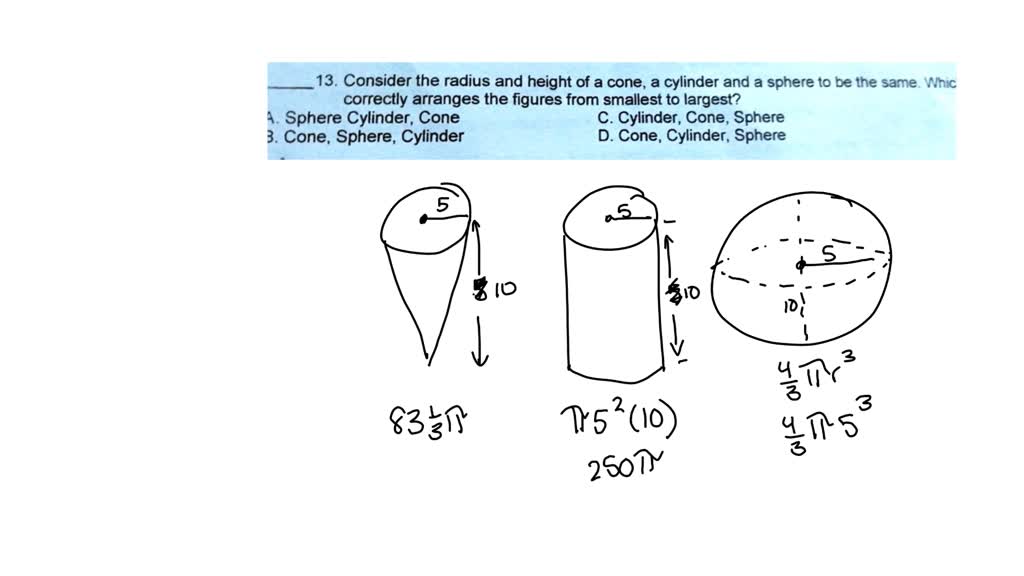
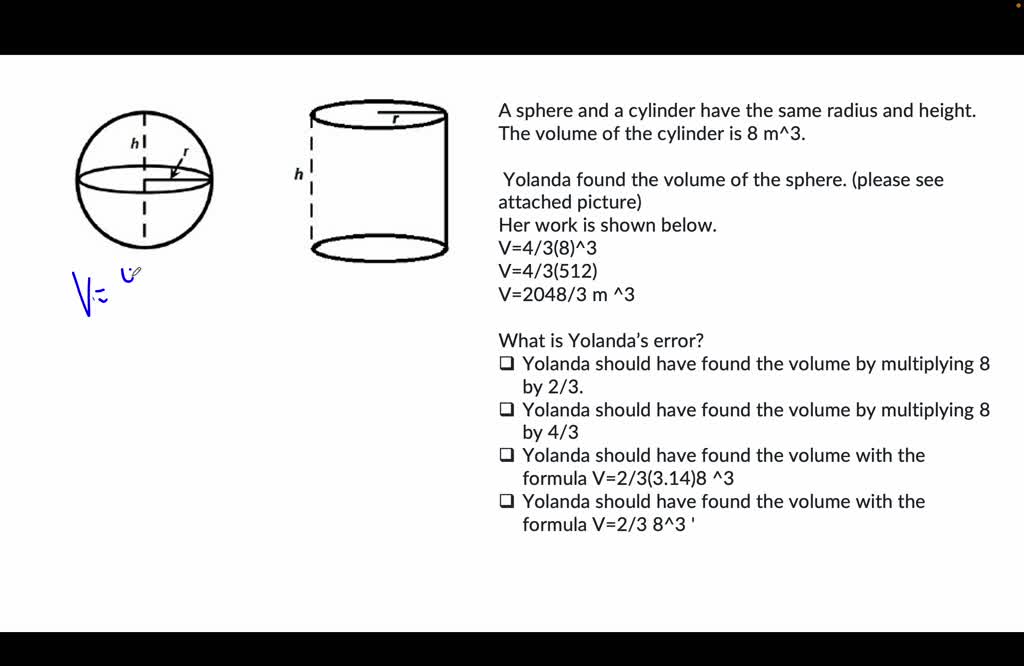
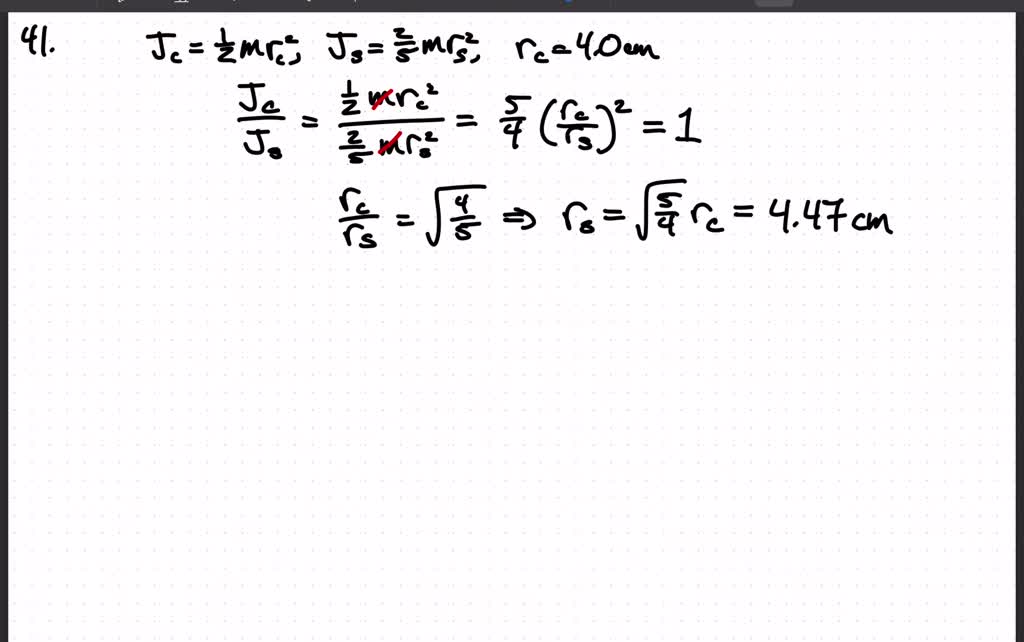
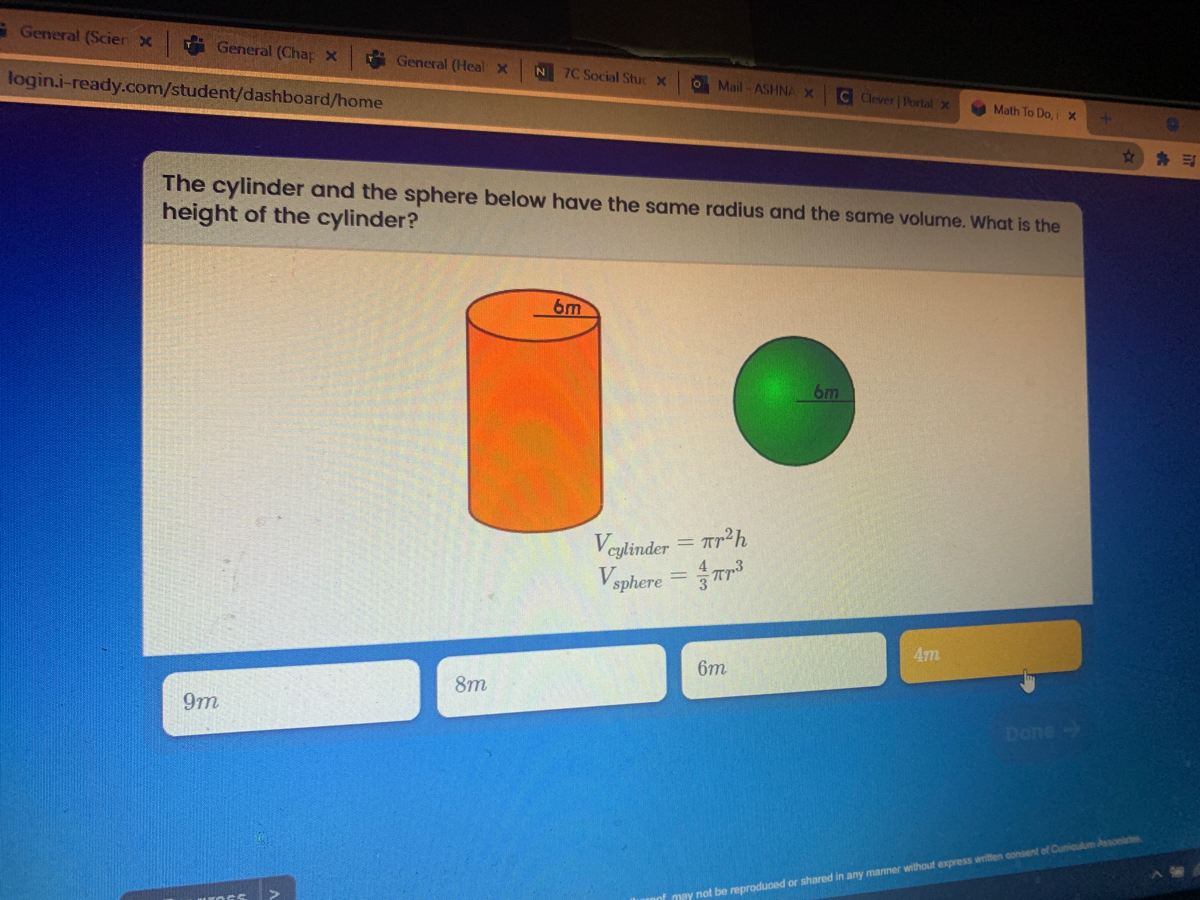
This is where things start to get interesting. Imagine you have a sphere and a cylinder, both with the same radius, let's call it 'r'. Now, let's think about their volumes. The volume of a sphere is that famous 4/3 * pi * r³. It's like a perfect, plump ball of goodness.
The volume of a cylinder, on the other hand, is a bit more straightforward: pi * r² * h, where 'h' is the height. Now, here’s the kicker. If we want to compare these two shapes directly, we need to make a specific choice for the cylinder's height. And this is where the genius of ancient mathematicians, like Archimedes, really shines.
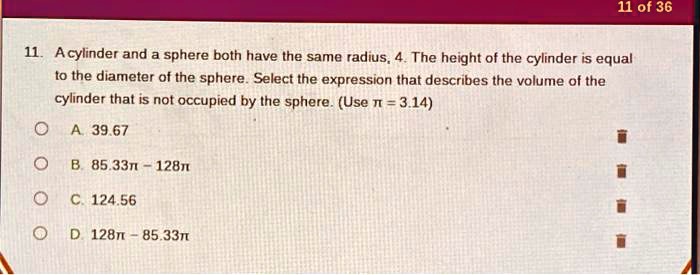
Archimedes discovered something truly remarkable. If you make the height of the cylinder exactly equal to the diameter of the sphere (which, of course, is 2 * r, since the radius is 'r'), then something beautiful happens with their volumes.
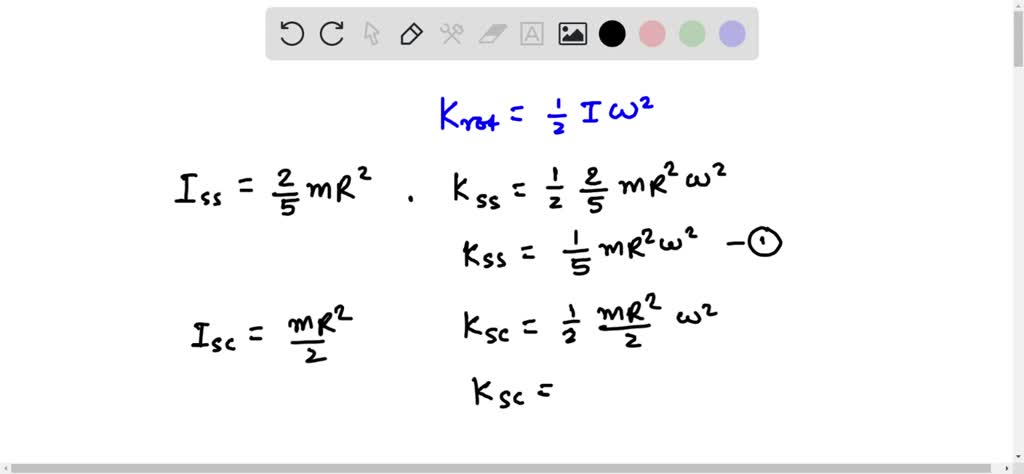
So, for our special cylinder, its volume becomes pi * r² * (2r), which simplifies to 2 * pi * r³. Now, compare that to the sphere's volume: 4/3 * pi * r³. What's the relationship?
It turns out that the volume of the sphere is exactly two-thirds the volume of this specially constructed cylinder! Isn't that wild? It’s like the sphere is this perfectly sculpted portion of its cylindrical counterpart. Imagine a sculptor taking a cylinder of clay and carving out the most perfect sphere from it. They'd end up with a sphere that uses up exactly two-thirds of the original clay.
Think of it like this: you have a big cylindrical block of cheese. If you carefully carve out the largest possible sphere from it, the sphere will take up 2/3 of the cheese, leaving 1/3 as shavings. Those shavings are like the "wasted" space if you were trying to fit the sphere perfectly into the cylinder. But in this context, it’s not wasted, it's just… the shape of things!
Surface Area Shenanigans: How Much Skin Do They Have?
Okay, so we’ve talked about how much they can hold. Now let's think about how much they have on their outside. This is their surface area. For our sphere with radius 'r', the surface area is a neat 4 * pi * r². It's like the total amount of wrapping paper you'd need to cover that perfect ball.
Now, remember our special cylinder? The one with radius 'r' and height '2r'? Its surface area is a little more complex. It has the top and bottom circles, each with an area of pi * r², so that’s 2 * pi * r² total. Then it has the "side" part, which, if you unrolled it, would be a rectangle with a width of the cylinder's circumference (2 * pi * r) and a height of 'h' (which is 2r). So, the side area is (2 * pi * r) * (2r), which equals 4 * pi * r².
Add it all up for the cylinder: 2 * pi * r² (for the ends) + 4 * pi * r² (for the side) = 6 * pi * r². So, the cylinder has a surface area of 6 * pi * r².
Now, let's do our comparison. Sphere: 4 * pi * r². Cylinder (height 2r): 6 * pi * r². What’s the relationship here? You might have guessed it already! The surface area of the sphere is exactly two-thirds the surface area of this specially constructed cylinder!
Isn't that just mind-blowing? It’s the same ratio as the volumes! It's like the sphere is perfectly "fitting" into the cylinder in terms of both space and skin. Archimedes was so impressed by this relationship that he wanted a sphere inscribed in a cylinder to be carved onto his tombstone. He saw it as a fundamental truth of geometry.
Why Is This So Cool?
Beyond the neat mathematical ratios, this comparison highlights the elegance and interconnectedness of shapes. It shows us that even seemingly simple objects have profound relationships that have been pondered and celebrated for centuries.
Think about it in real-world terms. Imagine you're designing something. If you know that a spherical component will occupy 2/3 of the volume of a similarly dimensioned cylindrical housing, that's valuable information! It helps in efficient design and resource allocation.
It also speaks to the beauty of nature. You see this kind of relationship reflected in how things pack, how organisms grow, and how even the universe is structured. While not always perfectly exact, these geometric principles often provide a framework for understanding the world around us.
So, the next time you see a ball or a can, take a moment. Think about their radii. Imagine them standing side-by-side, sharing that fundamental measurement. And remember the quiet, yet powerful, two-thirds relationship that binds them. It’s a little piece of geometric wonder, freely available to anyone who cares to look.
It’s these kinds of simple observations that can lead to the most profound insights. It's a reminder that sometimes, the most interesting things aren't hidden in complex equations, but are right there, in the shapes we interact with every single day. Pretty neat, huh?
![[ANSWERED] A sphere a hoop and a cylinder all with the same mass M and](https://media.kunduz.com/media/sug-question-candidate/20220507003512493122-4411178.jpg?h=512)